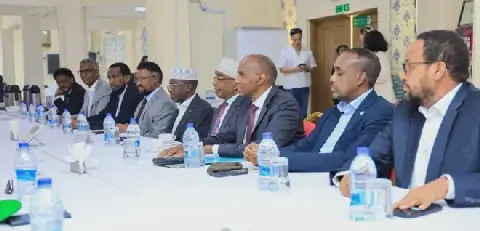
A recent incident at a Namibian airport has exposed the practical challenges facing efforts to deepen regional integration and facilitate the free movement of people across Africa. About 86 delegates from East and Southern Africa, travelling to a regional meeting involving 25 countries, encountered immigration clearance difficulties. The incident has raised concerns about the contradiction between regional commitments to improve connectivity, trade, and investment, and the obstacles travellers continue to face at African borders.
The delegates, who were experiencing delays, were frustrated at the airport, while those who had secured visas before travelling were processed faster. According to Eunice Kamwendo, director of the United Nations Economic Commission for Africa (Uneca) Southern Africa Office, the incident highlighted the need for Southern African countries to review their immigration arrangements. Kamwendo cited East Africa's progress in facilitating cross-border movement, where citizens of participating countries can travel using national identity cards, and regional passport arrangements have further eased mobility.
Kamwendo suggested that Southern Africa could draw lessons from East Africa's initiatives by adopting more flexible immigration procedures, including visa-on-arrival arrangements, to reduce barriers to cross-border travel. She emphasized that facilitating the movement of people was essential to achieving broader integration goals, as trade, investment, and economic connectivity depended on the ability of people to cross borders with fewer restrictions. Kamwendo's comments were made on the sidelines of the regional meeting.
Namibia's Minister of Finance, Ericah Shafudah, acknowledged the incident and apologized to those affected by the delays. In her official address at the meeting, Shafudah expressed regret over the inconvenience experienced by Madagascar's Minister of Energy and Hydrocarbons, Radonirina Rabearimanga, and his delegation, as well as other affected guests. The incident has raised concerns about the implementation of immigration policies and their impact on regional integration efforts.
The incident has also been criticized by the Malawi Confederation of Chambers of Commerce and Industry president, Daisy Kambalame, who described it as unfortunate. Kambalame said the incident illustrated how immigration policies and their implementation could undermine efforts to facilitate the free movement of people. The incident has highlighted the need for a review of immigration arrangements in Southern Africa.
The regional meeting, involving 25 countries, aims to strengthen economic ties between Southern Africa and East Africa. The incident has provided an opportunity for Southern African countries to examine their immigration protocols and consider adjustments to accommodate specified scenarios. Kamwendo emphasized that any changes to immigration procedures would need to be made within the framework of existing laws.
The incident has highlighted the challenges facing regional integration efforts in Africa, particularly in Southern Africa. The implementation of more flexible immigration procedures, such as visa-on-arrival arrangements, could help reduce barriers to cross-border travel and facilitate the free movement of people. Key regional players are expected to review their immigration arrangements and consider adopting more flexible procedures to ease mobility.
Key points
- The incident highlights the contradiction between regional commitments to improve connectivity, trade, and investment, and the obstacles travellers face at African borders.
- Southern Africa can draw lessons from East Africa's initiatives in facilitating cross-border movement.
- The incident provides an opportunity for Southern African countries to review their immigration arrangements and consider adjustments to accommodate specified scenarios.
Reporting sources
- Regional integration guests face airport visa delays · The Nation