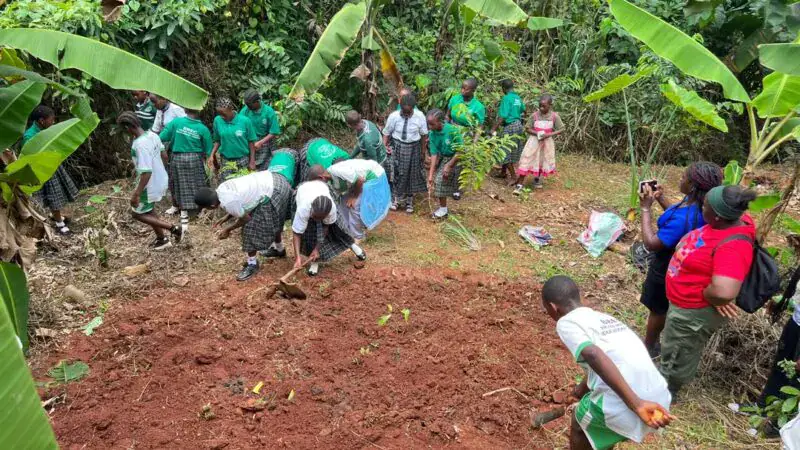
Students at Blessed Bilingual Education Centre in Ebang, Cameroon, have harvested their first crop of the 2026-2027 school year. The Climate Change and Innovation Club, introduced by Support Humanity Cameroon in 2024, connects environmental education with practical action. Through this initiative, students planted huckleberry in their school garden in September. This project aims to alleviate food insecurity while providing learning opportunities and empowering community members.
Cameroon faces a decade-long humanitarian crisis, contributing to food insecurity in the Anglophone regions and Far North, displacing thousands of families. The International Federation of Red Cross and Red Crescent Societies reported worsening hunger among nearly 6,000 Cameroonian households. More than 3.3 million people struggle to find enough food, with about 64 percent of households experiencing severe food insecurity. Children are disproportionately affected, with 29 percent of children under five experiencing chronic malnutrition.
Food insecurity affects children's ability to learn and participate in school activities. According to the Food and Agriculture Organisation (FAO), hunger impairs concentration and memory and affects classroom attendance. In February 2026, the organisation reported that only 2.8 percent of primary school pupils in Cameroon received a free hot meal at school. This highlights the limited reach of school lunch programmes in the country.
Educators and nonprofit organisations are partnering to teach children how to grow their own food. In Bamenda, North West region of Cameroon, the Youth Association for Climate Action (YACA) runs the ADAPT Programme, engaging 70 pupils from two nursery and primary schools. The programme has established gardens with five sections: nurseries, vegetables, fruit trees, composting, and tubers.
The ADAPT Club involves pupils in more than just planting. Programme coordinator Muluh Kelly Vughose says pupils, volunteers, and teachers designed each garden. Children learn basic agricultural skills like plantain propagation and grafting of fruit trees. The club holds two sessions each week, lasting about two hours. This hands-on approach aims to equip pupils with practical skills to combat food insecurity.
Similar initiatives are underway in other regions. In Nkambe and neighbouring villages, pupils from six primary and two secondary schools learn agricultural skills through regenerative practices. These practices include minimal tillage, composting, organic manure, and fruit-tree grafting. By adopting these methods, pupils can help ensure a sustainable food supply while mitigating the effects of climate change.
The success of these initiatives depends on continued support and collaboration. As Cameroon continues to face food insecurity challenges, regenerative school gardens offer a promising solution. By empowering pupils with knowledge and skills, these projects can help build a more food-secure future for the country. Key efforts focus on providing learning opportunities, promoting sustainable agriculture, and enhancing food security.
Key points
- School gardens provide learning opportunities and food for students in Cameroon.
- Regenerative practices like minimal tillage and composting are used in school gardens.
- Food insecurity affects 3.3 million people in Cameroon, with 64 percent of households experiencing severe food insecurity.
Reporting sources
- Can regenerative school gardens strengthen food security in Cameroon? · Global Voices Africa