An impending September 30 deadline issued by the anti-immigration movement, March and March, has sparked profound anxiety across migrant communities in South Africa. The group has spearheaded protests throughout the year, demanding that undocumented foreign nationals leave the country. Organisers warn of further demonstrations if their demands remain unmet. For many refugees, official paperwork provides little solace as they face escalating fear and hostility on the streets.
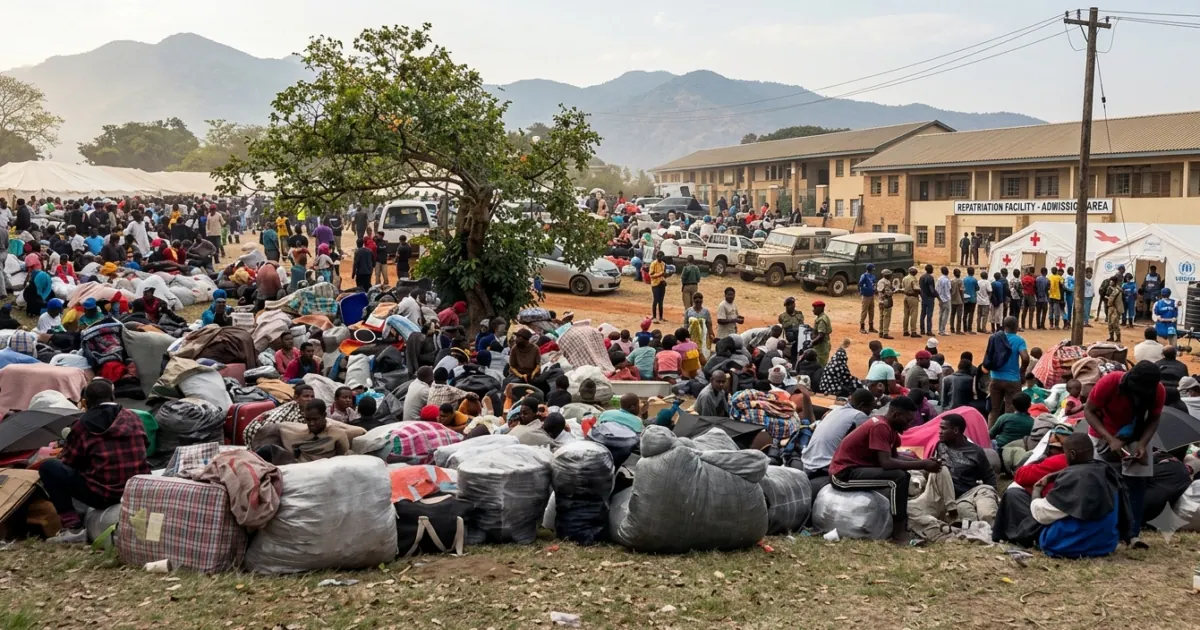
Hundreds of asylum seekers and refugees have been occupying the pavement outside the Durban Refugee Reception Centre, fleeing violence in nations such as the Democratic Republic of the Congo, Burundi, Uganda, Mozambique, and Tanzania. They sought sanctuary near the Department of Home Affairs but were instead forced to make the street their home. Conditions quickly deteriorated into a desperate struggle for survival, with irregular access to food and necessary medication.
The camp offered no immunity from the hostility its residents hoped to escape. On September 3, members of March and March confronted the refugees living outside the centre, leading to violence and police intervention that left at least four people injured. March and March frames its mobilization as a campaign against crime, deteriorating community conditions, and insufficient government enforcement of immigration laws.
Despite having official documentation, refugees report that their status offers no protection from attacks. Earlier this year, six refugee salon workers near Warwick Street Market were beaten with sticks, sending two to the hospital. Allegations of police inaction compounded their isolation, with refugees claiming that police said they couldn't open cases because they were foreigners.
In mid-September, authorities cleared the makeshift Durban camp, presenting residents with stark choices: return to neighborhoods they previously fled or accept temporary placement at the Lindela facility in Gauteng. On September 15, authorities transported 274 individuals by bus to Lindela, while roughly 150 others remained in Durban to seek alternative shelter.
Community representatives, such as Kafuti Muyumba, a Congolese small business owner, note that returning to previous neighborhoods remains terrifying. Muyumba linked current tensions to painful historical precedents, recalling deadly xenophobic outbreaks in 2008 and 2015 that displaced thousands. Distrust of local law enforcement runs deep among community members who feel abandoned by authorities.
The South African government has intensified immigration enforcement operations in response to sustained public pressure. Between June 14 and August 20, authorities processed 86,596 foreign nationals for deportation and repatriation. Despite lacking legal force, the September 30 deadline carries psychological weight and generates widespread panic among refugees, who face deep uncertainty about their future.
Key points
- The anti-immigration movement, March and March, has spearheaded protests demanding that undocumented foreign nationals leave the country.
- Refugees report that official documentation offers little protection from attacks and hostility on the streets.
- The South African government has intensified immigration enforcement operations, processing 86,596 foreign nationals for deportation and repatriation between June 14 and August 20.