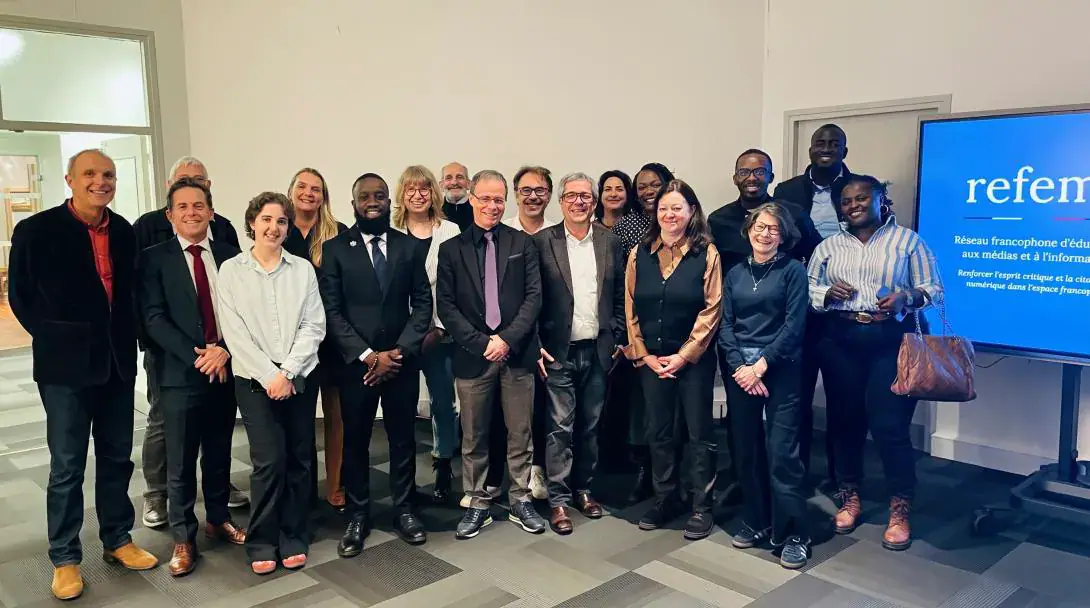
The Réseau francophone d’éducation aux médias et à l’information (REFEMI) has called on governments to strengthen their investments in media education to equip citizens with critical thinking skills. In a statement released on November 16, 2026, the organization emphasized the need for media education to be a priority. This comes as disinformation and artificial intelligence-generated content continue to pose significant challenges. REFEMI was established on October 3, 2024, in Paris.
The REFEMI network believes that media education should not only focus on digital tool proficiency but also enable populations to understand information production mechanisms, verify sources, and participate informedly in public debates. To achieve this, REFEMI advocates for integrating media education into educational systems and lifelong training programs. The organization has developed a competency framework for Francophone trainers and launched the "For For" program to train trainers and produce educational resources.
During their annual conference in Paris on November 16-17, 2026, REFEMI members defined their roadmap for 2027-2029. The plan includes expanding the network, enhancing trainer capacities, and continuing advocacy with public authorities. With support from the Organisation internationale de la Francophonie (OIF) and CFI, REFEMI aims to make media education a lever for citizen and democratic resilience. The organization is present in several Francophone countries, including Senegal through Polaris Association.
REFEMI's call to action emphasizes the urgent need for citizens to distinguish reliable information from disinformation. The proliferation of digital platforms and AI-generated content has transformed information circuits, increasing the risk of manipulation and polarization. By enhancing media education, REFEMI seeks to empower citizens to navigate the complex information landscape effectively.
The REFEMI network has already made significant strides in promoting media education. With the support of its partners, the organization has developed educational resources and trained trainers to equip citizens with critical thinking skills. REFEMI's efforts aim to foster a more informed and engaged citizenry, capable of participating meaningfully in public debates.
In Senegal, REFEMI's local chapter, Polaris Association, is working to promote media education and critical thinking. By engaging with local communities and stakeholders, the organization seeks to raise awareness about the importance of media education in combating disinformation. This initiative is part of REFEMI's broader efforts to enhance media literacy and promote democratic resilience.
As the media landscape continues to evolve, REFEMI's advocacy for enhanced media education is gaining momentum. The organization's efforts to prioritize media education and critical thinking are crucial in addressing the challenges posed by disinformation and AI-generated content. By working together with governments, institutions, and civil society, REFEMI aims to create a more informed and resilient citizenry.
Key points
- REFEMI urges governments to prioritize media education to tackle disinformation and AI-generated content.