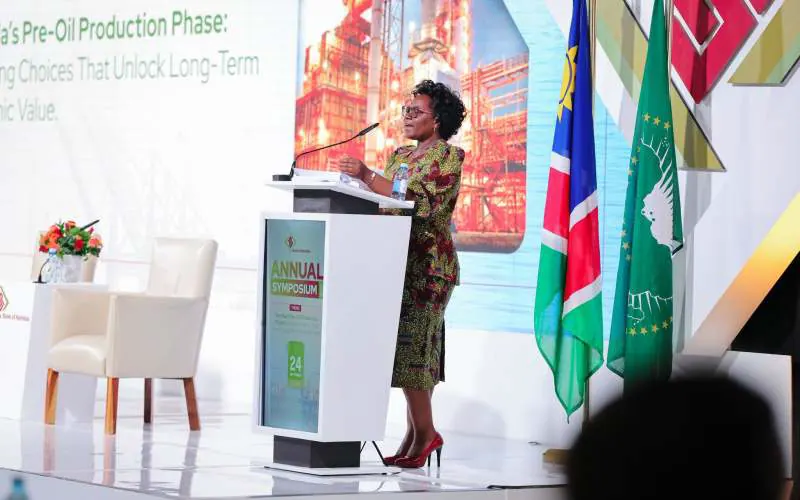
The Bank of Namibia has emphasised the need for strengthened legal, institutional, and economic preparedness as the country prepares to become a first-time oil producer. To achieve this, the central bank has recommended the immediate gazetting of the Petroleum (Exploration and Production) Amendment Bill, 2025, and the Sovereign Wealth Fund Bill. These measures aim to clarify institutional mandates and enhance petroleum revenue management.
Additional recommendations include the implementation of binding Local Content legislation, improved alignment between local hiring targets and available skills, and the establishment of a specialised petroleum business development and support centre. A targeted public-sector capacity-building programme is also suggested, which would include a special remuneration framework to retain scarce technical expertise in areas such as petroleum law and fiscal modelling.
The Bank of Namibia's recommendations also highlight the importance of a coordinated public communication strategy to improve understanding of petroleum project timelines and manage public expectations. This comes as oil and gas exploration has become a significant driver of Namibia's economy, attracting approximately N$74.4 billion in Foreign Direct Investment between 2021 and 2025. This represents about 56% of total FDI inflows during the period.
According to the central bank, oil and gas exploration accounted for an average 30% of total Gross Fixed Capital Formation between 2022 and 2025. The sector has also increased demand for imports, generating N$60.3 billion in services imports and N$7.7 billion in goods imports since 2021. These figures demonstrate the substantial impact of the oil and gas sector on Namibia's economy.
Despite the progress made, the Bank of Namibia's assessment warns that Namibia's pre-production window is narrowing, with several institutional and regulatory gaps still requiring attention before commercial production begins. The bank has identified concerns such as delays in finalising key statutory instruments, limited clarity over institutional mandates, and weak enforceability of the country's Local Content Policy.
The assessment also highlights a gap between local-content targets and the availability of domestic technical skills. Furthermore, the state currently lacks a coordinated public communication strategy, contributing to limited public understanding of realistic petroleum development timelines. To mitigate these risks, the bank advises Namibia to learn from the experiences of other first-time resource producers and avoid common pitfalls.
Namibia's first oil projects are progressing, with TotalEnergies and its partners planning to reach a Final Investment Decision on the Venus project by the end of 2026, subject to regulatory approvals. Galp and its partners have also expanded appraisal activities on the Mopane project, confirming significant oil accumulations. The Bank of Namibia has cautioned against pro-cyclical spending and aggressive borrowing during periods of high commodity revenues, given the country's public debt of 64% of GDP.
Key points
- The Bank of Namibia recommends immediate gazetting of the Petroleum (Exploration and Production) Amendment Bill, 2025, and the Sovereign Wealth Fund Bill.
- Oil and gas exploration has attracted approximately N$74.4 billion in Foreign Direct Investment in Namibia between 2021 and 2025.
- The central bank warns against pro-cyclical spending and aggressive borrowing during periods of high commodity revenues.