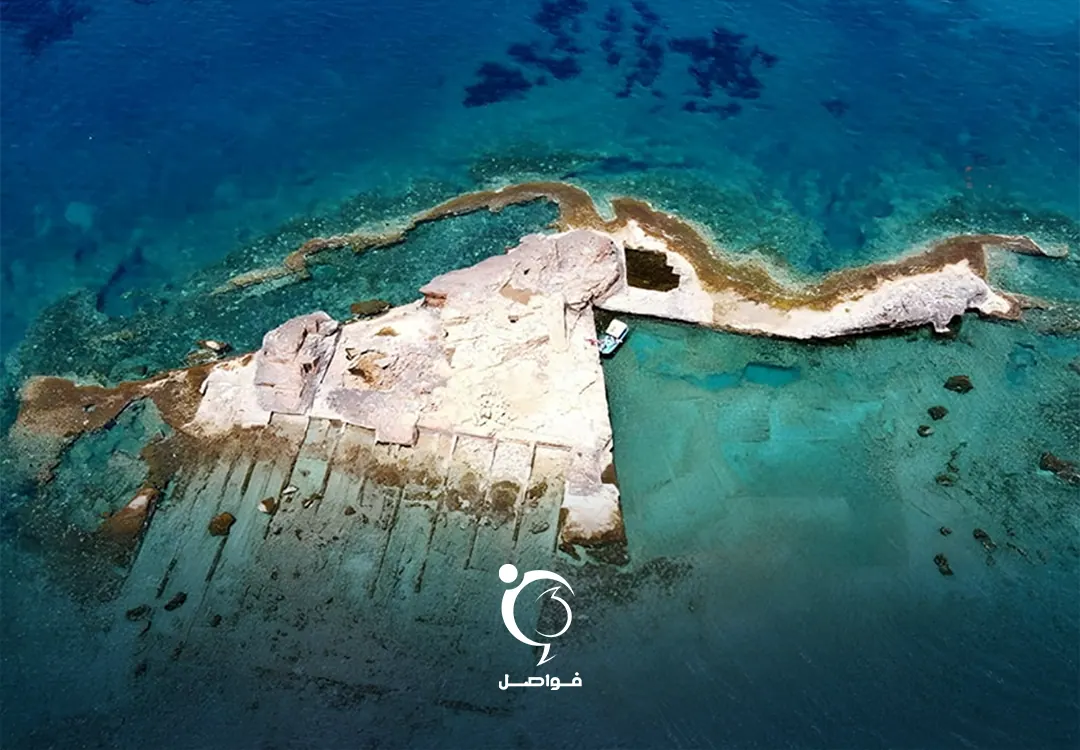
A recent archaeological study has shed new light on the creation of the ancient port of Apollonia in eastern Libya. The study, conducted by four researchers, including Nick Flemming, Julia Nicholas, and Libyans Saad Mohammed Buiadam and Ahmed Imrag, reveals that Greek settlers reformed parts of the coastline to establish a safe harbor for the city of Cyrene, located about 15 kilometers inland. The research, published in a journal affiliated with the British Institute for Libyan and North African Studies, employed underwater archaeological surveys, previous studies, and modern aerial images.
The study suggests that the coastal activity in Apollonia dates back to a period before the official establishment of Cyrene in 631 BC. The researchers believe that the natural rock formations and small islands in the area provided a safe haven for fishermen, traders, and ships before the arrival of Greek settlers. The team used results from underwater archaeological surveys conducted by the University of Cambridge in 1958 and 1959, as well as measurements taken in 2025.
The researchers found that Greek engineers exploited the natural coastal terrain, extracting rocks and conducting excavation and construction work to create wave barriers, ship entrance channels, and sloping areas for ship launching and protection. The study reveals that Apollonia gradually developed from a natural anchorage into a comprehensive port complex capable of supporting commercial and military activities.
The port of Apollonia played a significant role for over 1200 years, serving as a naval base for Cyrene, which later became the capital of the Pentapolis region in Cyrenaica. The area underwent transformations that affected the port's shape and sea level, with parts of the port submerged due to changes in sea level linked to tectonic movement.
The study highlights the complexity of the site's archaeological record, with the team concluding that the combination of natural and man-made features created a sophisticated port system. The research also underscores the significance of Apollonia as a major port and naval base in the ancient world.
The researchers' findings provide new insights into the history of Apollonia and its role in the ancient Mediterranean world. The study demonstrates the importance of interdisciplinary research, combining archaeology, history, and geology to understand the complexities of the site.
The discovery of Apollonia's ancient port has significant implications for our understanding of the region's history and cultural heritage. As researchers continue to explore and study the site, they are likely to uncover more secrets about this ancient civilization.
Key points
- The study reveals that Greek settlers reformed parts of the coastline to establish a safe harbor for the city of Cyrene.
- The port of Apollonia played a significant role for over 1200 years, serving as a naval base for Cyrene.
- The site's archaeological record is complex due to changes in sea level and tectonic movement.