Nigeria's national football team, the Super Eagles, is at a critical juncture following a series of disappointing results. The team's recent performance has raised concerns about its current state and future prospects. To achieve consistent success, Nigeria must adopt a long-term strategy and build a sustainable football model. This involves strengthening the confidence of players, coaches, administrators, and fans, as well as improving preparation. A clear football identity with efficient planning is crucial for the team's recovery.
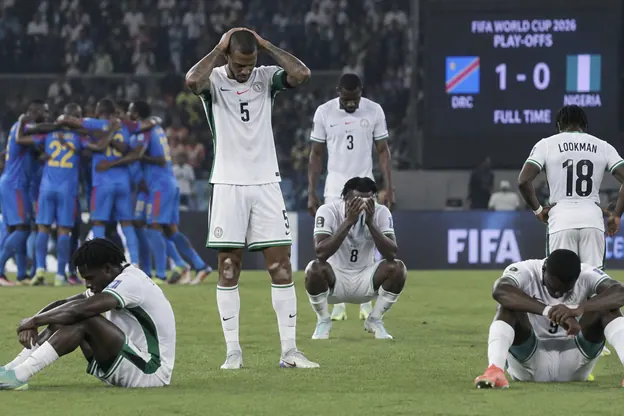
The Super Eagles' performance at AFCON 2023 demonstrated their capability to play top-tier football, reaching the final before losing 2-1 to hosts Ivory Coast in extra time. Despite taking an early lead through William Troost-Ekong, Nigeria conceded two second-half goals, highlighting a recurring inability to convert strong campaigns into silverware. This defeat marked Nigeria's fifth AFCON final loss. Additionally, the team was eliminated in a penalty shootout by DR Congo in the CAF Play-Off final for the 2026 FIFA World Cup, further emphasizing the need for rebuilding.
Building a stronger football development system is essential for Nigeria's recovery. The country has produced great players in the past, but there is a need for more robust youth academies, better coaching education, and more competitive domestic structures. It takes more than just recognizing talent to develop it; young footballers need to be trained in technical and tactical aspects, physical conditioning, and psychological strategies. A successful national team requires a continuous supply of full-fledged players, which can be achieved through a well-structured football development system.
Creating a clear playing identity is another important challenge for Nigeria. The Super Eagles have long been known for their athleticism, attacking prowess, and individual brilliance. However, in today's international football, there is a need for greater tactical organization and consistency. The next generation of Nigeria's outfit needs to have both classic and tactical approaches. With world-class attacking possibilities offered by Victor Osimhen and Ademola Lookman, it will take a collective effort from the entire team to achieve success.
Stability and professional leadership are crucial for Nigeria's progress. The team has faced frequent changes in leadership, which has hindered continuity and stability. Coaches must be given sufficient time to formulate tactics, assess players, and build good team bonds. The Nigeria Football Federation requires better planning, transparency, and communication to provide a stable environment for the team. Current head coach Éric Chelle has spoken candidly about the challenges, emphasizing the need for a more stable and professional environment.
Balancing experience with emerging talent is essential in a successful rebuild. Senior players share their expertise and experience, especially under pressure in knockout phases. However, Nigeria needs to open up opportunities for new talent emerging from its own competitions and European academies. Infusing youth will help build leaders for the future while keeping dependence on a few superstars in check. The goal is to foster a competitive environment where new generations can grow and thrive alongside experienced players.
Improving mental preparation and tournament management is also vital for Nigeria's success. AFCON is not just about skills; concentration, maintaining emotional control, and reacting at difficult moments are key characteristics of tournament football. Enhancing mental performance should be a key component of the national team's preparation. Psychological preparation is now regarded as one of the most important factors that differentiate elite football teams from championship-winning teams. By addressing these areas, Nigeria can rebuild and improve its chances of success in the next AFCON.
Key points
- Nigeria needs to adopt a long-term strategy and build a sustainable football model to achieve consistent success.
- Building a stronger football development system, including robust youth academies and better coaching education, is essential for Nigeria's recovery.
- Stability and professional leadership are crucial for Nigeria's progress, requiring better planning, transparency, and communication from the Nigeria Football Federation.