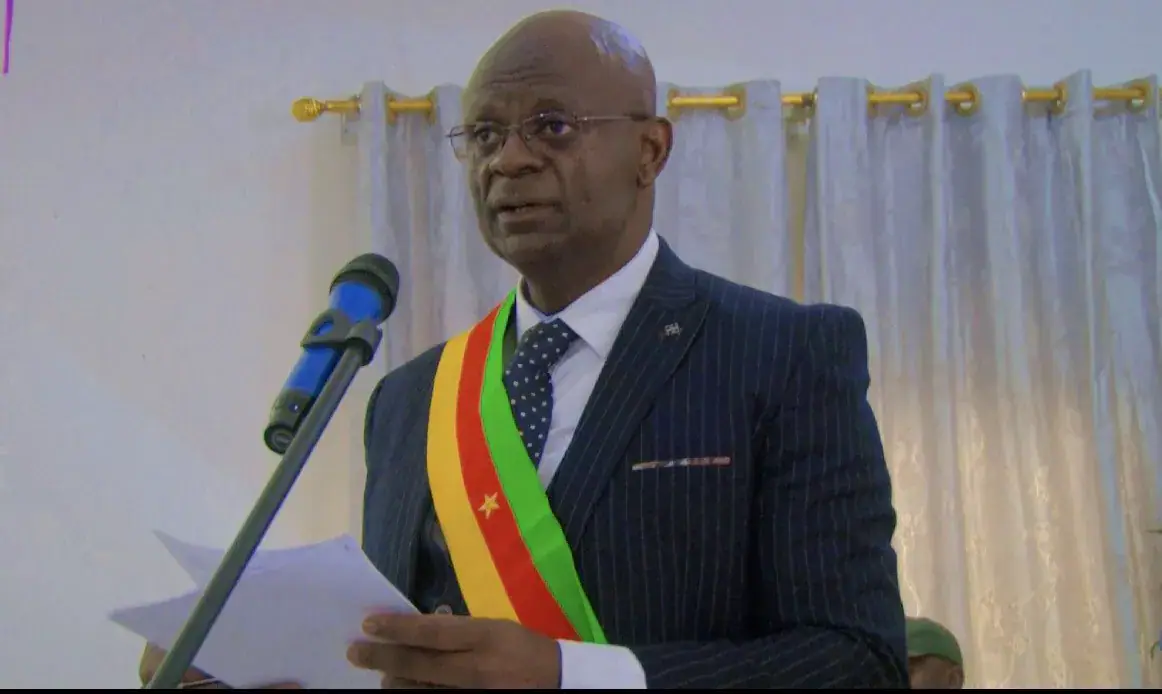
Cameroon's South West Region has endured years of conflict, economic disruption and uncertainty, making the promise of decentralisation significant. The Regional Assembly has been operational for five years, and expectations are high that bringing governance closer to the people will translate into better infrastructure, education, healthcare and economic opportunities. President Zacheus Bakoma Elango has spent his first mandate navigating limited resources and competing development priorities. He acknowledges that progress has been gradual but insists that the foundations are being laid for a stronger and more responsive institution.
The Regional Assembly has implemented various projects, including new healthcare facilities in Buea, Kumba and Mamfe, classroom construction, road rehabilitation, water projects and solar street lighting. President Bakoma Elango notes that the Assembly has adopted a bottom-up approach, listening to communities and institutions to determine their needs. The Regional Assembly has constructed and equipped a paediatric centre at the Buea Central Hospital, a one-storey administrative block at the Kumba Regional Hospital and a dialysis centre. These projects aim to address the region's healthcare needs.
In addition to healthcare projects, the Regional Assembly has constructed and equipped mother-and-child centres in several communities, including Mundemba, Bangem, Tombel, Nguti and Ekondo Titi. The Assembly has also rehabilitated hospitals and healthcare facilities in Mamfe, Tiko, Muyuka and Limbe. President Bakoma Elango emphasizes that meaningful development begins by listening to communities and finding local solutions to local problems. The Regional Assembly's approach focuses on responding to community needs and available resources.
Despite progress, President Bakoma Elango acknowledges that security concerns persist, resources remain inadequate and the journey towards effective decentralisation is far from complete. He is looking beyond the challenges of establishing a new institution towards consolidating its achievements, expanding development projects and attracting greater participation from communities, investors and the Cameroonian diaspora. The President's optimism about the region's recovery is tempered by the recognition that significant work remains.
President Bakoma Elango has served a second mandate, during which he aims to build on the Assembly's achievements. He notes that the population of the South West Region has welcomed the institution with satisfaction. The President recalls a quotation from Chinua Achebe, emphasizing that the Regional Assembly has achieved a lot during its first mandate despite challenges and limited resources. The population will ultimately determine the Assembly's success.
The Regional Assembly's decentralisation efforts aim to bring governance closer to the people, increasing citizen participation and community engagement. President Bakoma Elango stresses that decentralisation is a gradual process requiring patience, adequate resources and stronger public understanding of regional governance. The Assembly's progress and challenges reflect the complexities of implementing decentralisation in a region recovering from conflict.
As the South West Regional Assembly continues to evolve, President Bakoma Elango's vision for the region is centred on meaningful development through community engagement and local solutions. The Assembly's achievements and challenges serve as a foundation for future growth, and its efforts to address community needs will likely shape the region's recovery and development trajectory.
Key points
- The South West Regional Assembly has implemented various projects, including healthcare facilities, classroom construction and road rehabilitation, to demonstrate that regional governance can deliver practical results.
Reporting sources
- Rebuilding Cameroon’s South West: Zacheus Bakoma Elango on Progress, Challenges and Hope · Pan African Visions