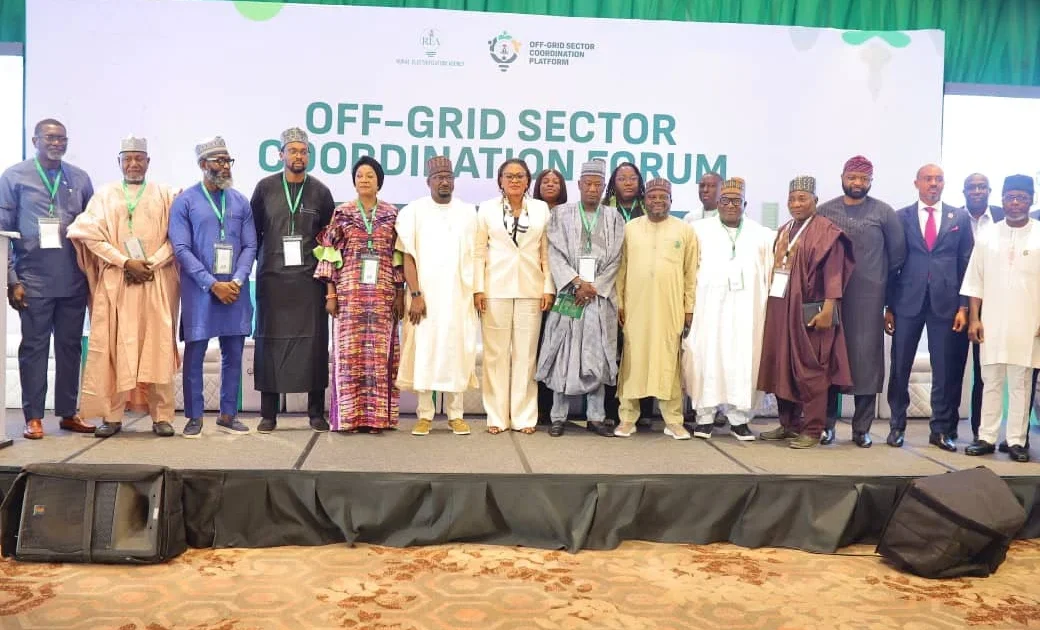
The Rural Electrification Agency (REA) has urged government agencies, state governments, development partners, private operators, and other stakeholders to adopt a unified approach to expand electricity access across Nigeria. REA's Managing Director, Dr. Abba Abubakar Aliyu, made the call at the relaunch of the Off-Grid Stakeholder Coordination and Partnership Forum in Abuja. He emphasized the need for stronger coordination to prevent project duplication, optimize resource utilization, and ensure interventions reach those who need electricity most.
An analysis of the 2024 and 2025 Federal Government budgets using Artificial Intelligence revealed that multiple government institutions were implementing power-related projects, highlighting the need for better coordination across the sector. Some agencies involved in electricity-related projects are not traditionally regarded as major power-sector institutions. Aliyu warned that without coordination, efforts would be in vain, and stakeholders must share data to ensure efficient resource use.
The REA boss disclosed that the agency had encountered situations where projects under different programs overlapped at the same locations. With funding for the sector shrinking, stakeholders must coordinate interventions to maximize available resources. A centralized platform for sector data could help identify existing projects, avoid duplication, and determine areas requiring new interventions.
The Minister of Power, Joseph Tegbe, represented by his Chief of Staff, Doyin Adelabu, noted that fragmentation remained a major challenge to delivering electricity projects. He described fragmentation as a "quiet tax" that results in duplicated efforts, missed investment opportunities, and slower power delivery to Nigerians. The Federal Government is establishing a standing Off-Grid Coordination Secretariat to track commitments and risks, convene issue-based working groups, and generate shared market intelligence.
The Minister called on development partners, financiers, private operators, state governments, and civil society organizations to nominate focal points, share data and commitments, and participate actively in working groups. The Federal Ministry of Power will provide policy direction through the National Electrification Strategy and Implementation Plan, while supporting state electricity markets under the Electricity Act.
The Executive Director of the Rural Electrification Fund, Doris Uboh-Ogunkoya, emphasized that coordination should be a continuous function, not limited to periodic meetings. The Off-Grid Coordination Secretariat will help stakeholders identify gaps, address bottlenecks, and track commitments. The aim is to align efforts, identify gaps, address bottlenecks, and follow through on commitments between meetings.
Other stakeholders, including Ikenna-Donald Ofoegbu of Heinrich Böll Stiftung Nigeria, urged stakeholders to look beyond the number of connections delivered when measuring the success of off-grid electricity interventions. He called for greater emphasis on productive use of electricity, innovative financing, sustainability, and local capacity development. The Off-Grid Stakeholder Coordination and Partnership Forum has been relaunched under a new coordination framework, with over 7.5 million Nigerians gaining electricity access through solar hybrid mini-grids and solar home system connections.
Key points
- The Rural Electrification Agency is pushing for a unified approach to expand electricity access across Nigeria.
- The Federal Government is establishing a standing Off-Grid Coordination Secretariat to track commitments and risks.
- Over 7.5 million Nigerians have gained electricity access through solar hybrid mini-grids and solar home system connections.