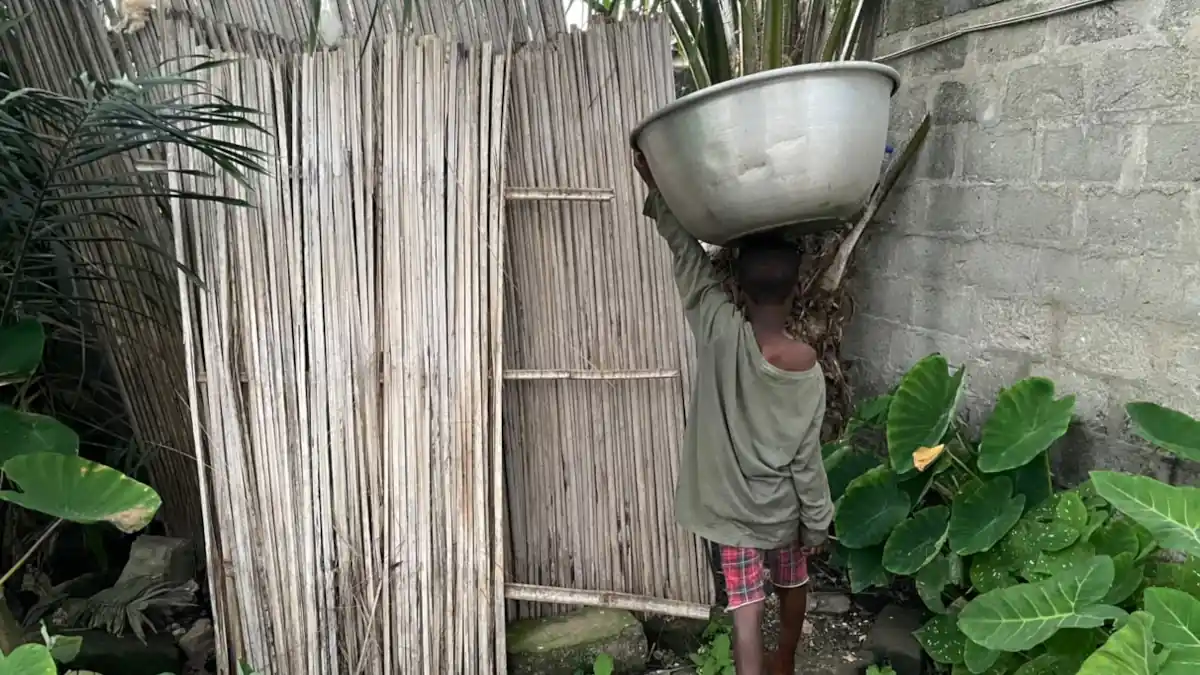
In some households in Benin, unplanned pregnancies can disrupt the family balance, particularly in already precarious situations. The arrival of a new baby can mean more domestic chores for older children, additional deprivations, or even dropping out of school. This phenomenon is often linked to limited access to family planning, side effects, misinformation, and opposition from spouses. According to Mauricette, a 19-year-old girl from Cotonou, when her mother announced another pregnancy, she was unhappy, knowing she would have to take on more responsibilities and face reduced resources.
Mauricette's family of eight lives in a two-room house in a swampy area of Cotonou. The living conditions are challenging, with high bushes and stagnant water attracting mosquitoes and other insects. The family struggles with frequent illnesses, suspected to be malaria, and often resorts to self-medication. The children occasionally go without food, and during celebrations, they rarely receive new clothes. Mauricette and her siblings engage in small jobs to earn money, such as helping with construction or cooking. Mauricette has taken on significant household responsibilities since the birth of her fourth sibling.
As the eldest of six children, Mauricette's daily routine includes cooking, laundry, washing dishes, cleaning, and childcare. She had been an excellent student in primary school but faced difficulties in middle school, failing three times before dropping out in her third year. Mauricette attributes her academic struggles to her increased responsibilities at home, which left her with less time to study, rest, or play. She now works as a laundress to support her family, having had to abandon her dream of becoming a hairstylist.
Sociologist Gisèle Abidji notes that Mauricette's situation is not isolated. In some families, older children put their own needs aside to care for younger siblings, becoming de facto relays for their parents. While a reasonable level of participation in family life is normal, excessive responsibilities can be detrimental to a child's education, rest, and childhood. Abidji emphasizes the need to strike a balance between family solidarity and respect for children's rights.
According to Paul Yassegoungbé, a sociologist specializing in human rights and child protection, when children are forced to work, interrupt their education, or assume significant responsibilities due to family financial difficulties, their rights are compromised. He cites the Beninese Child Code, which regulates child labor and protects them from hazardous work. Yassegoungbé advocates for the norm of "children in school or apprenticeship, parents at work."
Dr. Racine de Pascale Viou, a child psychiatrist, describes Mauricette's situation as "parentification," where a child assumes premature and excessive responsibilities towards their siblings or parents. This phenomenon can lead to a false sense of maturity, causing children to miss essential developmental stages. As adults, they may struggle with self-care, boundary setting, and emotional dependence due to a lack of affective care during childhood. Parentification can also lead to chronic stress, potentially resulting in psychological disorders or depression.
The prospect of another pregnancy had Mauricette worried, fearing increased responsibilities and reduced family resources. Her concerns reflect an understanding of the household's economic limitations and the potential impact of another child. Experts agree that addressing these issues requires a comprehensive approach, including access to family planning, education, and child protection. By supporting families and children, Benin can work towards mitigating the effects of unplanned pregnancies and promoting a healthier and more equitable society.
Key points
- Unplanned pregnancies in Benin force children to take on excessive responsibilities, impacting their education and well-being.
- Limited access to family planning, side effects, misinformation, and opposition from spouses contribute to the issue.
- Experts emphasize the need for a balance between family solidarity and respect for children's rights to address this phenomenon.