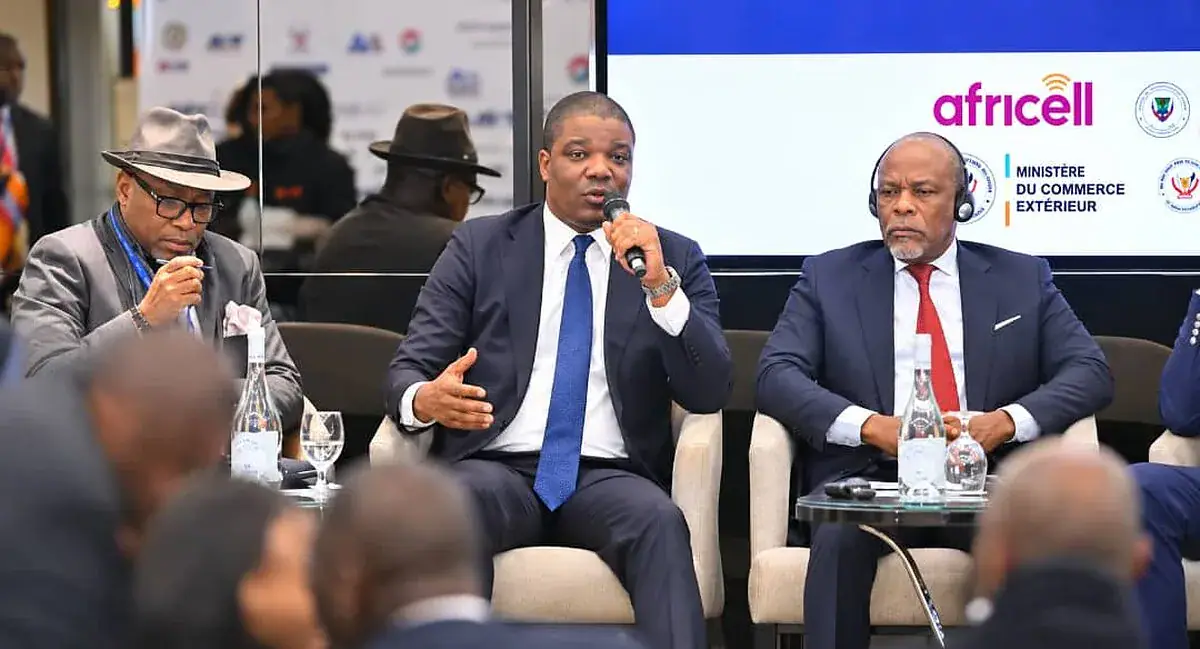
The Democratic Republic of Congo is seeking to attract more international investors, and Ted Beleshayi Kasanda, director-general of the Autorité de régulation de la sous-traitance dans le secteur privé (ARSP), is leading the charge. At the UK-RDC Economic Forum in London, which began on November 2, 2026, Beleshayi highlighted the country's progress in improving its business climate and encouraged investors to explore opportunities in the energy and infrastructure sectors.
Beleshayi emphasized the government's efforts to simplify administrative procedures and provide more visibility for economic operators. He noted that the government has made significant strides in improving the business climate, making it more attractive to investors. The director-general of ARSP also stressed the importance of predictability in politics and law, which is crucial for attracting investments, particularly in the context of the global transition to renewable energy.
The RDC has significant reserves of critical minerals, which are in high demand due to the global transition to renewable energy. However, to capitalize on this interest, the country must address two major challenges: strengthening its energy supply and developing its communication infrastructure. Beleshayi highlighted the need for reliable energy and transportation infrastructure to support economic growth and attract investments.
On the energy front, Beleshayi pointed out that the RDC has significant hydroelectric potential, but there is a gap between this potential and the actual production and distribution of electricity. While the liberalization of the sector has opened up opportunities for private operators, infrastructure constraints continue to hinder its development. The director-general of ARSP noted that the concentration of electrical infrastructure around the Société nationale d'électricité (SNEL) is a major challenge.
Beleshayi also emphasized the importance of developing the country's communication infrastructure, particularly the national road network. He cited several strategic axes, including the Kisangani-Beni and Mbuji-Mayi-Nguba routes, which will help connect provinces and facilitate the circulation of people and goods. The development of these infrastructure projects is expected to improve economic integration and facilitate trade.
In addition to promoting the RDC's investment opportunities to foreign capital, Beleshayi also emphasized the importance of developing the national private sector. He believes that Congolese entrepreneurs have untapped potential and that improving access to energy and road infrastructure will enable them to expand their activities and contribute more to wealth creation.
Ultimately, Beleshayi is optimistic about the RDC's economic prospects, citing the country's progress in improving its business climate and investment opportunities. He encouraged both foreign and local investors to explore opportunities in the energy and infrastructure sectors, which are critical to the country's economic growth and development.
Key points
- The RDC is seeking to attract more international investors, particularly in the energy and infrastructure sectors.
- The country's business climate has improved significantly, with simplified administrative procedures and more visibility for economic operators.
- Developing the national private sector is crucial to the RDC's economic growth and development.