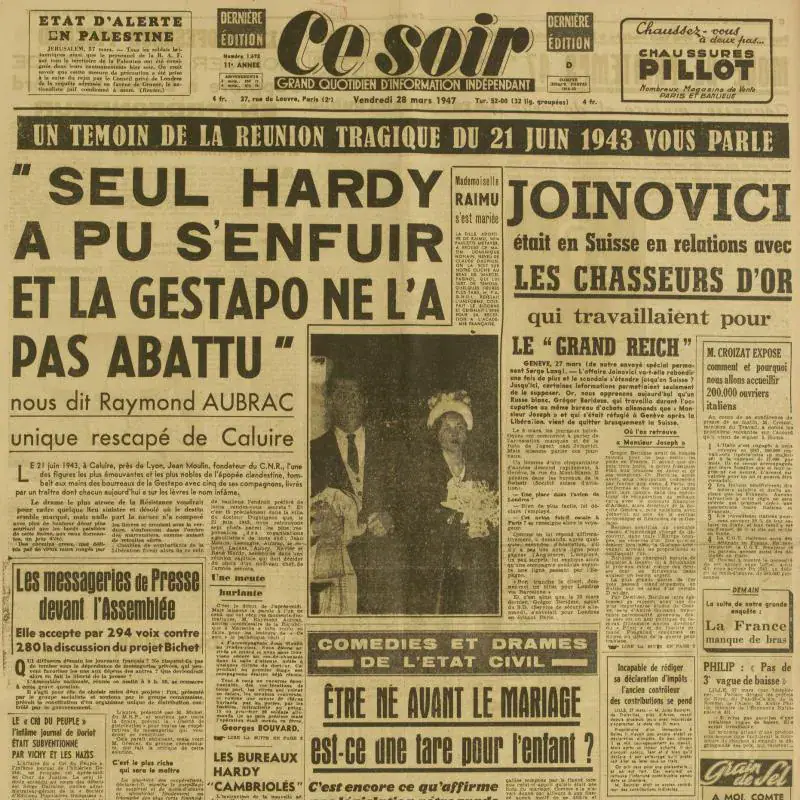
On March 28, 1947, Raymond Aubrac wrote an article in the French communist newspaper Ce Soir, detailing the events surrounding Jean Moulin's capture by the Gestapo on June 21, 1943, in Caluire, a suburb of Lyon. Aubrac, a prominent figure in the French Resistance, claimed that René Hardy, who escaped during the raid, was responsible for the betrayal. This account was part of a larger narrative of suspicion and mistrust surrounding Hardy's actions that day.
The meeting at the villa of Dr. Dugougeon in Caluire was a pivotal event in the history of the French Resistance. Seven key leaders, including Jean Moulin, were gathered to discuss the selection of a new chief for the secret army. Aubrac described the sudden and violent interruption by German soldiers, who burst into the villa, arresting those present. Hardy, however, managed to escape, sparking immediate suspicion among his fellow resisters.
Aubrac's account of the events provided a detailed description of the Gestapo's raid. He noted that while he and the others were quickly subdued and handcuffed, Hardy was only loosely held by a German gendarme. This leniency, combined with Hardy's easy escape, raised suspicions about his loyalty. Aubrac emphasized that the circumstances of Hardy's escape were unusual and suggested a level of complicity.
The aftermath of the arrest saw Hardy's actions come under intense scrutiny. Aubrac disputed Hardy's own narrative of a daring escape, suggesting instead that the Germans made little effort to pursue or recapture him. When Hardy was eventually found at a hospital, the Germans reportedly took an interest in his well-being, further fueling suspicions of a collaborative relationship.
The judicial process that followed did not initially find Hardy guilty due to a lack of evidence. However, Aubrac's testimony, along with that of others, contributed to a growing body of suspicion against Hardy. Aubrac stated that his conviction about Hardy's betrayal was formed immediately after the Caluire meeting and was reinforced by subsequent investigations.
The case against Hardy was complex and multifaceted, involving various testimonies and pieces of evidence. The "Flora" report, the Montron affair, and depositions from key witnesses like Cressol and Delettraz all contributed to the narrative of suspicion around Hardy. Aubrac's early and enduring conviction that Hardy had betrayed the Resistance added significant weight to these allegations.
The legacy of Jean Moulin's capture and the role of René Hardy in these events continue to be subjects of historical debate. Aubrac's 1947 account in Ce Soir remains a crucial primary source for understanding the perspectives of those directly involved in the Resistance. The accusations against Hardy, and the suspicions that have endured, highlight the complexities and challenges faced by those fighting against Nazi occupation during World War II.
Key points
- Raymond Aubrac accused René Hardy of betraying Jean Moulin and other Resistance leaders during their arrest in Caluire on June 21, 1943.
- The Gestapo's raid on the villa of Dr. Dugougeon resulted in the arrest of several key Resistance leaders, with Hardy being the sole escapee.
- Aubrac's testimony was part of a broader case against Hardy, which included various testimonies and evidence suggesting Hardy's complicity in the betrayal.