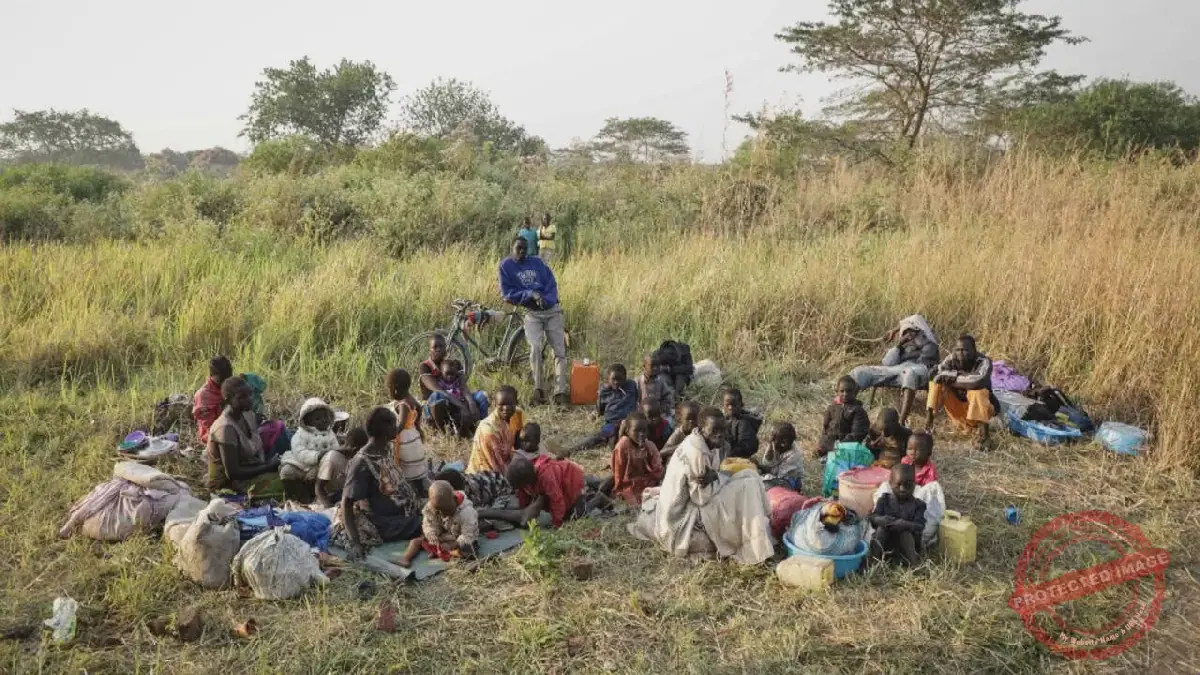
Authorities in Ibba County, South Sudan, have reported that over 5,000 people have fled the Democratic Republic of Congo (DRC) due to fears of an Ebola outbreak. The returnees have been settling in the Nabanga area of Ibba County. According to Tito Amos Nganzi, the caretaker commissioner of Ibba County, local authorities, the Relief and Rehabilitation Commission (RRC), and non-governmental organizations are working together to provide assistance to the new arrivals.
The returnees are in dire need of basic necessities such as food, shelter, and medical supplies. Nganzi stated that the available support remains inadequate, and the situation of the returnees is dire. The arrivals began gradually in July and increased significantly between July and August, with over 5,000 people reported to have entered the county. The returnees and Congolese nationals fled areas affected by the Ebola outbreak in the neighbouring country.
To prevent the spread of the disease, the new arrivals have been screened, according to Kamal El-din Bashir, the head of the Ebola task force. However, Ibba County lacks a properly equipped isolation facility and a dedicated ambulance to handle suspected Ebola cases. Bashir highlighted the challenges faced by the county, including the lack of an ambulance and poor communication at entry points.
The influx of returnees has put a strain on the resources of Ibba County. Nganzi emphasized the need for urgent support to help the returnees settle within the communities in Nabanga. The county authorities, RRC, and non-governmental organizations are coordinating efforts to provide assistance, but more support is needed to address the dire situation of the returnees.
The Ebola outbreak in the DRC has led to a significant influx of returnees in Ibba County. The county authorities are working to prevent the spread of the disease, but the lack of resources and infrastructure is a major challenge. Bashir stressed the need for a properly equipped isolation facility and a dedicated ambulance to handle suspected Ebola cases.
The situation in Ibba County highlights the need for increased support and coordination to address the humanitarian needs of the returnees. The county authorities, RRC, and non-governmental organizations are working together to provide assistance, but more support is needed to address the dire situation of the returnees. The returnees are in need of urgent support to help them settle and recover from their ordeal.
The response efforts in Ibba County are ongoing, with authorities and humanitarian organizations working together to provide assistance to the returnees. The situation remains dire, and more support is needed to address the humanitarian needs of the returnees. The county authorities and humanitarian organizations are working to prevent the spread of Ebola and provide essential services to the returnees.
Key points
- Ibba County in South Sudan reports 5,000 returnees fleeing Ebola outbreak in neighbouring DRC
- Returnees in dire need of food, shelter, and medical supplies
- Ibba County lacks resources and infrastructure to handle suspected Ebola cases