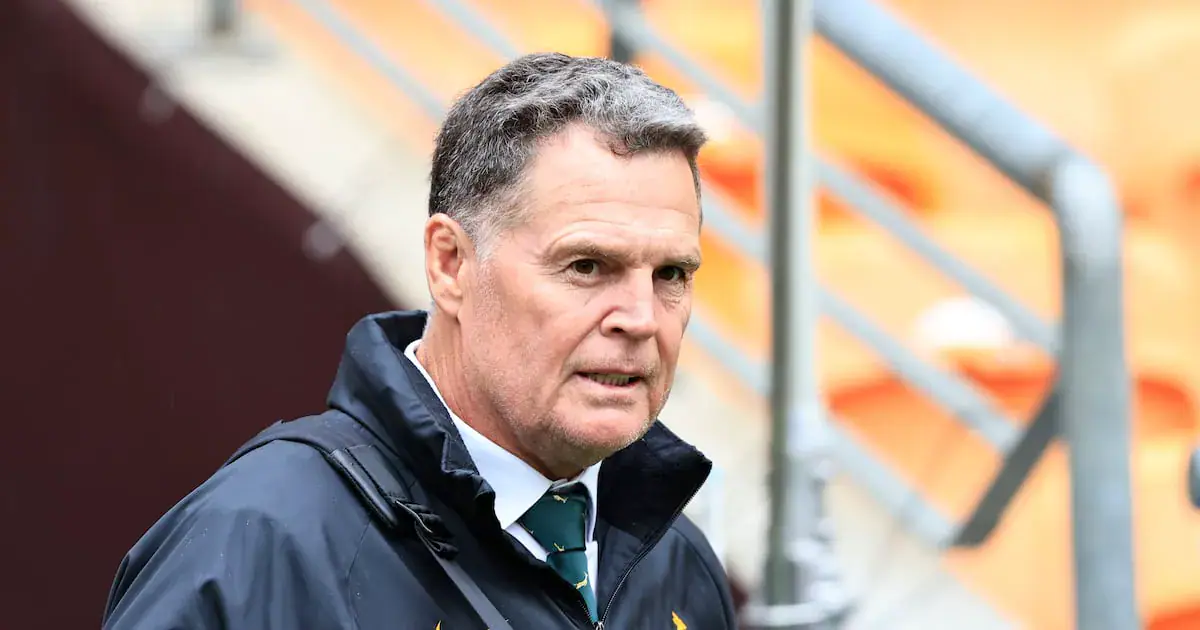
Springbok coach Rassie Erasmus has been handed a six-match ban by World Rugby for his comments on match officials during the team's 21-19 loss to France last Friday. The ban, which Erasmus will appeal, will see him miss Saturday's fixture against Ireland and the Nations Championship finals weekend, as well as the Boks' first four matches of 2027. Erasmus's comments were deemed to be a breach of World Rugby's regulations, specifically targeting the organization's match official abuse sanction process introduced in July this year.
Erasmus's cardinal sin was to publicly question the officiating during the France match, berating the television match official (TMO) and claiming that 17 knee-drop tackles by France went unpunished. He alleged that 11 of these tackles were penalisable and three warranting yellow cards. World Rugby argued that using terms like "match-fixing" directly suggested that officials acted with bias or deliberately altered the outcome of a Test match. This is Erasmus's third major disciplinary sanction for publicly criticising referees, following a 2021 ban during the British & Irish Lions series and a two-match suspension in 2022.
SA Rugby says Erasmus will request a full misconduct hearing into his suspension. The ban has been met with criticism in South Africa, where free speech is highly valued. Many have argued that the sanction is overly stiff and autocratic, and that Erasmus raised valid player-safety concerns. Multiple analysts have noted that he was highlighting dangerous, banned tackle techniques and perceived officiating double standards rather than making a literal criminal accusation.
The disciplinary process has also been questioned, with some arguing that Erasmus was not given an opportunity to state his case before being sanctioned. No hearing was afforded to him before the ruling, allowing him to contextualise his comments and offer an explanation. This has been seen as a dictatorial style of leadership, which is counterproductive and outdated.
A six-match ban is disproportionately severe for the passionate words of a frustrated coach, according to critics. While all sport must adhere to acceptable levels of decorum, publicly ventilating concerns that could have a material impact on player safety and the credibility of the game should be allowed to be aired, discussed and debated in public. World Rugby was within its right to sanction Erasmus, but the nature of the sanction was heavy-handed and harsh.
The ban has significant implications for the Springboks, who will be without their coach for several key matches in 2027. Erasmus's absence will be felt, particularly so close to the 2027 Rugby World Cup next October. The team's performance may be impacted by the lack of leadership and guidance from their coach.
The case has sparked a wider debate about the balance between free speech and regulatory compliance in sport. As one commentator noted, "I disapprove of what you say, but I will defend to the death your right to say it." The incident highlights the challenges of navigating the complex relationship between athletes, coaches, and governing bodies in professional sport.
Key points
- Erasmus's comments were deemed to be a breach of World Rugby's regulations.
- The ban has been met with criticism in South Africa, where free speech is highly valued.
- Erasmus will appeal the suspension and request a full misconduct hearing.