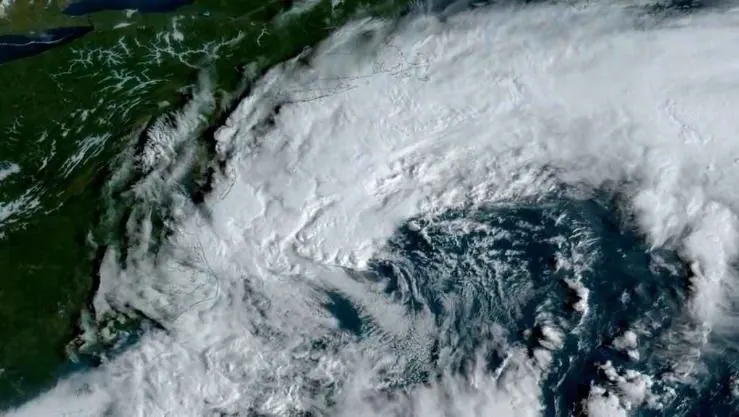
A rare and powerful nor'easter storm has been affecting a large stretch of the US East Coast since the end of the weekend, bringing heavy rain, strong winds, and coastal flooding. The storm has caused significant disruptions to travel, with hundreds of flights cancelled and thousands delayed. The affected areas span from Washington D.C. to the state of Maine, with New York and New Jersey declaring a state of emergency in areas threatened by severe weather.
The storm has caused widespread power outages, with over 100,000 homes and businesses affected at its peak. The strong winds and heavy rain have resulted in coastal flooding in parts of New Jersey and New York, with some areas experiencing gusts of wind approaching hurricane force. The National Weather Service has warned of continued risks of coastal flooding, strong ocean currents, and heavy rain until the start of next week.
What makes this storm unusual is its timing, occurring in September, the beginning of the fall season. Typically, the strongest nor'easter storms form during the winter months. According to the Washington Post, only about 1% of the strongest historical nor'easter storms have occurred in September. Nor'easters are not tropical cyclones, but rather low-pressure systems that form or intensify near the US East Coast, characterized by winds coming from the northeast.
The storm has had a significant impact on travel, with over 400 flights cancelled and thousands more delayed. The National Weather Service has warned of continued disruptions to travel, particularly in areas where the storm is expected to persist. Authorities have advised against non-essential travel in the most affected areas, with emergency services working to respond to the situation.
The storm's effects are expected to persist into the start of next week, with the National Weather Service warning of continued risks of coastal flooding, strong winds, and beach erosion. The agency has urged residents to take necessary precautions and stay informed about the latest developments. Meanwhile, emergency services are working to restore power and respond to the needs of affected communities.
The nor'easter storm has brought significant disruptions to daily life, with many residents experiencing power outages, flooding, and travel disruptions. The storm's impact has been felt across a wide area, with multiple states affected. As the situation continues to unfold, authorities are working to respond to the needs of affected communities and restore normal services.
The rare September nor'easter storm serves as a reminder of the unpredictable nature of weather patterns. As the storm continues to affect the US East Coast, residents are advised to stay informed and take necessary precautions to ensure their safety. The situation will continue to be monitored, with updates provided as more information becomes available.
Key points
- The nor'easter storm has caused significant disruptions to travel, with over 400 flights cancelled and thousands more delayed.
- The storm's timing is unusual, occurring in September, with only about 1% of the strongest historical nor'easter storms happening during this month.
- The National Weather Service has warned of continued risks of coastal flooding, strong ocean currents, and heavy rain until the start of next week.