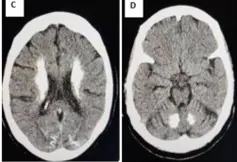
A case report published in Health Sciences and Diseases highlights a rare neurological disorder discovered in a 57-year-old Gabonese woman with type 2 diabetes mellitus and hypertension. The patient presented with confusion and severe hyperosmolar dehydration. Despite prompt treatment, her neurological impairment persisted, prompting further investigation. A non-contrast brain computed tomography scan revealed bilateral, symmetrical calcifications in the basal ganglia and cerebellar dentate nuclei, consistent with probable Primary Brain Calcification.
Primary Brain Calcification, also known as Fahr Disease, is an exceptionally rare condition. The patient's symptoms and test results were carefully analyzed, and her case was documented in a recent study. According to the report, this condition is often revealed during a hyperosmolar hyperglycemic state. The study emphasizes the importance of neuroimaging in patients with incomplete neurological recovery after such episodes, particularly in resource-limited settings.
The patient's unusual presentation sparked interest among medical professionals, who noted the significance of her case in understanding this rare condition. The study's authors stress that Primary Brain Calcification can manifest in various ways, making diagnosis challenging. They highlight the need for increased awareness and further research into this condition to improve diagnosis and treatment.
The case report and literature review provide valuable insights into the genetics and clinical manifestations of Primary Brain Calcification. According to recent studies, the condition is associated with various genetic mutations and can present with a range of symptoms, including cognitive decline, movement disorders, and psychiatric symptoms. The study's authors emphasize that a comprehensive understanding of this condition is essential for accurate diagnosis and effective management.
Researchers have made significant progress in understanding the genetics of Primary Brain Calcification. Recent studies have identified several genes associated with the condition, including SLC20A2. Further research is needed to elucidate the underlying mechanisms and to develop effective treatments. The study's authors suggest that a multidisciplinary approach, involving neurologists, geneticists, and other specialists, is essential for managing patients with this complex condition.
The patient's case highlights the importance of considering Primary Brain Calcification in patients with hyperosmolar hyperglycemic state and neurological impairment. The study's authors emphasize that early diagnosis and treatment can significantly impact patient outcomes. They stress that healthcare professionals should be aware of this condition and consider it in their differential diagnoses.
The study's findings have implications for medical practice in resource-limited settings. The authors suggest that neuroimaging should be considered in patients with incomplete neurological recovery after hyperosmolar hyperglycemic state, even in the absence of obvious symptoms. This approach can help identify underlying conditions, such as Primary Brain Calcification, and inform effective management strategies.
Key points
- A rare case of Primary Brain Calcification was documented in a 57-year-old Gabonese woman with type 2 diabetes mellitus and hypertension.
- The condition is often revealed during a hyperosmolar hyperglycemic state, and neuroimaging is essential for diagnosis.
- Further research is needed to elucidate the underlying mechanisms and develop effective treatments for Primary Brain Calcification.