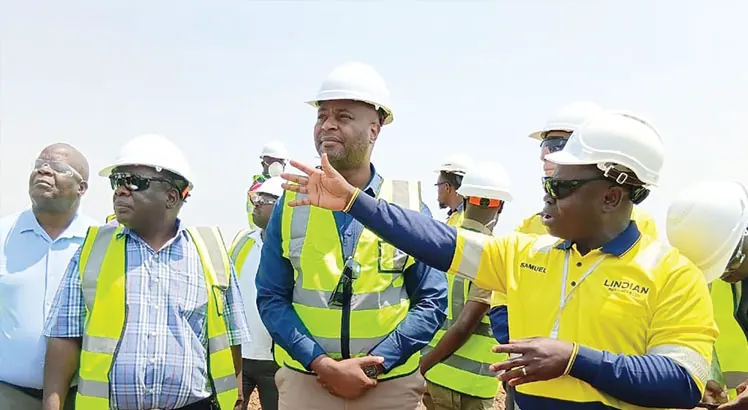
Lindian Resources Limited, a rare earths miner, has identified access to grid power as a major consideration for its expansion plans at the Kangankunde Rare Earths Project in Balaka District, Malawi. The company's executive director, Zekai Komur, stated that the expansion will increase ore production from 500,000 metric tonnes per year to about four million metric tonnes, subject to the outcome of ongoing studies and power supply.
The company's expansion plans involve a significant increase in power requirements. For stage two of the project, Lindian Resources is considering a major solar farm and 20 megawatts of Escom power. In the first phase, the processing plant will require about three megawatts of power, which will be met through a combination of grid electricity, solar power, and battery storage. This development highlights the challenges faced by the mining industry in Malawi, where reliable energy is a major constraint.
The World Bank estimates that Malawi's mining industry could require between 60 and 100 megawatts of power in the medium-term and up to 160 megawatts in the long-term. The bank also identifies reliable energy and the investment climate as major constraints to unlocking Malawi's mining potential. According to the World Bank, the sector could generate more than $30 billion in exports between 2026 and 2040 if key constraints are addressed.
Lindian Resources' expansion plans involve a five-fold increase in production, with the company targeting production of around 100,000 metric tonnes of rare earth concentrate annually by 2028 or 2029. The company has applied to upgrade the project's mining licence from medium-scale to large-scale to reflect the planned expansion. This development is expected to have a significant impact on Malawi's economy, with the project projected to generate $114 million per year over 40 years.
Minister of Mining Thoko Tembo acknowledged that electricity, transport, and the cost of doing business remain challenges for mining projects in Malawi. The government is working with mining companies to address infrastructure gaps and provide the necessary infrastructure for efficient operations. Escom has reportedly advised Lindian Resources to wait for the commissioning of the Mozambique-Malawi Power Interconnector or Mpatamanga Hydro Power Station.
The Kangankunde Mine is expected to play a significant role in diversifying the global supply chain for rare earths, reducing dependence on China and strengthening Africa's mineral sector. The United States and Europe are seeking alternative sources of rare earths, and Malawi's entry into rare earth production is expected to contribute to this effort. The mine hosts a 261 million tonne resource grading, 2.19 percent total rare earth oxides.
Lindian Resources' feasibility study report, released earlier this year, projects that the Kangankunde Mine will generate $114 million per year over 40 years. The company's expansion plans are subject to the outcome of ongoing studies and power supply. With the necessary infrastructure in place, the project is expected to have a significant impact on Malawi's economy and contribute to the growth of the country's mining sector.
Key points
- Lindian Resources Limited requires a reliable power supply to expand its Kangankunde Rare Earths Project in Malawi.
- The World Bank estimates that Malawi's mining industry could require up to 160 megawatts of power in the long-term.
- The Kangankunde Mine is projected to generate $114 million per year over 40 years.