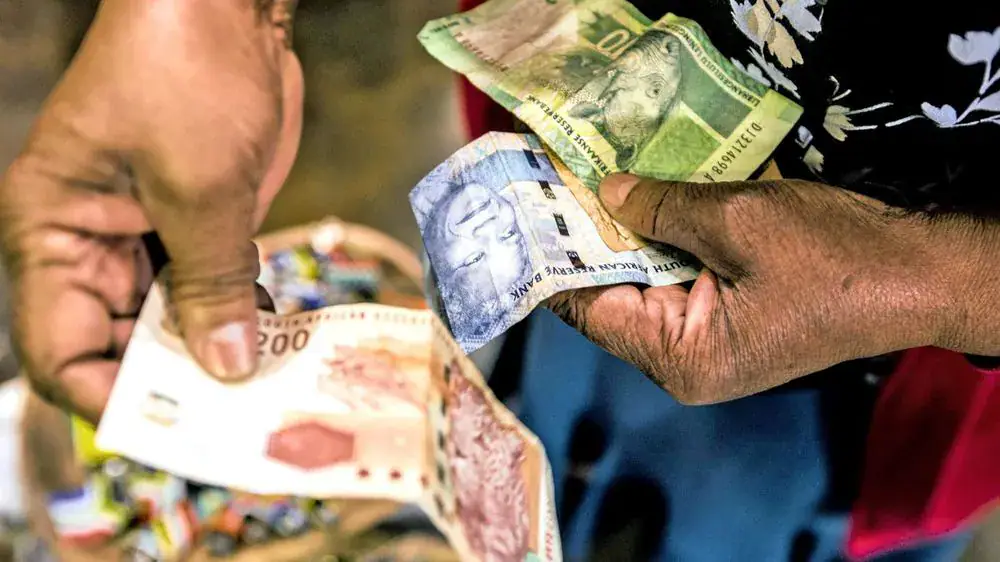
The rand stood at R16.52 to the dollar on Friday, about 0.6% firmer on the week. This recent strength is attributed to a combination of factors, including a weaker US dollar and stronger precious metals prices. Lower oil prices have also eased concerns about imported inflation. According to analysts, the rand has benefited from these favorable conditions, allowing it to hover around a one-month high.
Trading Economics described the rand as hovering around a one-month high at about R16.40 to the dollar, near its highest level since late September. The currency has been supported by a softer greenback and firmer precious metals prices. Additionally, lower oil prices have moderated expectations of a US interest rate hike in December. This has contributed to the rand's recent strength, despite a sharp sell-off on Wall Street.
Investec chief economist Annabel Bishop noted that the rand had shifted stronger to R16.50 from a week earlier. This was helped by Brent crude trading below $100 a barrel and a somewhat weaker US dollar. The rand's strength came despite a sharp sell-off on Wall Street, which was triggered by the Democrats' midterm victory and the slide in technology and artificial intelligence-related shares.
Bianca Botes, MD at Citadel Global, noted that the rand had “shrugged off Wall Street’s rout” after the Democrats' midterm victory. The rand's resilience was helped by a softer dollar and firmer bullion. The dollar was pulled two ways, with demand for safety supporting it, but the sell-off also made a December US rate hike less likely. This uncertainty gave emerging-market currencies room to hold their ground.
The sharp drop in the oil price has subdued international petroleum product prices, which would aid South Africa’s fuel prices lower and sharply reduce the chance of another interest rate hike this year. Bishop noted that most councils would need a coalition, and investors were assessing the election outcome. Coalition negotiations are likely to be crucial in determining the leadership of several municipalities.
The rand typically strengthens into year-end, Bishop said, because “the northern hemisphere winter tends to see more risk taking appetite”. While near-term uncertainty remains, Bishop expects an improved global environment for emerging markets in 2027. Lower oil prices, moderating US inflation expectations, and a less volatile US policy environment are expected to support their currencies, including the rand.
The rand's recent strength is also attributed to South Africa's “solid democratic base” and the strength of the government of national unity. Although most of the rand's direction is influenced by the international environment, local factors have also played a role. The rand is likely to make more progress as expectations of a US rate hike wane further, although this is not certain for this year.
Key points
- The rand's recent strength is attributed to a combination of factors, including a weaker US dollar, stronger precious metals prices, and lower oil prices.