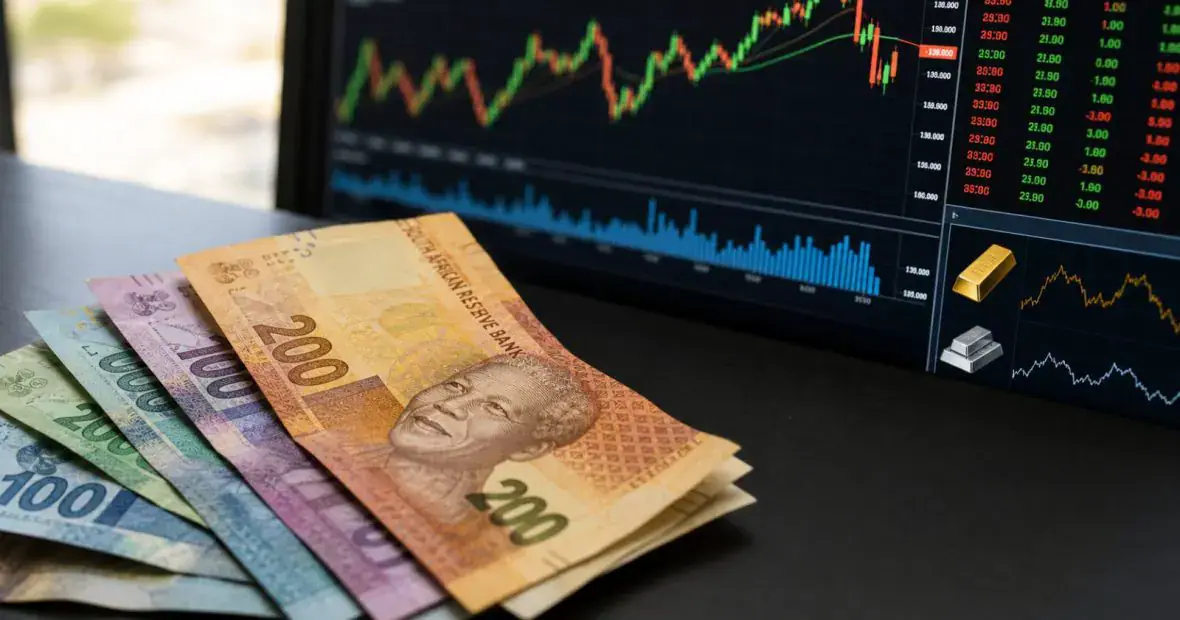
The rand's major exchange rates offer insight into the cost of imports, overseas travel, and foreign-currency payments for South African consumers and businesses. On 9 November 2026, the rand exchange rates were as follows: 1 USD = R16.5344, 1 EUR = R18.4301, 1 GBP = R22.0902, and 1 AUD = R11.3636. These rates are crucial for individuals and businesses involved in international transactions.
The prices of gold and oil also fluctuated on 9 November 2026. Gold was trading at USD 4,105.70, representing a 0.80% increase from the previous close. Meanwhile, oil prices rose to USD 89.81, marking a 1.92% increase from the previous close. These changes can have a ripple effect on the local economy, influencing the cost of living and doing business in South Africa.
A weaker rand typically increases the local cost of dollar-priced imports and fuel inputs, while a stronger rand can alleviate some of this pressure. The rand's performance is closely monitored by consumers, businesses, and policymakers, as it impacts the overall economic landscape. Market prices move continuously, and the values mentioned above serve as reference rates rather than executable dealer quotes.
The EBNewsDaily markets dashboard provides the latest refreshed values for rand exchange rates and other market indicators. This resource enables individuals and businesses to stay informed about market trends and make informed decisions about their financial transactions. The dashboard is an essential tool for anyone involved in international trade or investment.
The rand's fluctuations can have far-reaching consequences for the South African economy. A weaker rand can lead to higher import costs, which may be passed on to consumers through increased prices. On the other hand, a stronger rand can make imports cheaper, potentially leading to lower prices for consumers. Understanding these dynamics is crucial for businesses and individuals to navigate the complex world of international trade.
The South African economy is heavily influenced by global market trends, and the rand's performance is a key indicator of the country's economic health. As such, it is essential for stakeholders to closely monitor the rand's exchange rates and adjust their strategies accordingly. This may involve hedging against currency fluctuations or seeking opportunities to capitalize on a strong rand.
In conclusion, the rand exchange rates on 9 November 2026, were as follows: 1 USD = R16.5344, 1 EUR = R18.4301, 1 GBP = R22.0902, and 1 AUD = R11.3636. These rates, combined with changes in gold and oil prices, provide valuable insights into the country's economic landscape. As the global economy continues to evolve, it is crucial for stakeholders to stay informed and adapt to changing market conditions.
Key points
- The rand's major exchange rates provide an early guide to the cost of imports, overseas travel, and foreign-currency payments for South African consumers and businesses.
- A weaker rand generally raises the local cost of dollar-priced imports and fuel inputs, while a stronger rand can ease some of that pressure.
- The EBNewsDaily markets dashboard offers the latest refreshed values for rand exchange rates and other market indicators.