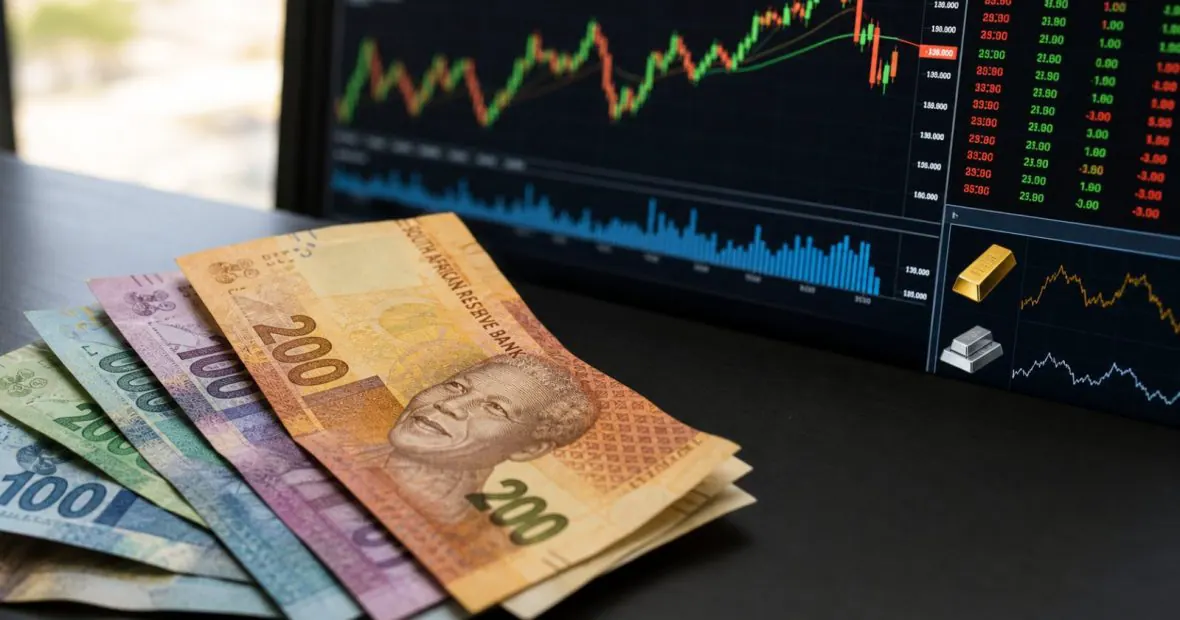
The rand's major exchange rates serve as an early indicator of the cost of imports, overseas travel, and foreign-currency payments for South African consumers and businesses. On 3 October 2026, the rand's exchange rates against major currencies were as follows: 1 USD = R16.6589, 1 EUR = R18.7491, 1 GBP = R22.0332, and 1 AUD = R11.5916. These rates are crucial for businesses and individuals involved in international transactions.
The prices of gold and oil, which significantly impact the rand's value, were also reported on 3 October 2026. Gold was trading at USD 4,162.30, representing a -0.15% change from the previous close. Meanwhile, oil was priced at USD 91.11, marking a -1.61% change from the previous close. These fluctuations can influence the rand's value and, subsequently, the cost of imports and foreign-currency payments.
A weaker rand typically increases the local cost of dollar-priced imports and fuel inputs, while a stronger rand can alleviate some of this pressure. The rand's value is subject to continuous market fluctuations, and the rates provided are reference rates rather than executable dealer quotes. As such, individuals and businesses should verify the latest rates for actual transactions.
The rand's exchange rates against major currencies have significant implications for South Africa's economy. A favorable exchange rate can boost the country's exports, while an unfavorable rate can increase the cost of imports. The current rates of 1 USD = R16.6589, 1 EUR = R18.7491, 1 GBP = R22.0332, and 1 AUD = R11.5916 will likely influence the pricing of goods and services in the country.
Market participants can access the latest refreshed values on the EBNewsDaily markets dashboard. This platform provides up-to-date information on various market indicators, including exchange rates, gold prices, and oil prices. By staying informed about market developments, businesses and individuals can make more informed decisions about their international transactions.
The publication of rand exchange rates and other market indicators is crucial for promoting transparency and facilitating informed decision-making. EBNewsDaily's reporting on these topics helps to ensure that South African consumers and businesses have access to reliable and timely information about market trends and developments.
In related news, various economic developments have been reported recently, including Eskom's load reduction efforts and the launch of a business council between Egypt and South Africa to deepen trade. These events highlight the complexities of the current economic landscape and the need for stakeholders to stay informed about market trends and developments.
Key points
- The rand's exchange rates against major currencies serve as an early indicator of the cost of imports and foreign-currency payments.
- The prices of gold and oil significantly impact the rand's value and, subsequently, the cost of imports and foreign-currency payments.
- A weaker rand typically increases the local cost of dollar-priced imports and fuel inputs, while a stronger rand can alleviate some of this pressure.