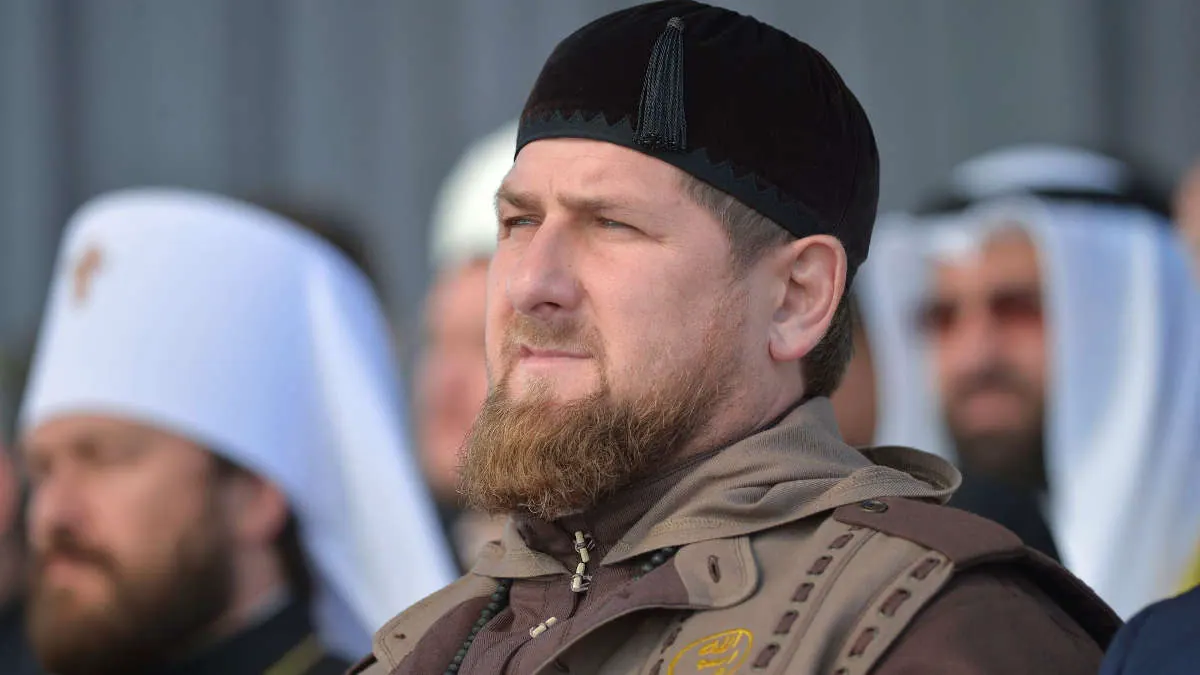
Ramzan Kadyrov has secured a fifth term as the head of the Russian republic of Chechnya, winning 99.85% of the vote. According to the Russian Central Election Commission, all ballots have been counted, confirming Kadyrov's victory. This is his best personal score since taking office in 2007. Kadyrov's election was part of a three-day voting period that concluded on September 20, 2026.
The election was held concurrently with Russia's legislative elections. Kadyrov faced two official opponents: Ismail Denilkhanov, president of the Chechen Public Chamber and candidate for the Just Russia party, and Khalid Nakaev, a communist regional deputy. They garnered 0.05% of the vote each. Analysts had predicted the outcome, suggesting that Denilkhanov and Nakaev's candidacies were more of a formality than a genuine challenge.
Kadyrov's previous scores were 99.7% in 2021 and 97.94% in 2016, when he was first directly elected. Before that, he was reappointed in 2011 through a unanimous vote by the local parliament. According to Caucasian Knot, the turnout in the capital city of Grozny reached 85.24% after the first two days of voting.
Since the introduction of direct voting in 2016, no opponent of Kadyrov has surpassed the 5% mark. In 2016, his competitors received between 0.53% and 0.84% of the vote, while in 2021, they garnered less than 0.4% combined. Kadyrov's long-standing relationship with Russian President Vladimir Putin has been a significant factor in his continued leadership.
Putin personally supported Kadyrov's candidacy during a meeting at the Kremlin in April 2026, expressing hope that the people of Chechnya would reelect him. Since his father's appointment as head of the region in 2000, Kadyrov has been one of the Kremlin's most loyal allies. He provides Moscow with his personal military forces, deployed in Ukraine since 2022, and diplomatic networks in the Middle East.
In return for his loyalty, Chechnya enjoys significant autonomy and substantial financial transfers from the federal government. Human Rights Watch has criticized Kadyrov's rule as repressive, and his reappointment in 2021 was seen as an extension of his authoritarian power. Kadyrov's new term will last until 2031, unless there are changes in the political landscape in Moscow.
The electoral process in Chechnya has raised concerns about the lack of genuine competition and the region's autonomy. Despite this, Kadyrov's victory is seen as a continuation of his long-standing relationship with the Kremlin. His leadership has significant implications for the region and its relations with Moscow.
Key points
- Ramzan Kadyrov won a fifth term as head of Chechnya with 99.85% of the vote.
- Kadyrov's victory was widely expected, with analysts describing his opponents as largely symbolic.
- Kadyrov's leadership has been marked by a close relationship with Vladimir Putin and concerns about human rights.