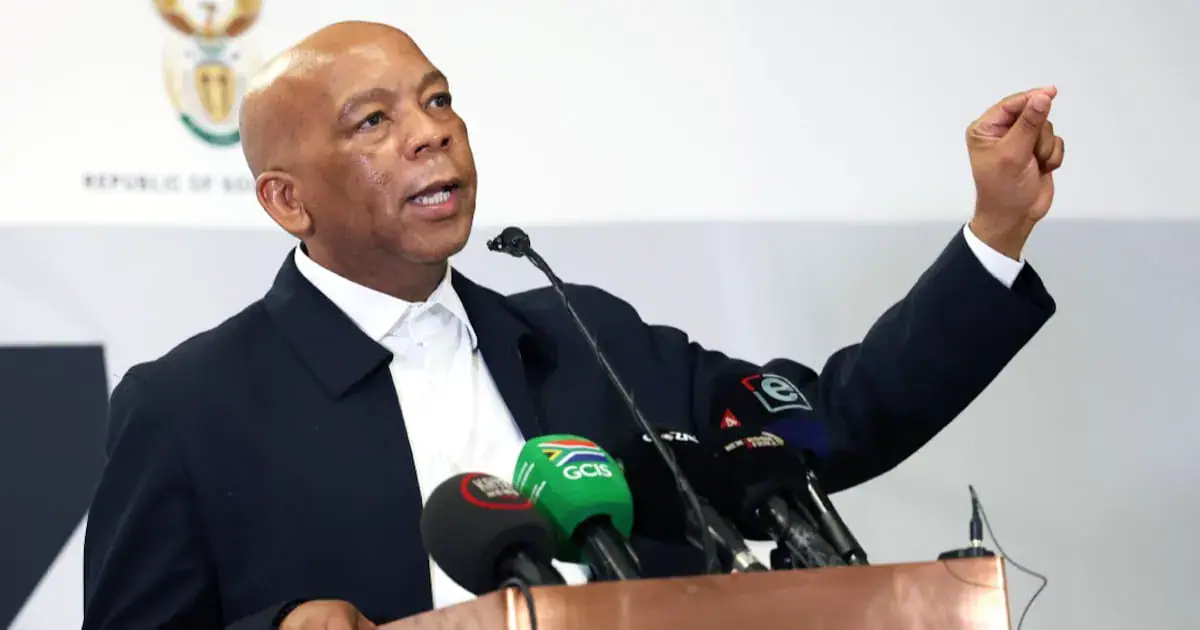
South Africa's Electricity and Energy Minister Kgosientsho Ramokgopa has emphasised the need for the African region to expand its electricity capacity and make power affordable to drive industrialisation. Speaking at the Kgalema Motlanthe Foundation's Drakensberg Inclusive Growth Forum, Ramokgopa highlighted the region's rich mineral resources and renewable energy potential, which could support manufacturing. However, he noted that the region lacked sufficient electricity infrastructure to turn these advantages into economic growth.
Ramokgopa argued that electricity has historically been treated as an instrument for private accumulation rather than a public good. He believes that the state has a central role to play in using energy to drive development and industrialisation. The minister pointed out that Africa's energy deficit remained a significant obstacle, with approximately 600 million people on the continent lacking access to electricity.
The growing demand for data centres and artificial intelligence presents an opportunity for South Africa to attract investment, according to Ramokgopa. He cited the country's undersea cable connections, electricity generation potential, and renewable energy resources as advantages. However, the region would struggle to benefit from this opportunity unless it could supply reliable and affordable electricity.
Ramokgopa also called for more mineral processing to take place in Africa, as the region holds substantial reserves of critical minerals needed for technologies such as solar panels, wind turbines, and batteries. However, high electricity costs make local processing less competitive. He stressed that expanding electricity transmission infrastructure and regional interconnectors was essential to move surplus power to neighbouring countries and support regional energy security.
South Africa plans to add 102GW of new generation capacity, with 60% expected to come from renewable sources, according to Ramokgopa. He emphasised that regional co-operation and investment in electricity infrastructure would be necessary to turn the continent's resources into industrial development and jobs. This would require a concerted effort from governments, private sector investors, and other stakeholders.
Ramokgopa's comments come as the African region seeks to address its energy challenges and unlock economic growth. The minister's call for investment in electricity infrastructure is likely to resonate with policymakers, investors, and industry stakeholders. As the region moves forward, it will be crucial to balance the need for reliable and affordable electricity with the imperative to transition to a more sustainable and environmentally friendly energy mix.
Key points
- Africa's energy deficit remains a significant obstacle, with approximately 600 million people lacking access to electricity.
- South Africa plans to add 102GW of new generation capacity, with 60% expected to come from renewable sources.
- Regional co-operation and investment in electricity infrastructure are necessary to turn the continent's resources into industrial development and jobs.