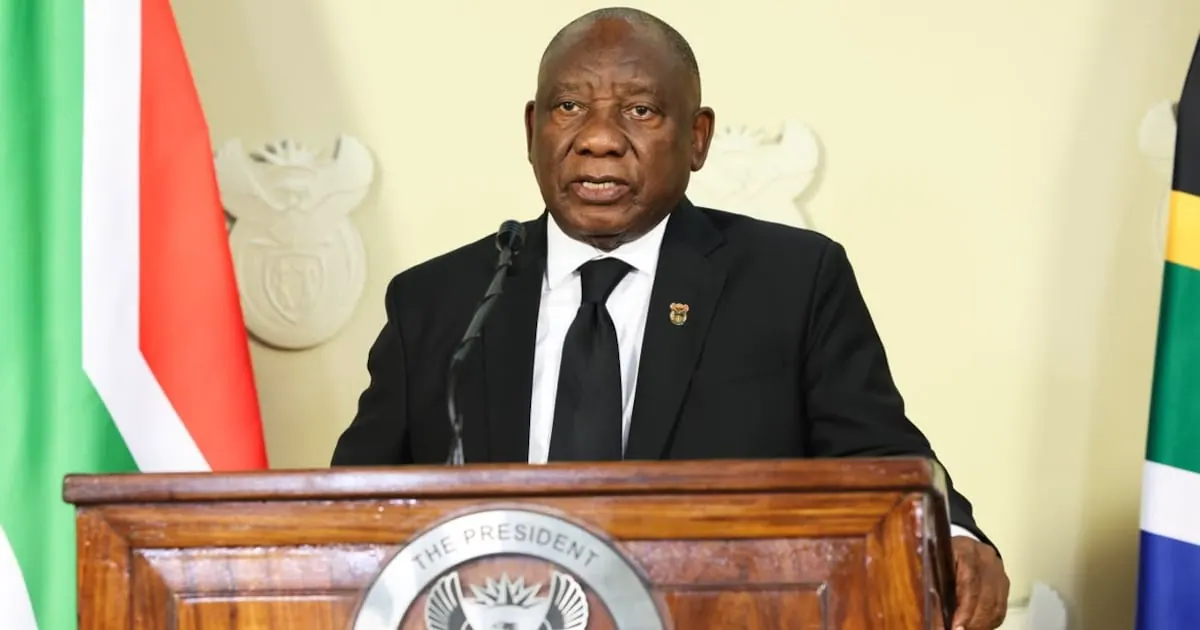
President Cyril Ramaphosa addressed the nation on Tuesday night, emphasizing that the government's response to gender-based violence and femicide has not been enough to prevent women from being killed. He announced four immediate measures to intensify the fight against this scourge. Ramaphosa's address came amid renewed scrutiny of the government's response since GBV and femicide were classified as a national disaster in 2025.
Ramaphosa said South Africa has held summits, introduced legislation, established new institutions, and allocated resources to the fight against GBV, but these efforts have still failed to make women safe. He noted that seven years ago, in the same month, he stood before the nation to speak about this same crisis. The president emphasized that the names of the victims are new, but the crime is not. His address was centered on implementation rather than another policy framework.
The first measure announced by Ramaphosa involves a national case-recovery operation to audit unresolved murders, attempted murders, rapes, and serious sexual offenses involving women and children. The ministers of police and justice, working with the SAPS and National Prosecuting Authority (NPA), must conduct this audit within 60 days. The audit must identify the age and number of unresolved cases, those awaiting forensic evidence, cases in which suspects have been identified but not arrested, and cases in which investigative or prosecutorial action has been delayed.
The second measure targets forensic backlogs, with police and forensic authorities required to produce a funded plan within 60 days to reduce the backlog and establish turnaround standards for priority GBV and femicide cases. Forensic samples relating to the rape or murder of women and children are to be ring-fenced for urgent processing, with quarterly public reporting. Ramaphosa also shifted responsibility to municipalities, ordering every municipality to conduct a women's safety audit covering broken streetlights, overgrown public spaces, abandoned buildings, unsafe transport routes, and poorly secured parks.
Municipalities and provinces must also intensify enforcement against unlicensed liquor outlets and establishments operating outside permitted hours. A fourth measure will target alcohol-related violence, with the trade, industry, and competition minister working with other ministers to submit a legislative and enforcement package to cabinet within 60 days. Ramaphosa stressed that alcohol does not cause GBV or excuse perpetrators but said harmful alcohol use is a significant aggravating factor in interpersonal violence.
The interministerial committee and national council will monitor the measures, with the first consolidated report due within 90 days and quarterly reports thereafter. Ramaphosa acknowledged criticism that the problem is now less about a shortage of plans than implementation. He emphasized that institutions and programs mean little if they fail when women need them. The president said women reporting abuse must not be turned away from police stations, protection orders must not become "merely a piece of paper," and forensic samples must not sit unprocessed while perpetrators remain free.
The immediate crisis in Ekurhuleni has put accountability under renewed scrutiny, with 11 women's bodies found in the area since July, according to Ramaphosa. A cabinet statement issued earlier on Tuesday put the number at 13. Four suspects have been arrested in connection with three murders and remain in custody after being denied bail. Police have identified people of interest in other cases and collected DNA, blood, clothing, and cellphone evidence.
Key points
- President Ramaphosa has announced four immediate measures to combat GBV, including a national case-recovery operation and a plan to reduce forensic backlogs.
- The government has allocated resources to fight GBV, but the president acknowledged that current efforts have been insufficient.
- The interministerial committee and national council will monitor the measures, with the first consolidated report due within 90 days.