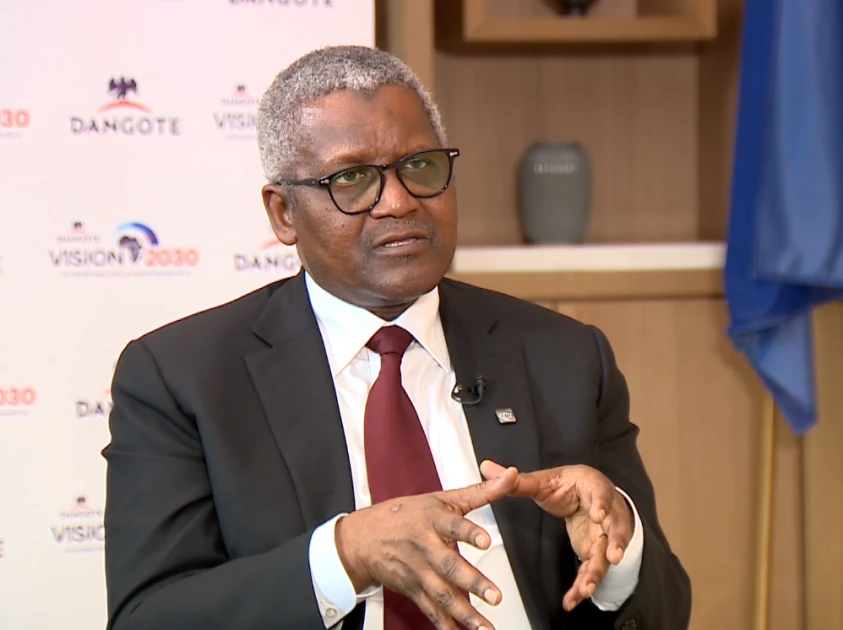
Businessman Aliko Dangote, President of Dangote Group, has explained how the idea for the Ksh.2 trillion refinery planned for Lamu came about. Discussions on the project began during a meeting in Nairobi in April, with the group initially considering Tanga in Tanzania as the preferred location due to a planned pipeline connecting Uganda to the Tanzanian port. The meeting was an invitation by the Managing Director of the African Finance Corporation, where President William Ruto also wanted to discuss fertilizer supply.
Dangote revealed that Lamu was preferred due to its unique natural qualities, including enough water, sufficient sea depth, and good land. The refinery project was subsequently discussed, with Dangote committing his group to the investment after determining that the project was viable. He noted that his group can make commitments on behalf of the board if the project seems real and good.
The refinery is expected to have a capacity of 700,000 barrels per day and produce over 100 million litres of petrol, diesel, and aviation fuel daily. It will supply refined petroleum products to Kenya and neighbouring countries, including Ethiopia, South Sudan, Uganda, Tanzania, Rwanda, Burundi, and the Democratic Republic of Congo. This project will become Dangote Group's biggest refining investment outside Nigeria.
President Ruto is expected to break ground for the refinery on September 30, with the project projected to take up to three years to complete. The refinery will also have a 1,000-megawatt power plant, with about 500 megawatts expected to be available for sale to the Kenyan government. This will significantly boost Kenya's energy sector.
However, the project has faced opposition from some residents in Lamu, with over 130 residents of Chandavai moving to court to challenge the development over alleged land acquisition and potential displacement. The residents have raised concerns over compensation and resettlement as construction preparations get underway.
Dangote has dismissed concerns over the court order halting the Lamu oil refinery construction, stating that such challenges are normal in Africa. Despite the opposition, the project is expected to drive economic growth and create jobs in the region.
The Ksh.2 trillion refinery project is a significant investment in Kenya's energy sector, and its completion is expected to have a positive impact on the country's economy. The project will also enhance Kenya's position as a major player in the regional energy market.
Key points
- The Dangote Group chose Lamu for the refinery project due to its natural qualities, including sufficient water and sea depth.
- The refinery is expected to produce over 100 million litres of petrol, diesel, and aviation fuel daily.
- The project has faced opposition from some residents in Lamu over land acquisition and potential displacement.