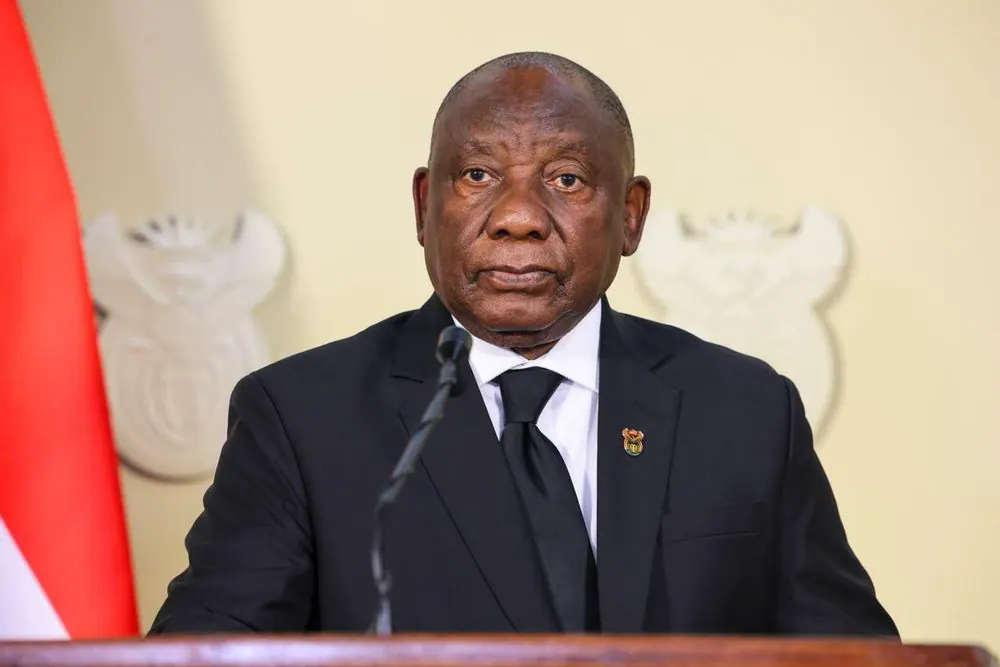
President Cyril Ramaphosa has ordered a national review of stalled GBV cases, a plan to clear forensic backlogs, and municipal safety audits in response to the recent killings of women in Ekurhuleni. The measures aim to strengthen South Africa's response to gender-based violence and femicide. Ramaphosa acknowledged that government efforts to prevent violence against women had not been sufficient, calling for urgent action to improve investigations and address forensic backlogs.
The announcement comes after 11 women's bodies were found in Ekurhuleni since July, with the latest victim discovered in Springs on Sunday. Ramaphosa paid tribute to women and girls killed in other parts of the country, including 10-year-old Octavia Swarts from Kraaifontein and 15-year-old Amogelang Motshwaedi from Dinokana village. He acknowledged that existing interventions had not done enough to prevent women from being killed, protect them in their homes and public spaces, or change the attitudes that enable abuse.
The president said the killings highlighted the continuing failure to ensure women's safety, despite years of interventions and commitments to address the crisis. He noted that seven years ago, he stood before the nation to speak about this same crisis, yet the reality of violence against women persists. Ramaphosa emphasized that as President of the Republic of South Africa, he acknowledges the government's shortcomings and vowed to do better.
The Ekurhuleni investigations have been intensified, with a specialised multidisciplinary investigation elevated to national level under the coordination of the Deputy National Commissioner for Detective Services. The investigation brings together detectives, Crime Intelligence, forensic specialists, investigative psychologists, and digital investigators. Arrests have already been made in connection with some of the murders, and police have identified persons of interest in other cases.
Ramaphosa assured grieving families that the cases would receive continued attention, and appealed to the public to provide information that could assist investigators. He stressed that there was no requirement to wait 24 hours before reporting someone missing, and that hours, information, photographs, and vehicle registration numbers matter. The president also announced an increase in visible policing in Ekurhuleni, which would continue for as long as necessary.
However, Ramaphosa warned that policing and arrests alone would not resolve the crisis. He emphasized that the task must be to prevent the violence before it happens. To address weaknesses in the criminal justice system, Ramaphosa announced four immediate measures, including a national case-recovery operation targeting unresolved murders, attempted murders, rapes, and serious sexual offences involving women and children.
The measures also include reducing forensic backlogs, municipalities conducting women's safety audits to identify high-risk areas and infrastructure, and intensifying enforcement of existing liquor laws and by-laws. Provincial and municipal authorities have been instructed to address the most urgent hazards within 90 days of the completion of the audits or include them in a funded implementation plan with clear completion dates. The findings and progress must be made public.
Key points
- President Cyril Ramaphosa announces a national review of stalled GBV cases and a plan to clear forensic backlogs.
- The president vows to prevent violence against women before it happens, emphasizing that policing and arrests alone will not resolve the crisis.
- Ramaphosa announces four immediate measures to address weaknesses in the criminal justice system and strengthen efforts to prevent gender-based violence.