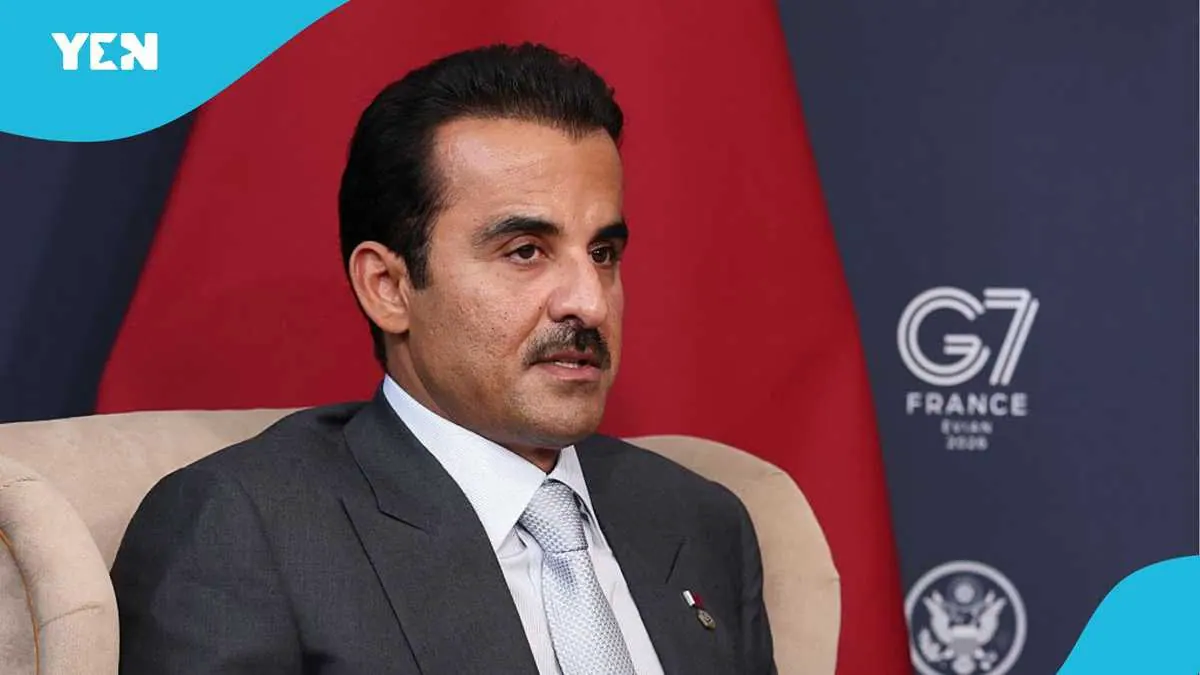
Qatar has introduced new regulations requiring foreign workers to meet a minimum monthly income threshold to sponsor a spouse or children. The rules, which differentiate between government and private sector employees, have significant implications for workers from Ghana, a country with a sizeable workforce in Qatar. According to the new regulations, foreign employees in Qatar's government or semi-government institutions must have an officially classified senior profession job and meet specific income requirements.
Government and semi-government employees must have a job classified as a senior profession, backed by an employment contract or formal letter from the employer. Additionally, they must either receive employer-provided family housing or earn at least QAR 10,000 a month as stated in their contract. This threshold is designed to ensure that employees can support their dependents while living in Qatar.
Private sector expatriates, including many Ghanaians working in construction, hospitality, and domestic work, face different rules. Workers whose employers do not provide housing must earn at least QAR 10,000 monthly to qualify for family sponsorship. However, if the employer supplies a family housing facility, the requirement drops to QAR 6,000 a month. These rules create a two-tier system, where workers with similar jobs may have different prospects for bringing their families to Qatar.
Beyond the salary conditions, Qatar has also set rules for the dependents themselves. Any spouse or child being sponsored must carry valid health insurance covering their entire stay in the country. Sons can only be sponsored up to the age of 25, while daughters qualify only if they remain unmarried. These regulations aim to ensure that dependents are properly supported and insured while living in Qatar.
The new rules have significant implications for Ghanaians working in Qatar, particularly those in lower-paid private sector jobs where employer-provided housing is not guaranteed. For workers without a housing allowance, the QAR 10,000 monthly benchmark could put family reunification out of reach. In contrast, those whose contracts include housing face a comparatively easier QAR 6,000 threshold.
The announcement comes amid a busy stretch of migration-related news affecting Ghanaians. Recent reports have highlighted Canada's offer of a direct path for Ghanaian workers to rural towns, the UK's expanded university visa list for Ghanaian graduates, and Germany's job opportunities. These developments demonstrate the evolving landscape of international migration and employment opportunities.
The new family-sponsorship income thresholds will take effect, but no specific date has been given. Affected Ghanaian workers may need to confirm details directly with their employers or Qatari immigration authorities. Additionally, Qatar is ending a separate policy of automatically extending entry visas by one month at no cost, with normal immigration processing set to resume from June 7, 2026.
Key points
- The new regulations require foreign workers to meet a minimum monthly income threshold to sponsor a spouse or children in Qatar.
- The rules differentiate between government and private sector employees, with varying income requirements.
- The regulations have significant implications for Ghanaians working in Qatar, particularly those in lower-paid private sector jobs.