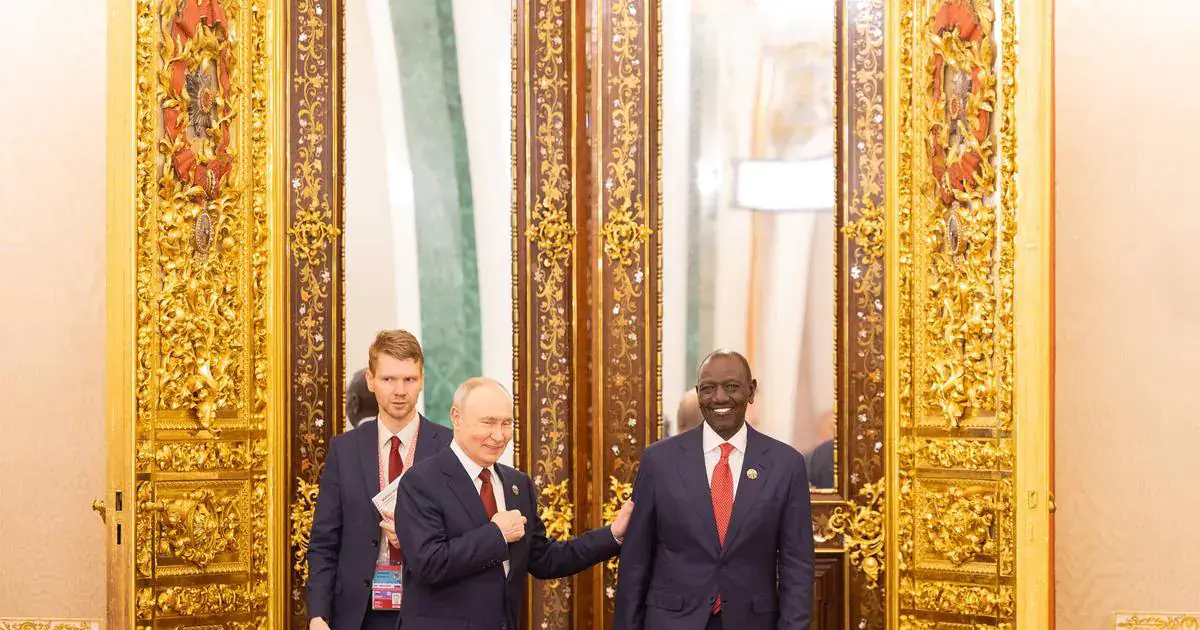
Russian President Vladimir Putin's gesture of offering ice cream to African presidents during the third Russia-Africa summit in Moscow has turned into an unexpected diplomatic and public relations talking point. The incident, captured during an interaction with African leaders, quickly ignited discussions across social media, with people expressing sharply contrasting views about its symbolism, timing, and message. African Heads of State, including Kenya's President William Ruto, were seen lining up to pick their ice cream gifts.
The seemingly innocent gesture has sparked debate over whether it was an appropriate diplomatic gesture or an awkward episode that raised questions about how African leaders are received on the international stage. While some interpreted the offer as a warm display of friendship and Russian hospitality, others questioned the optics of the moment. The incident has opened up a wider conversation about diplomacy, respect, power relations, and the symbolism of seemingly ordinary gestures when world leaders meet.
The incident has also reignited an important conversation about the need for African presidents to approach international summits as equal partners rather than leaders arriving with proverbial begging bowls. Some commentators opined that the simple act of lining up for treats overshadowed the serious socioeconomic and political challenges facing citizens of the various African countries. The online backlash extended to the dignity of the offices held by those seen queuing for the treat, with some users noting that their actions on the global stage are demeaning.
President William Ruto's previous remarks expressing his displeasure at African Presidents being paraded in foreign capitals and sometimes mistreated resurfaced after the video of African Presidents queuing for Putin's ice cream. Ruto had stated that it is not intelligent for 54 African leaders to go and sit before one gentleman from another place and be mistreated. One user on X revisited Ruto's remarks, writing that he not only got summoned for a meeting among other African heads of states but also lined up for ice cream.
Amid the criticism, one thing is clear: the continent is endowed with vast natural resources, a growing consumer market, and significant geopolitical influence. African leaders have an opportunity to negotiate from a position of strength by presenting clear economic interests, demanding mutually beneficial partnerships, and holding global powers accountable to commitments. The incident has highlighted the need for African leaders to command respect and demand meaningful partnerships.
The Russia-Africa summit, which brought together 21 African presidents and 48 countries, resulted in billions of dollars in MOUs. However, the ice cream incident has become a lasting memory for many. Some netizens stated that the optics of the moment were painful, projecting subservience rather than sovereign equality. Others added that Africa needs leaders who command respect, demand meaningful partnerships, and fight for Africa's interests.
The debate is expected to continue, with many calling for African leaders to approach international summits with dignity and respect. The incident has also highlighted the need for African leaders to be mindful of their actions on the global stage and to prioritize the interests of their citizens.
Key points
- The incident has sparked debate about diplomacy, respect, and power relations between African leaders and global powers.
- African leaders have an opportunity to negotiate from a position of strength by presenting clear economic interests and demanding mutually beneficial partnerships.
- The incident has highlighted the need for African leaders to command respect and demand meaningful partnerships on the global stage.