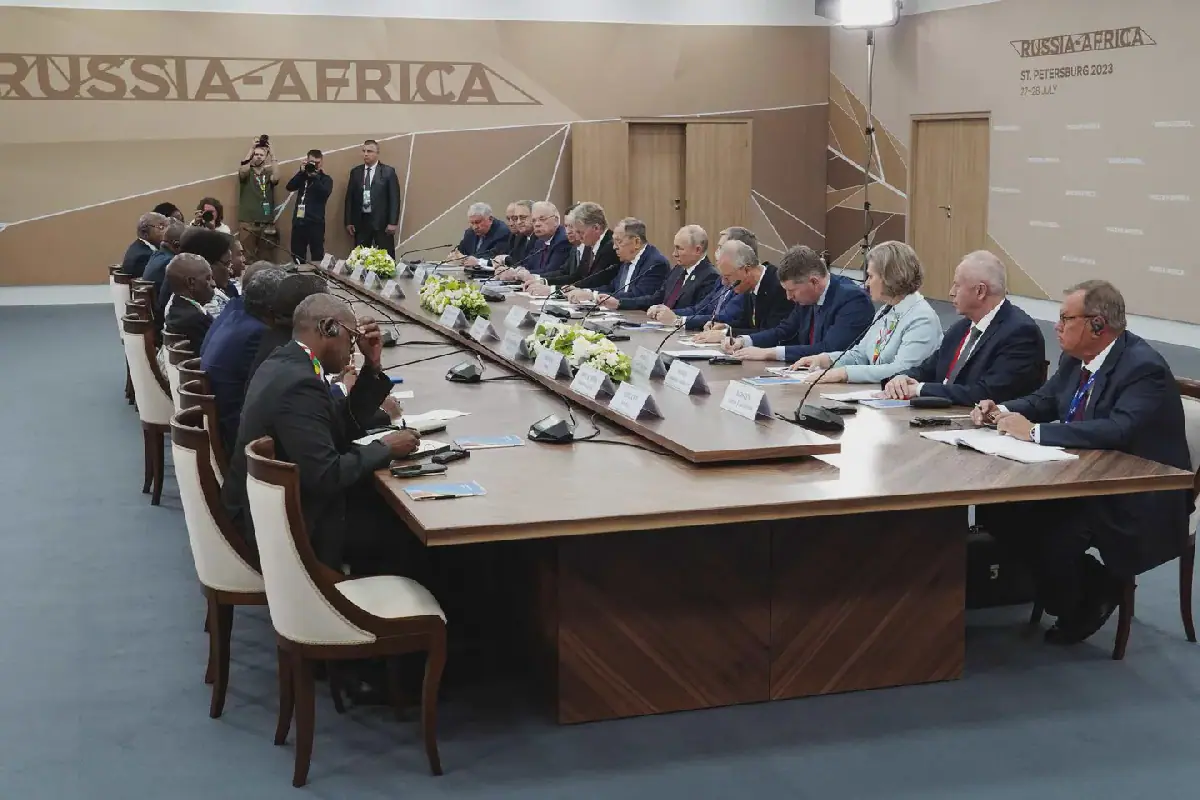
The Russia-Africa Summit, convened in Moscow, is being co-chaired by Russian President Vladimir Putin and Burundian President Evariste Ndayishimiye, who is the current chair of the African Union. The summit brings together 22 heads of state and delegations from 48 of Africa's 54 countries. The event aims to strengthen ties between Russia and African nations, with a focus on cooperation in various sectors.
According to Kremlin foreign policy aide Yury Ushakov, the summit will address central issues such as trade, investment, energy, agriculture, infrastructure, food security, science, technology, education, and humanitarian cooperation. Russia and African countries are seeking to build on their existing relationships, with trade between the two exceeding $27 billion in 2025, up from around $16.8 billion in 2019.
The summit's agenda includes discussions on transport and logistics, with both sides exploring ways to expand trade routes, improve connections, and increase the range of goods exchanged. Participants are expected to adopt a final declaration and a Russia-Africa Partnership Forum action plan covering 2027-2029. This plan aims to provide a framework for future cooperation and collaboration between Russia and African nations.
A separate declaration on cooperation in the civilian use of artificial intelligence is also planned, along with intergovernmental and interagency agreements in several sectors. These agreements are expected to enhance cooperation in areas such as education, technology, and humanitarian assistance. The summit provides a platform for Russia and African countries to engage in meaningful dialogue and strengthen their partnerships.
The Russia-Africa Summit is a significant event that highlights the growing importance of Russia's relationships with African nations. With 22 heads of state and delegations from 48 countries in attendance, the summit demonstrates the continent's interest in engaging with Russia on various issues. The event is expected to yield concrete outcomes and commitments that will shape the future of Russia-Africa relations.
According to Ushakov, the summit's focus on education, technology, and new trade routes reflects the evolving priorities of Russia's engagement with Africa. The two-day summit provides an opportunity for leaders to discuss pressing issues and explore new opportunities for cooperation. The adoption of a final declaration and action plan is expected to provide a roadmap for future collaboration.
The Russia-Africa Summit is a testament to Russia's commitment to strengthening its relationships with African nations. With a focus on cooperation in areas such as grain supplies, nuclear energy, and education, the summit aims to build on existing ties and explore new opportunities for collaboration. The event's outcomes are expected to have a lasting impact on Russia-Africa relations and contribute to the continent's development.
Key points
- Russia and African countries are seeking to expand cooperation in areas including grain supplies, nuclear energy, education, and new trade routes.