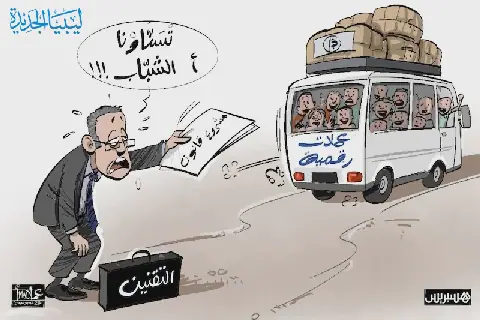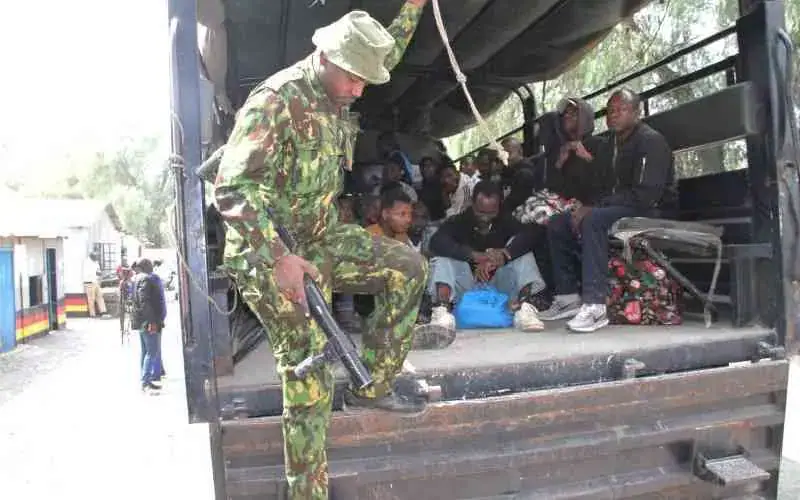
The Kenyan government is under scrutiny following allegations that some officials colluded with recruitment agencies and Russian government representatives to facilitate the fraudulent recruitment of over 1,000 Kenyan men into the Russian military. According to the United States Department of State's 2026 Trafficking in Persons Report, the recruits were promised lucrative employment in construction and security but ended up being drawn into Russia's war against Ukraine. This has raised concerns about corruption and abuse of public office in Kenya.
The report's revelations have sparked outrage, with Prime Cabinet Secretary Musalia Mudavadi informing Parliament that government records identified 354 Kenyans connected to the conflict. Of these, 84 were reported killed or missing in action, 77 remained on the frontlines, 38 were in military camps, and 34 were hospitalized. However, families have disputed the government's figures, claiming that as many as 841 Kenyans remain unaccounted for. The discrepancies have sparked calls for urgent clarification.
The human trafficking allegations have exposed a potentially more sinister dimension of corruption in Kenya, where public authority is allegedly used to facilitate the movement of unsuspecting Kenyans into dangerous foreign conflicts. This has raised concerns about the exploitation of human lives and the need for the government to establish the whereabouts of those missing, secure the return of survivors, and assist families seeking information about those reported dead or missing.
The US report also raises concerns about recruitment agencies reportedly owned by government employees and allegedly implicated in trafficking offenses. It notes that the government did not report taking action against some of these agencies, exposing serious weaknesses in institutional oversight and potential conflicts of interest within public service. The government has been urged to strengthen oversight of overseas recruitment agencies, immigration clearances, and employment contracts.
To address the issue, public officers implicated by credible evidence must face independent investigations, suspension where legally justified, and prosecution where sufficient evidence exists. The Ethics and Anti-Corruption Commission, Directorate of Criminal Investigations, and Office of the Director of Public Prosecutions must be allowed to perform their responsibilities without political interference. Whistleblowers must also receive meaningful protection to encourage reporting of wrongdoing.
The government has been urged to review existing legislation to adequately punish public officers who knowingly facilitate human trafficking. Although trafficking does not automatically constitute treason under Kenyan law, deliberate collaboration with foreign interests to expose citizens to exploitation warrants consideration of aggravated criminal penalties. Asset recovery, confiscation of criminal proceeds, and disqualification from public office should accompany appropriate criminal sanctions.
Ultimately, Kenya must take decisive action to dismantle networks operating within government institutions and prevent further exploitation of its citizens. The government must prioritize the protection of human lives and national security, and ensure that those responsible for abuse of public office are held accountable. By doing so, Kenya can restore public trust and demonstrate its commitment to fighting corruption and human trafficking.
Key points
- The Kenyan government must take decisive action against state officials linked to human trafficking.
- The government must establish the whereabouts of Kenyans missing in the conflict and assist families seeking information.
- Existing legislation must be reviewed to adequately punish public officers who facilitate human trafficking.