Member of Parliament for Pujehun District, Hon. Hawa Akpajie Kallon, has embarked on a large-scale rice farming project in Senehun Town, Kamajei Chiefdom, Moyamba District. The project, spanning 256 hectares, aims to support President Julius Maada Bio's Feed Salone initiative, which seeks to increase local food production and reduce dependence on imported rice. This agricultural investment is expected to provide opportunities for farmers and community members while contributing to the availability of locally produced rice for households.
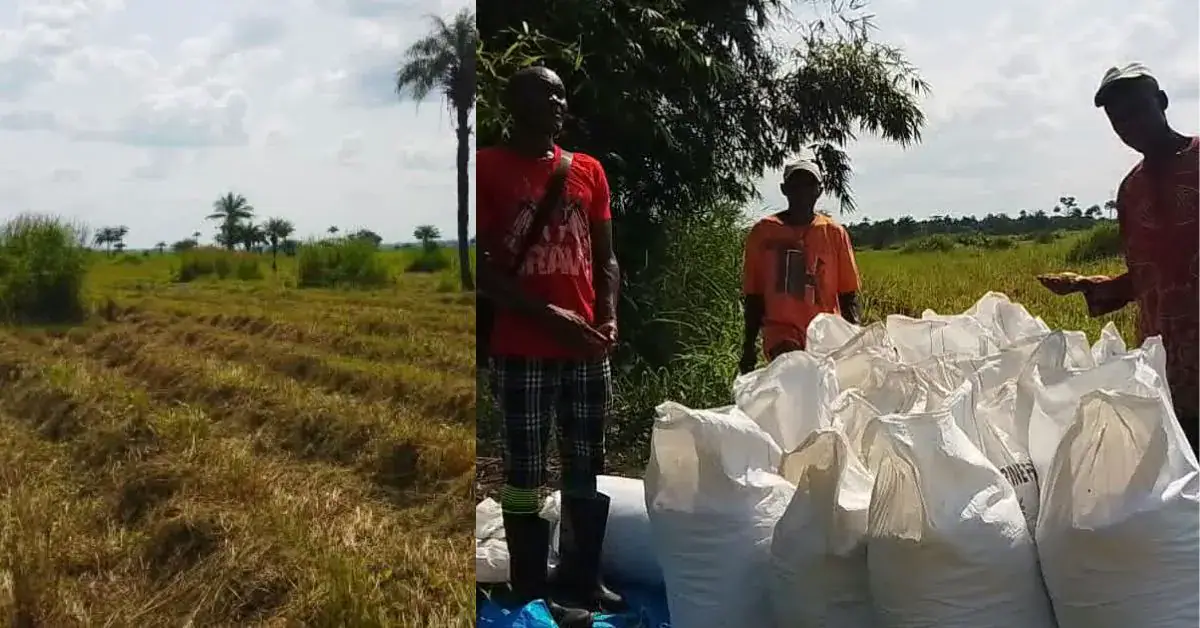
The rice farm, located in the Bolie area of Senehun Kamajei Chiefdom, is currently undergoing harvesting. Hon. Kallon's initiative forms part of her personal contribution to the government's drive to strengthen food self-sufficiency across Sierra Leone. The project highlights her commitment to promoting local food production, boosting agricultural productivity, and contributing to national food security. By investing in agriculture, Hon. Kallon aims to support food production and improve the livelihoods of her constituents.
However, this year's harvesting exercise has been affected by the unavailability of adequate harvesting machinery. According to farm management, the project recorded an encouraging harvest of 984 bags of plan camp rice last year when harvesting machinery was made available on time. The delay in securing a harvester this season, coupled with the early drying of the rice, has created difficulties for the harvesting process. Farm Manager Patrick Palmer expressed disappointment over the challenges encountered during this year's harvesting season.
Palmer noted that last year's harvesting was more successful because the necessary machinery was made available at the appropriate time, allowing the farm to harvest its rice effectively. He expressed hope that the farm would still record a reasonable harvest and appealed for improved access to agricultural machinery to prevent similar difficulties in subsequent farming seasons. The challenges highlight the need for stronger government support in agricultural mechanisation, particularly in rural communities.
Despite these challenges, Hon. Hawa Akpajie Kallon has reaffirmed her determination to sustain the agricultural initiative. She assured her constituents that she will not relent in her efforts to support food production and improve the livelihoods of her people. Hon. Kallon expressed her ambition to contribute significantly towards feeding Pujehun District through the proceeds of her agricultural investment, while also supporting the broader national objectives of the Feed Salone initiative.
Beneficiary Mariama Sandy noted that the previous year's harvest had made a positive difference in her household, particularly in supporting her children's education. She disclosed that proceeds from the previous harvest enabled her to pay her children's school fees, describing the agricultural initiative as a meaningful intervention that provides practical economic benefits to ordinary people. Sandy, however, emphasised that large-scale agriculture requires substantial financial investment, particularly in the area of mechanisation.
The agricultural initiative reflects the growing importance of private and individual investments in agriculture, particularly at a time when Sierra Leone is seeking sustainable ways to increase domestic rice production and strengthen food security. Hon. Kallon's commitment to agriculture remains strong, and she intends to continue investing in the sector as part of her contribution to national development and the welfare of her constituents.
Key points
- Pujehun MP Hawa Kallon cultivates 256 hectares of rice farmland to support President Julius Maada Bio's Feed Salone initiative.
- The project faces challenges due to the unavailability of adequate harvesting machinery.
- Hon. Kallon reaffirms her determination to sustain the agricultural initiative and support food production in her district.