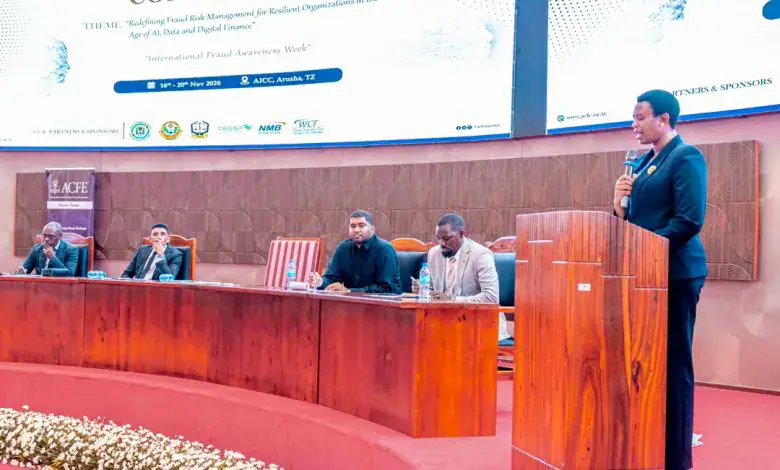
The Tanzanian government has urged public and private institutions to invest in modern technology to detect and prevent digital fraud. This call was made by Deputy Minister of the President's Office for Public Service and Good Governance, Regina Qwaray, while opening the Annual Conference of the Association of Certified Fraud Examiners Tanzania (ACFE Tanzania) in Arusha. The conference discussed ways to combat fraud in the era of artificial intelligence, big data, and digital finance.
According to Regina, technological advancements have brought opportunities for improving service delivery, transparency, and efficiency in institutions, but have also introduced new risks of fraud, including the use of artificial intelligence to create fake identities, voice and image forgery, and conduct illegal transactions. She emphasized that institutions need to move away from relying on outdated control systems and invest in modern systems that can detect fraud indicators in a timely manner and take swift action to prevent harm.
The government is strengthening transparency, accountability, and integrity through the National Anti-Corruption Strategy and Implementation Plan (NACSAP IV), Regina said, adding that every public servant has a duty to protect national resources and prevent the misuse of power and public funds. The Deputy Minister also urged institutions to adopt a proactive approach to preventing and detecting fraud, rather than just reacting to it after it has occurred.
ACFE Tanzania President, Ali Mabrouk Juma, said the association aims to increase the capacity of local professionals to prevent, detect, and investigate fraud in line with international standards, while collaborating with other institutions without interfering with their legal mandates. The association is also involved in preparing a National Strategy for Preventing Fraud and recommending the recognition and continuation of fraud examiner cadres in the public and private sectors.
The Acting Chief Internal Auditor of the Government, Ministry of Finance, Mhandisi Kenneth Nindie, said the government has taken steps to strengthen fraud risk management, including issuing the Fraud Risk Management Guidelines in Public Institutions in 2023 and developing the Government Electronic Risk Management Information System (GERMIS). This system will enable institutions to identify and monitor risks in real-time.
The conference brought together experts and stakeholders to discuss the challenges and opportunities presented by technological advancements in the fight against fraud. Participants emphasized the need for collaboration and coordination among institutions to prevent and combat fraud effectively. They also stressed the importance of investing in modern technology and capacity building for professionals to stay ahead of emerging threats.
The government and institutions are working together to prevent and combat fraud, and the call for investment in modern technology is part of these efforts. By adopting proactive measures and investing in modern systems, institutions can reduce the risk of digital fraud and protect national resources. The government will continue to strengthen its efforts to prevent and combat fraud, and collaboration with institutions and stakeholders is crucial to achieving this goal.
Key points
- The Tanzanian government has urged public and private institutions to invest in modern technology to detect and prevent digital fraud.
- The government is strengthening transparency, accountability, and integrity through the National Anti-Corruption Strategy and Implementation Plan (NACSAP IV).
- The Association of Certified Fraud Examiners Tanzania (ACFE Tanzania) aims to increase the capacity of local professionals to prevent, detect, and investigate fraud in line with international standards.
Reporting sources
- Serikali yataka taasisi kuwekeza kwenye teknolojia · habarileo.co.tz