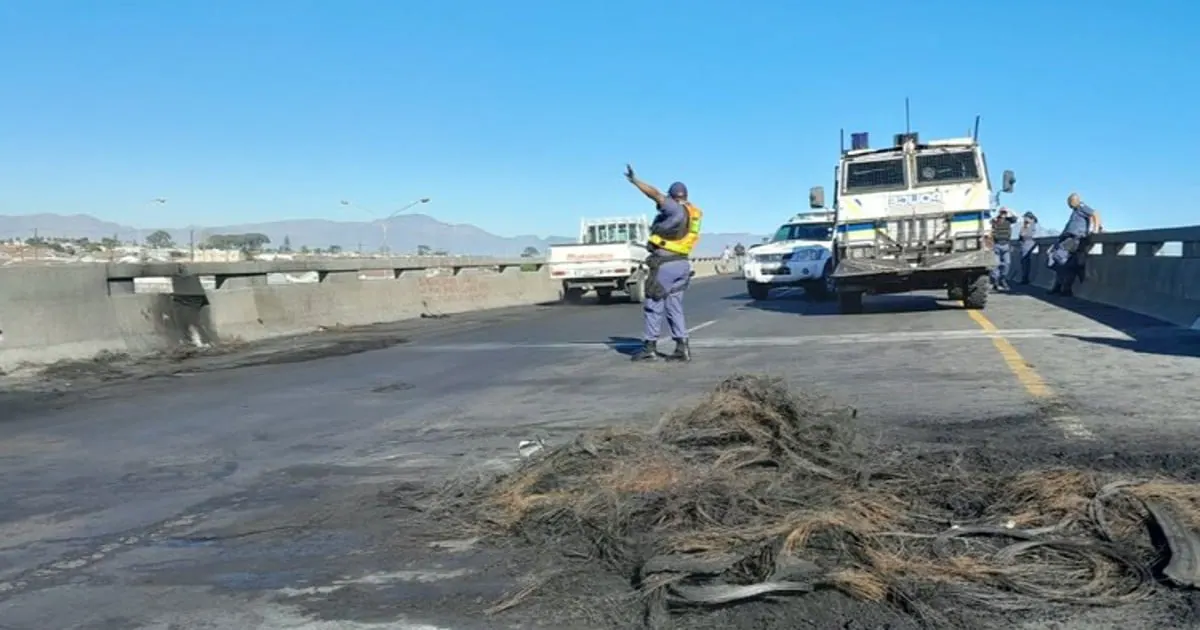
Residents of the Covid informal settlement in Cape Town have been protesting on the N2 and R300 highways for the installation of taps and toilets. The protesters claim they have to cross the busy highways to relieve themselves on open land, resulting in injuries and fatalities. This is not the first time the residents have taken to the streets to demand basic services. Nearly a year ago, shack dwellers from the settlement marched to the offices of the Western Cape Premier and Cape Town mayor to request toilets and water.
On Monday morning, protesters used burning tyres and debris to block sections of the freeway and Old Faure Road near Mfuleni. This was the fourth protest in a week, with Western Cape police spokesperson Ndakhe Gwala stating that a case of public violence would be opened after about 500 people protested for services on Friday. The police took action to disperse the crowd on Monday, but no arrests were made, and no injuries were reported.
Community leader Bathandwa Gali expressed frustration that the City of Cape Town and the Premier's Office had "ignored" their memorandums. The residents have been staying in the settlement for six years without access to water and chemical toilets. Gali said they expected senior officials to engage with them after handing over the memorandums.
Protester Andiswa Charlie shared her personal experience of sexual harassment while relieving herself beside the N2 highway. She said some drivers stop and wave for her to approach them while she is relieving herself, making her feel unsafe. Another resident, Zandile Ntsabo, said they rely on one community-installed tap for water to cook, drink, and do laundry, often experiencing long lines in the morning.
Ntsabo, who stays with her 14-year-old daughter, expressed concern about their safety when relieving themselves in the open. She recounted an incident where her daughter was approached by a man while relieving herself, and she had to throw a stone at him to scare him away. Since then, they have been relieving themselves in buckets inside their shack and emptying it in a hole they dig.
Regan Thaw, spokesperson for the Premier's Office, confirmed that the Office of the Premier received the memorandum and referred the matter to the Western Cape Department of Local Government. The City of Cape Town's response is pending. The protests highlight the struggles faced by residents in informal settlements who lack access to basic services like water and sanitation.
The Covid informal settlement residents' demands for taps and toilets are a pressing concern, with many residents forced to risk their lives to access basic services. The protests will likely continue until the residents' demands are met, and a lasting solution is implemented to provide them with safe access to water and sanitation.
Key points
- Residents of Covid informal settlement have been protesting for taps and toilets, citing safety concerns and lack of basic services.
- Protesters have blocked the N2 and R300 highways, resulting in police intervention and a case of public violence being opened.
- The City of Cape Town and Premier's Office have been accused of ignoring the residents' memorandums, leading to continued protests and unrest.