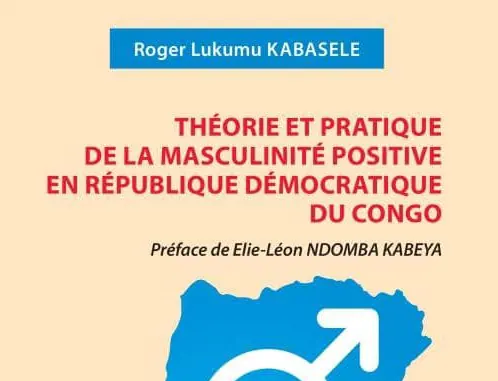
A new book published in Paris by Éditions l'Harmattan has called for the promotion of positive masculinity in the Democratic Republic of Congo (DRC) as a way to build a more just and equitable society. The book, titled "Théorie et pratique de la masculinité positive en RDC," was written by Roger Lukumu, a lecturer at the Université Chrétienne Cardinal Malula in Kinshasa. Lukumu argues that promoting positive masculinity requires combined efforts from men, women, civil society organizations, and government institutions.
Lukumu defines positive masculinity as a set of actions and attitudes that promote the integral development of women and rebalance the relationship between men and women, as guaranteed by the country's laws. He notes that the relationship between men and women has been characterized by an imbalance in favor of men since ancient times. The book examines the theoretical and practical aspects of positive masculinity in the DRC, including the analysis of laws, speeches, and declarations by opinion leaders.
The author cites the Congolese President, Félix-Antoine Tshisekedi, who, in his speech at the 79th ordinary session of the United Nations General Assembly in 2024, emphasized the need to change mentalities and overcome societal barriers that hinder women's development. Tshisekedi stressed the importance of involving men in this process to transform social dynamics and value their role in women's success. Lukumu also mentions the legal instruments and state actions aimed at promoting parity and combating gender-based violence.
The book highlights significant progress made in women's participation in decision-making, including the appointment of a woman as Prime Minister and Head of Government for the first time in the country's history. Lukumu advocates for education and awareness programs that aim to deconstruct gender stereotypes and promote equality between men and women. He also calls for men's engagement in promoting equality and combating gender-based violence.
Lukumu, who is also an advocate at the Kinshasa/Matete Bar and a former legal advisor at the Ministry of Gender and Vocational Training, emphasizes the need for governments, civil society organizations, religious leaders, and community leaders to commit to promoting positive masculinity. The book also advocates for economic development, promotion of male mental health through adapted services, and engagement of governments and other stakeholders.
The author believes that promoting positive masculinity can contribute to the construction of a more just and equitable society for all. He notes that this requires a combined effort from all stakeholders, including men, women, and institutions. Lukumu's book provides an analysis of the theoretical and practical aspects of positive masculinity in the DRC, offering a new perspective on the issue.
The book has been welcomed as a valuable contribution to the discussion on promoting positive masculinity and gender equality in the DRC. Lukumu's work is seen as an important step towards creating a more just and equitable society in the country.
Key points
- The book "Théorie et pratique de la masculinité positive en RDC" advocates for promotion of positive masculinity in the DRC.
- The author, Roger Lukumu, defines positive masculinity as a set of actions and attitudes that promote the integral development of women and rebalance the relationship between men and women.
- The book calls for combined efforts from men, women, civil society organizations, and government institutions to promote positive masculinity.