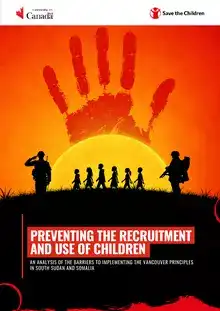
A recent report by Save the Children highlights the challenges of preventing the recruitment and use of children in conflict zones, particularly in South Sudan and Somalia. Despite the countries' commitment to rebuilding and peace, children continue to face threats to their survival and development due to violence, displacement, and food insecurity. Many children in both countries have been separated from their families, making them vulnerable to recruitment by armed groups.
In Somalia, decades of conflict, climate shocks, and droughts have reshaped livelihoods and displaced millions. Children born in conflict are transitioning into adulthood while still in conflict, making their future uncertain. However, the country remains committed to rebuilding and has hope for a peaceful Somalia. The co-existence of fragility and stability is reflected in many parts of Southern Somalia, where armed conflict and economic hardship are shaping the future of entire generations.
In South Sudan, one of the youngest countries in East Africa, children face daily threats to their survival and development. Millions of children are affected by the six grave violations, and due to prolonged conflicts, have been separated from their families and communities. This separation makes them more vulnerable to recruitment and use by armed groups. Despite these challenges, many children in South Sudan have great dreams, wanting to become teachers, nurses, doctors, and pilots.
Save the Children engaged with children from Somalia and South Sudan through child-friendly discussions, ensuring their meaningful participation. Article 12 of the United Nations Convention on the Rights of the Child guarantees the participation of children, and the African Charter on the Rights and Welfare of the Child provides for the right to child participation. The consultations aimed to understand the challenges faced by children in conflict zones.
The report highlights that children in both countries have not experienced life without conflict, consistently looking over their shoulders and living in fear. The long-term effects of being in conflict environments were expressed in their storytelling and narratives as they shared their lived experiences. Save the Children aims to ensure that children participate not only as survivors of violence but as rights-holders capable of contributing to society.
The Vancouver Principles, which aim to prevent the recruitment and use of children in conflict, face barriers to implementation in South Sudan and Somalia. The report analyzes these barriers and provides recommendations for preventing child recruitment. The country's fragile humanitarian context and the impacts of armed conflict and economic hardship on children are critical factors to consider.
The report emphasizes the need for commitment and action to prevent child recruitment and protect children's rights. Save the Children's engagement with children from Somalia and South Sudan underscores the importance of child participation in shaping their future. The organization continues to work towards ensuring that children are protected from violence, exploitation, and abuse, and that their rights are respected and fulfilled.
Key points
- Save the Children highlights the challenges of preventing child recruitment in conflict zones, particularly in South Sudan and Somalia.
- The report analyzes the barriers to implementing the Vancouver Principles in South Sudan and Somalia.
- Children's participation is crucial in shaping their future and preventing child recruitment.