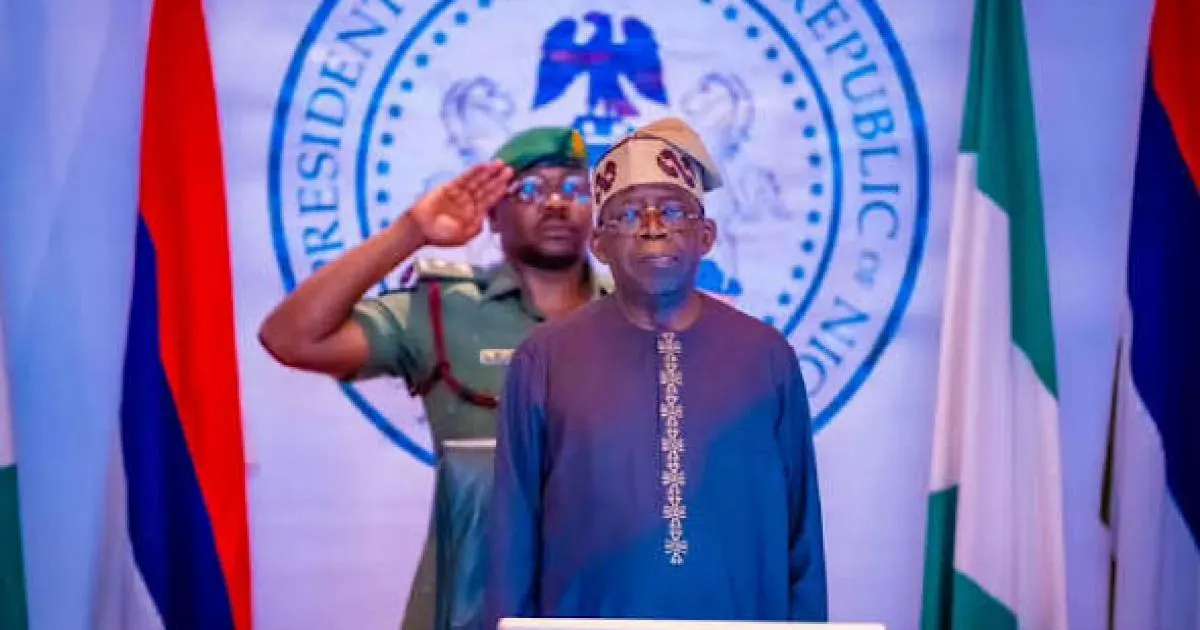
On October 1, 2026, President Bola Ahmed Tinubu delivered his Independence Day address, marking 66 years since Nigeria gained independence. In his speech, Tinubu reflected on the nation's journey, acknowledging the difficulties and challenges faced, but also expressing optimism about the future. He emphasized that Nigeria has endured through the efforts of its people, including farmers, traders, teachers, and young entrepreneurs.
Tinubu noted that Nigeria's founding fathers did not struggle solely for independence, but for the freedom to shape their own destiny and build a nation that provides opportunity, dignity, and a better life for its people. He acknowledged that the promise of Nigeria was undermined by poor choices in the past, leading to economic distortions and rising poverty. By 2023, the country's situation had become critical, with hope nearly lost.
The President explained that his administration had to take difficult decisions to address the nation's economic challenges. He likened Nigeria to a patient with cancer, who must choose between undergoing painful treatment or succumbing to the disease. Tinubu stated that his government had opted for the former, implementing reforms to confront the weaknesses in the economy. These reforms have had positive effects, with the economy growing by over 4% in the current year.
According to Tinubu, the evidence of Nigeria's improved economic outlook is undeniable. The non-oil sector has contributed significantly to the country's growth, with oil theft decreasing and inflation falling substantially from its peak. The country's foreign reserves have been rebuilt, and the foreign exchange market has stabilized. In 2025, Nigeria recorded its highest revenue from non-oil exports, exceeding $6 billion.
Tinubu emphasized that the emergency treatment phase is over, and the foundation has been repaired. He stated that the central economic task now is to achieve shared and widespread prosperity. The President envisioned a Nigeria where farmers can cultivate their land safely, businesses have access to credit, and young people can find productive work. He outlined plans to bring down the cost of living by lowering production and transportation costs.
To achieve this goal, Tinubu's government is focused on expanding mechanized irrigation and dry-season farming, improving access to seeds and fertilizer, and investing in storage and transportation. The administration is also building and completing roads, railways, and ports to connect farms and factories to markets. Tinubu believes that these efforts will ultimately lead to lower prices of goods in the market.
The President concluded by emphasizing that prosperity requires more than just cheaper goods; it requires productive work. With millions of young Nigerians entering adulthood every year, Tinubu stressed that it is the government's responsibility to ensure that this demographic strength becomes an engine for growth and development. He expressed optimism that Nigeria can build a united, strong, and prosperous nation.
Key points
- President Tinubu outlines plans to achieve shared and widespread prosperity in Nigeria.
- Nigeria's economy has grown by over 4% in the current year, with positive effects from reforms.
- The government is focused on expanding mechanized irrigation and dry-season farming to improve food production.