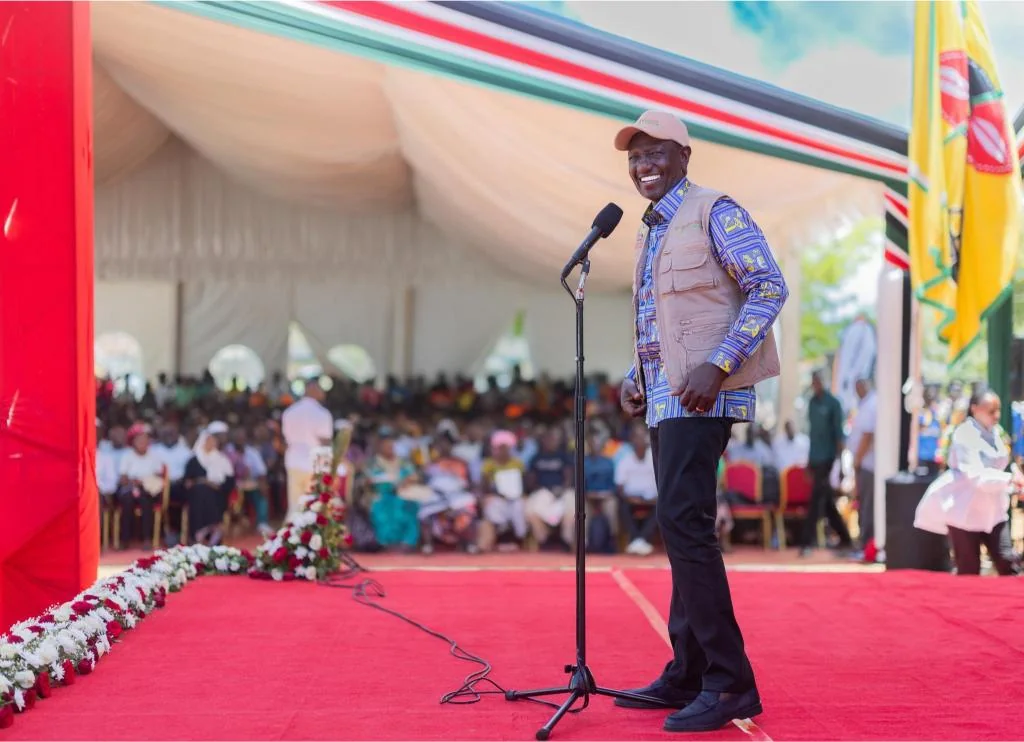
On September 29, 2026, President William Ruto addressed residents in Kilifi, reiterating his commitment to improving education and social protection in Kenya. The President has set a target for the launch of a national school meals programme in the first term of 2027. This programme aims to benefit learners from lower primary, upper primary, and junior secondary schools. The government plans to link the programme to its wider efforts to protect poor and vulnerable households from poverty and food insecurity.
President Ruto issued the directive during the opening of the Fourth Kenya Social Protection Conference at the Kenya School of Government in Kabete, Nairobi. His speech was delivered by Labour and Social Protection Cabinet Secretary Alfred Mutua. The President emphasized the need for a national system that can be expanded and sustained, moving away from separate approaches to school feeding. He highlighted that fragmented approaches have constrained the capacity to deliver impact and scale.
The President directed the Ministry of Education to work with the Ministry of Labour and Social Protection, the National Treasury, and other relevant agencies to put in place the necessary systems before the programme begins. The Ministry of Education, in collaboration with other stakeholders, will develop the policy, financing, governance, and implementation framework required for a national rollout commencing in the first school term of 2027. The programme aims to increase the number of learners receiving school meals from 2.6 million to 10 million by 2030.
Health Cabinet Secretary Aden Duale had previously disclosed the 10 million target at a high-level child survival and nutrition meeting in New York. The government has been pushing the home-grown school meals approach, under which schools source food from local farmers. This model connects school feeding with agriculture by creating a market for local farmers through public spending on meals. The proposed expansion could require substantial funding, with an estimated annual cost of Sh40 billion.
Currently, government-supported school feeding mainly serves vulnerable learners, particularly children living in arid and semi-arid areas and communities affected by food insecurity. The planned expansion comes as the government seeks to increase the number of learners receiving school meals. An Institute of Public Finance analysis estimated that feeding 10 million learners at an indicative rate of Sh20 per child each school day would cost about Sh40 billion annually.
President Ruto also announced plans for the establishment and capitalization of a Social Protection Fund. The fund will help make government assistance to vulnerable Kenyans more predictable. He emphasized the need for a system that can help families cope with poverty, disability, old age, and climate-related shocks. The President's directives aim to address the pressing issues of poverty, food insecurity, and education in Kenya.
The national school meals programme is expected to have a positive impact on the lives of millions of learners in Kenya. With a planned launch in 2027, the government is working towards creating a sustainable and expandable programme. Key stakeholders, including the Ministry of Education, Ministry of Labour and Social Protection, and the National Treasury, will work together to ensure the programme's success.
Key points
- President Ruto targets 10 million learners to receive school meals by 2030.
- The national school meals programme is set to launch in the first term of 2027.
- The programme aims to benefit learners from lower primary, upper primary, and junior secondary schools.