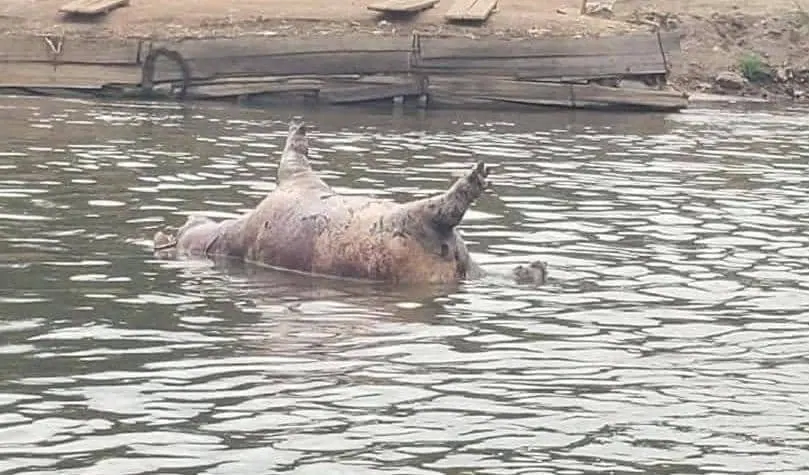
The Institute for Conservation of Nature (ICCN) in Nord-Kivu has confirmed that anthrax, also known as charbon bactéridien, is the cause of death for several hippopotamuses found in the Semuliki River. According to a statement released on September 30, joint analysis by ICCN teams and Virunga Doctors veterinarians verified the presence of anthrax. This confirmation follows a previous report on September 24. The ICCN had initially reported the suspicious discovery of several hippopotamus carcasses floating in the Semuliki River.
A protocol has been put in place to control the situation and prevent further spread of the disease. The public has been advised to take precautions to avoid contracting the disease, which can be transmitted to humans through contact with infected animals or consumption of contaminated meat. Residents have been warned not to touch, move, cut, bury, or burn the carcasses, and to avoid consuming meat from animals found dead or sick.
The ICCN and its partners are closely monitoring the situation and have urged local communities to remain calm but vigilant. The areas near the Virunga National Park have been particularly affected, with previous cases of anthrax reported in the region. On August 14, a case of anthrax was confirmed in the fishing enclave of Vitshumbi after the discovery of a hippopotamus carcass on August 8.
The disease poses a significant risk to both human and animal health, and authorities are working to contain the outbreak. Residents have been advised to report any new carcasses or unusual animal deaths to local authorities, veterinary services, or ICCN agents. They are also encouraged to seek medical attention immediately if they experience symptoms after coming into contact with infected animals or consuming suspect meat.
The ICCN has emphasized the importance of adhering to the recommended precautions to prevent the spread of anthrax. These measures include keeping children, livestock, and domestic animals away from the carcasses and avoiding the use of water near the affected areas. The situation is being closely monitored, and further directives may be issued as necessary.
This recent outbreak highlights the ongoing challenges related to animal health and conservation in the region. The Virunga National Park, where the affected areas are located, is a critical habitat for various wildlife species, including hippopotamuses. Conservation efforts are essential to protecting these species and preventing the spread of diseases like anthrax.
The ICCN and its partners continue to work together to manage the situation and mitigate the impact of the anthrax outbreak. By following the recommended precautions and staying informed, local communities can help prevent further spread of the disease and protect both human and animal health.
Key points
- Anthrax confirmed as cause of hippopotamus deaths in Nord-Kivu's Semuliki River
- Precautions advised to prevent spread of anthrax to humans and animals
- ICCN and partners monitoring situation, urging local communities to remain vigilant