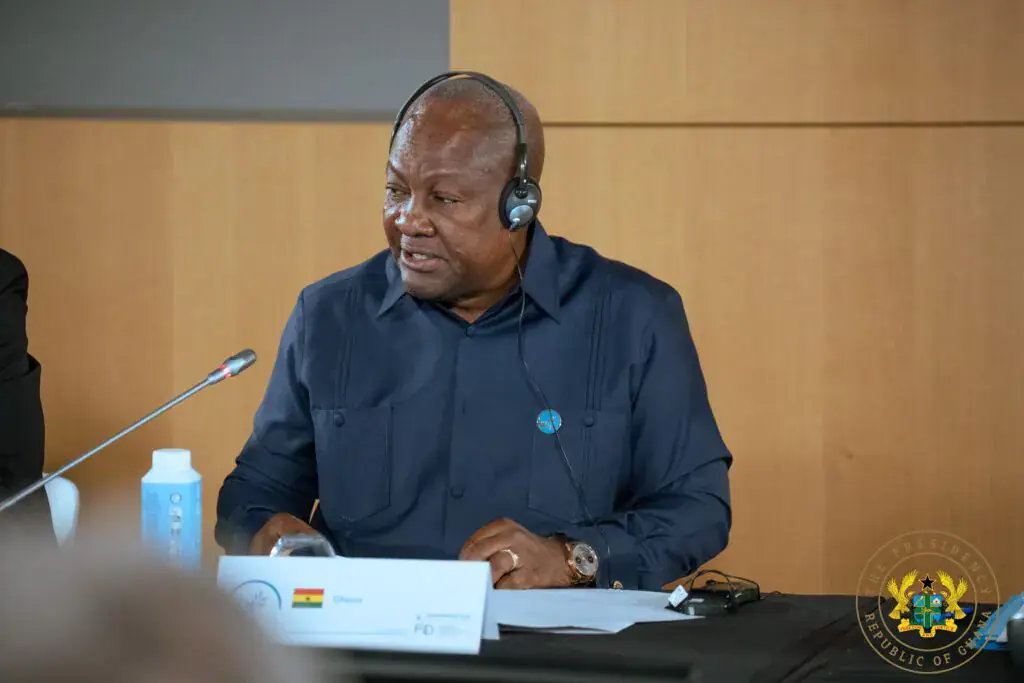
Ghanaian President John Dramani Mahama has stated that he welcomes criticism of his administration, saying it helps him become a better leader. During an engagement with the Ghanaian community in Moscow, Russia, Mahama noted that opposing views and public scrutiny allow him to reassess his approach and make necessary adjustments. He emphasized that criticism does not offend him, but rather motivates him to improve his governance.
Mahama's comments come as a contrast to the current controversy surrounding the prosecution of a National Democratic Congress (NDC) organiser in Agona West. The organiser is facing charges over alleged offensive comments made about former Vice President, Dr Mahamudu Bawumia. In response, Dr Bawumia has issued a statement, urging the government to release the organiser and emphasizing that Ghana's democracy can only be strengthened when citizens are free to express themselves without fear of arrest or prosecution.
Dr Bawumia's statement highlights his commitment to democratic principles, noting that he never lodged complaints or sanctioned prosecutions against individuals who spoke against him during his tenure as Vice President. He believes that such actions would be imprudent and contrary to democratic principles. Dr Bawumia has therefore called on the Ghana Police Service and the Attorney-General to discontinue the prosecution and release the young man.
The issue of free speech and criticism has become increasingly relevant in Ghana, particularly with regards to the recently passed Tribunals Bill, 2026. The bill, which was passed by Parliament on July 16, seeks to address the lacuna in Ghana's legal framework regarding tribunals. However, Dr Bawumia has cautioned President Mahama against assenting to the bill, adding to the growing concerns about its potential implications.
President Mahama's openness to criticism has been seen as a positive step towards promoting democratic governance in Ghana. His willingness to engage with opposing views and consider alternative perspectives has been praised by many as a sign of maturity and leadership. However, the extent to which his administration will implement this approach remains to be seen.
The Tribunals Bill, 2026, has sparked concerns among many Ghanaians, who fear that it could be used to suppress free speech and stifle criticism. As President Mahama prepares to give his assent to the bill, many are watching closely to see how he will balance the need for effective governance with the need to protect citizens' rights to free expression.
The debate over free speech and criticism in Ghana is likely to continue in the coming days, with many stakeholders weighing in on the issue. As the country continues to consolidate its democracy, the role of criticism and opposition in promoting good governance will remain a key challenge for leaders like President Mahama and Dr Bawumia.
Key points
- President Mahama welcomes criticism as a means to improve governance.
- Dr Bawumia advocates for free speech and opposes prosecution for expressing views.
- The Tribunals Bill, 2026, has sparked concerns about its potential implications for free speech in Ghana.