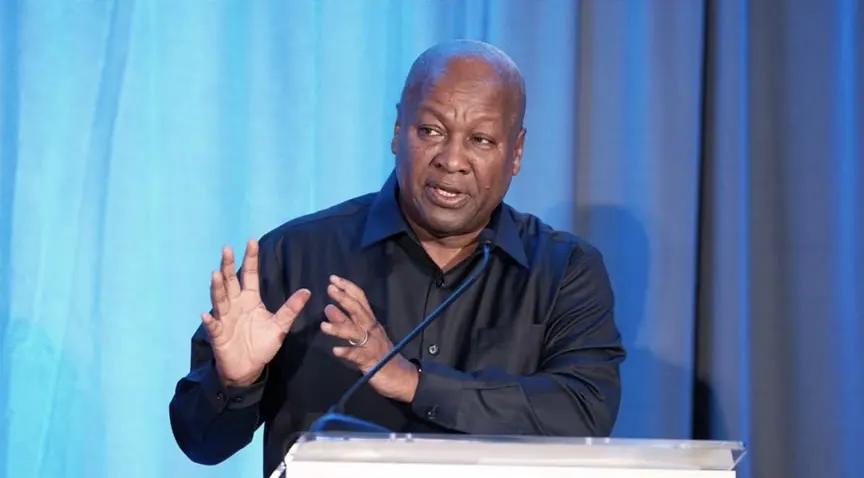
On September 21, 2026, President John Dramani Mahama addressed a high-level side event on the Accra Reset: Global Reset Dialogue on the sidelines of the 81st United Nations General Assembly in New York. He emphasized the need for a new global bargain that gives countries in the Global South greater control over decisions affecting their health systems and development priorities. According to President Mahama, countries cannot claim ownership of their health and development programmes when external actors control key decisions and resources.
President Mahama identified three interconnected challenges confronting the Global South: geostrategic marginalisation, geopolitical vulnerability, and donor dependence. He stated that addressing these challenges requires a connection between political authority, productive capability, and financial resilience. The President argued that sovereignty cannot be achieved merely by signing a donor agreement, emphasizing that "no ownership without control." He stressed that transferring control from international institutions to national governments would not automatically guarantee sovereignty.
President Mahama cautioned that control must be earned through uncompromising domestic accountability. He mentioned that Ghana's Resetting Ghana Agenda focuses on tightening fiscal controls, fighting corruption, and ensuring public resources are fully accounted for. The President emphasized that the same principle must apply across the Global South, insisting that there should be "no control without absolute accountability to our people." This principle forms the foundation of what he described as a New Global Bargain.
The New Global Bargain is based on responsibility matched by authority, authority backed by productive capacity, and accountability for commitments made by all partners. President Mahama stated that the Accra Reset is moving from policy design to execution, with Ghana and the Presidential Council expected to engage governments, global health organisations, development finance institutions, philanthropies, and the private sector. The goal is to translate recommendations into country-level compacts.
President Mahama launched the report, “A Sovereign Future for Health,” which contains ten recommendations for reforming the global health architecture. The report aims to develop self-sustaining networks linking research, regulatory oversight, local manufacturing, and reliable distribution. Ghana plans to work with partners across Africa, India, Indonesia, the Gulf, and other regions to achieve this goal.
The President's call for a new global bargain is an effort to address concerns over a global system in which the health, dignity, and future of people in developing countries remain vulnerable to changing donor priorities. He emphasized that the Accra Reset was born out of these concerns and aims to give countries in the Global South greater control over their health systems and development priorities.
The Accra Reset and the New Global Bargain have the potential to significantly impact global health policies and development priorities. By giving countries in the Global South greater control over their health systems and development priorities, the initiative aims to promote more equitable and sustainable development. The success of this initiative will depend on the ability of countries to work together and implement the recommendations outlined in the report.
Key points
- President Mahama calls for a new global bargain to give countries in the Global South greater control over health policies and development priorities.
- The Accra Reset aims to address concerns over a global system in which the health, dignity, and future of people in developing countries remain vulnerable to changing donor priorities.
- The New Global Bargain is based on responsibility matched by authority, authority backed by productive capacity, and accountability for commitments made by all partners.