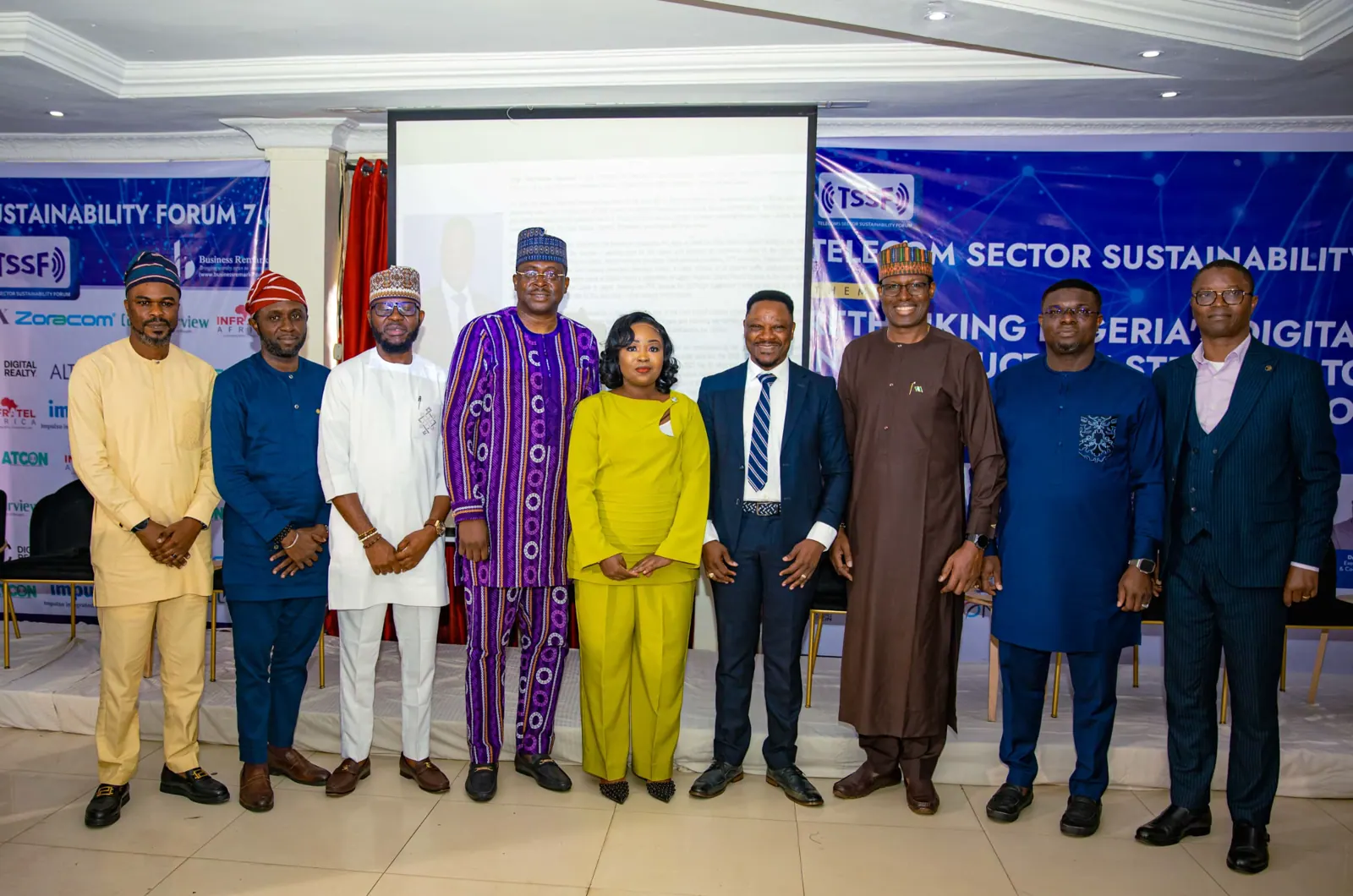
Business Remarks, a leading industry platform, recently hosted the 7th edition of the Telecom Sector Sustainability Forum (TSSF 7.0) in Lagos. The forum brought together industry experts, policymakers, operators, and innovators to discuss the country's digital infrastructure strategy. The theme of the forum was "Rethinking Nigeria's Digital Infrastructure Strategy to Attract Investment and Drive Innovation." The event was held at the CitiHeight Hotel, Ikeja, Lagos.
The Chairman of the Association of Licensed Telecoms Operators of Nigeria (ALTON), Mr. Gbenga Adebayo, emphasized the need for stakeholders to acknowledge and share the success story of the Nigerian telecom industry, which has performed well over its 25 years of existence. He urged the industry to highlight its contributions to society, education, and national development. Adebayo also noted that the world has changed significantly since COVID-19, the Russia-Ukraine war, and other global challenges, creating a new reality for the industry.
The Association of Telecommunications Companies of Nigeria (ATCON) called for a renewed focus on talent development, rural inclusion, and infrastructure investment to drive the country's digital economy. Ajibola Olude, ATCON's Executive Secretary and Chief Operating Officer, stated that the future of Nigeria's digital economy depends not only on infrastructure but on opportunities created for people, businesses, and communities. He stressed the need for a pipeline of skilled, industry-ready digital professionals.
The convener of the forum and Managing Editor of Business Remarks, Mrs Bukola Olanrewaju, noted that the forum aimed to move beyond rhetoric and proffer actionable solutions to Nigeria's persistent digital infrastructure deficit. She emphasized that telecommunications has evolved beyond being an enabler of communication to becoming a fundamental pillar of Nigeria's digital economy. However, rising infrastructure costs, foreign exchange pressures, and high financing costs are placing significant pressure on operators and infrastructure providers.
A distinguished panel of experts identified key challenges and proposed far-reaching solutions at the forum. The panel noted that Nigeria requires approximately $100 billion over the next 30 years to close its digital infrastructure deficit. They also highlighted that upfront taxation, spectrum fees, licensing costs, and right-of-way charges consume as much as 50% of capital expenditure, leaving investors with less funds to deploy into network assets.
The panel also discussed cybersecurity, observing that security is often treated as a secondary layer rather than a foundational element of infrastructure planning. They noted that reputational damage, sanctions, and business continuity risks far outweigh the cost of proactive security investment. Additionally, Engr. Ike Nnamani, CEO of Digital Realty Nigeria, revealed that Nigeria is currently losing an estimated $3.5 billion annually to foreign cloud service providers.
The forum highlighted the need for a collaborative effort to address the country's digital infrastructure challenges. Key stakeholders, including the Federal Government, industry regulators, and private sector players, must work together to rethink Nigeria's digital infrastructure strategy and attract investment to drive innovation. The event provided a platform for industry experts to share knowledge and propose solutions to the country's digital infrastructure deficit.
Key points
- Nigeria requires approximately $100 billion over the next 30 years to close its digital infrastructure deficit.
- The country's digital economy depends on opportunities created for people, businesses, and communities.
- Nigeria is currently losing an estimated $3.5 billion annually to foreign cloud service providers.