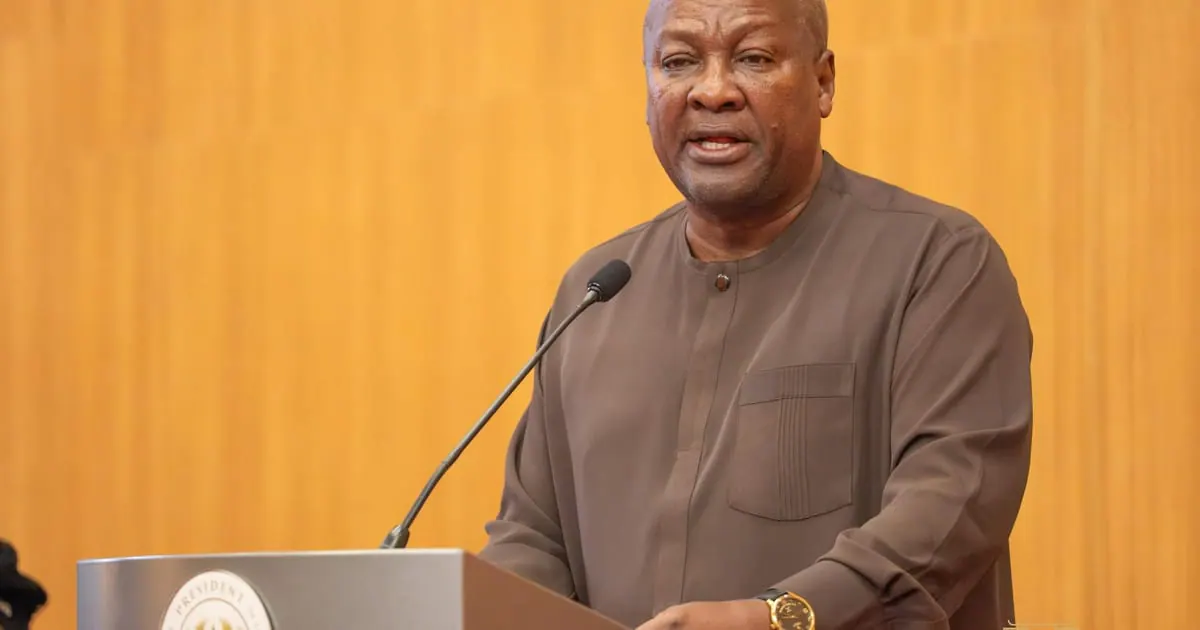
President John Dramani Mahama of Ghana has taken a significant step towards addressing the growing concern of hate speech and abusive online content. On September 22, 2026, he directed the Ghana Journalists Association (GJA) and the Media Foundation for West Africa (MFWA) to jointly organize a national stakeholder engagement. This initiative aims to tackle the increasing incidents of hate speech, threats, and harmful content on social media and digital platforms while ensuring the protection of freedom of expression.
The President's directive comes in response to the changing media landscape in Ghana, where public discourse is now significantly influenced by individual bloggers, content creators, and social media influencers. These new media actors often command large audiences but are not subject to traditional editorial standards or accountability mechanisms. The President has described this development as a "difficult but important public-policy challenge," emphasizing the need to address hate speech and unlawful conduct without stifling legitimate criticism and dissent.
President Mahama has expressed concern over the trend of disproportionate arrests for mere criticism or politically charged commentary. He argues that such actions could be counterproductive, create "undeserving martyrs," and erode public trust in state institutions. The President stressed the urgent need for a coherent national roadmap that balances the protection of freedom of expression with an appropriate response to genuinely harmful digital content.
The stakeholder engagement, to be led by the MFWA and GJA, is expected to be inclusive, bringing together a wide range of stakeholders. These include the National Media Commission, relevant religious bodies, the Ghana Police Service, civil society organizations, traditional media organizations, social media content creators, bloggers, influencers, legal and human rights experts, and representatives of digital platforms. The engagement will examine the adequacy of existing legal, regulatory, and institutional frameworks and propose practical guidelines for law enforcement agencies.
The process will also focus on clarifying the distinction between lawful criticism and unlawful speech, recommending policy and legislative measures, and considering public education and media literacy. Other areas of focus include professional and ethical standards for online content creators, accessible complaints and redress mechanisms, and alternatives to arrest and prosecution in cases that do not involve threats, incitement, or violence.
The MFWA and GJA have been tasked with submitting a proposed framework and timetable for the stakeholder engagement, along with recommendations arising from the process, for the President's consideration. This initiative reflects the government's commitment to addressing the complex challenges posed by the evolving digital media landscape in Ghana.
The national stakeholder engagement on hate speech and responsible digital communication is a critical step towards fostering a safer and more respectful online environment in Ghana. By bringing together diverse stakeholders, the government aims to develop a comprehensive and inclusive approach to addressing hate speech and promoting responsible digital communication.
Key points
- President Mahama directs GJA and MFWA to convene national stakeholder engagement on hate speech and responsible digital communication.
- The engagement aims to address hate speech, threats, and abusive online content while protecting freedom of expression.
- The process will examine existing frameworks, propose guidelines for law enforcement, and consider public education and media literacy.