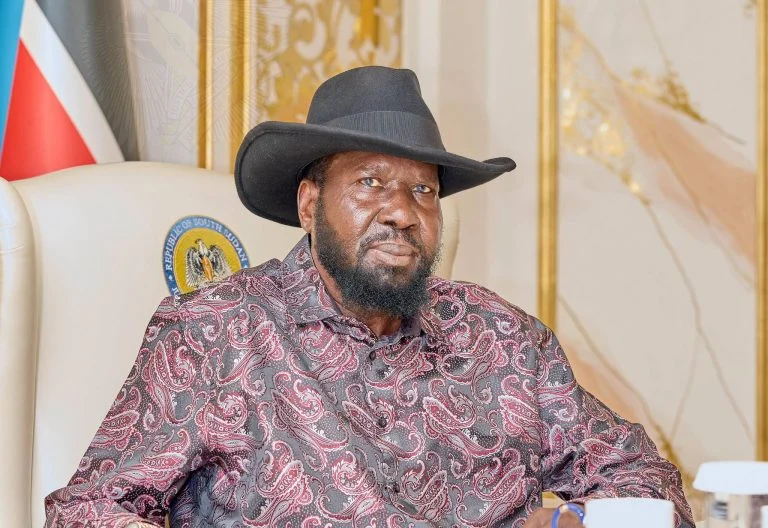
South Sudan has entered the final phase of its transition to an elected government after President Salva Kiir Mayardit dissolved the transitional administration on September 22, 2026. The announcement came three months before the planned vote and a day after Kiir signed amendments to the National Elections Act, 2012. The decision was made during an expanded meeting of the presidency that brought together vice presidents, political party leaders, presidential advisers, ministers, and other senior government officials.
The dissolution follows changes to South Sudan's electoral laws that removed a legal requirement for the elections to await the completion of the permanent constitution-making process and the national population and housing census. Kiir signed the amendments to the National Elections Act on September 21, 2026, after Parliament passed them. The revised law gives the National Elections Commission room to continue preparing for the December vote without waiting for the constitution-making process and census to be completed.
The President said the decision to dissolve the transitional government followed an agreement reached by political leaders during an expanded presidency meeting on December 10, 2025. The leaders had agreed against extending the transitional period again and committed to moving towards elections. Kiir expressed appreciation for the presence of leaders at the meeting, which showed their commitment and support to move the country forward as per their agreement.
Political leaders present at the meeting renewed their commitment to the December elections and agreed to participate in an Inter-Party Dialogue aimed at resolving outstanding political and electoral matters before the polls. The main opposition coalition had rejected the changes to the electoral law, citing disagreements over the electoral process. Under the amended law, the current executive leadership will remain in office during the election period.
Kiir also maintained that the Revitalized Agreement on the Resolution of the Conflict in South Sudan (R-ARCSS) remains in force. He communicated the same position during engagements with the African Union, the Intergovernmental Authority on Development (IGAD), and the African Union High-Level Ad Hoc Committee for South Sudan, also known as the C5. According to Kiir, progress has been made in key areas necessary for the elections, including legal reforms, administrative preparations, logistics, security, and political dialogue.
The President stated that the Political Parties Council had registered about 39 political parties and that the National Elections Commission had established a headquarters and offices across all states as part of preparations for the polls. Civic education had started, and voter-registration centres had been assessed across the country. Voter registration is expected to begin soon, according to Kiir. The African Union Peace and Security Council had recognised the government's commitment to holding the elections in December 2026.
The December 22, 2026 elections will mark a major step in South Sudan's transition following years of delayed polls. South Sudan has never conducted a general election since becoming independent in 2011, with successive elections postponed during the transitional period. The elections will be conducted under the amended electoral law as preparations continue, amid political disagreements and concerns over the readiness of the process.
Key points
- President Salva Kiir dissolved the transitional administration on September 22, 2026.
- The dissolution paves the way for the December 22, 2026 elections.
- The elections will be conducted under an amended electoral law.