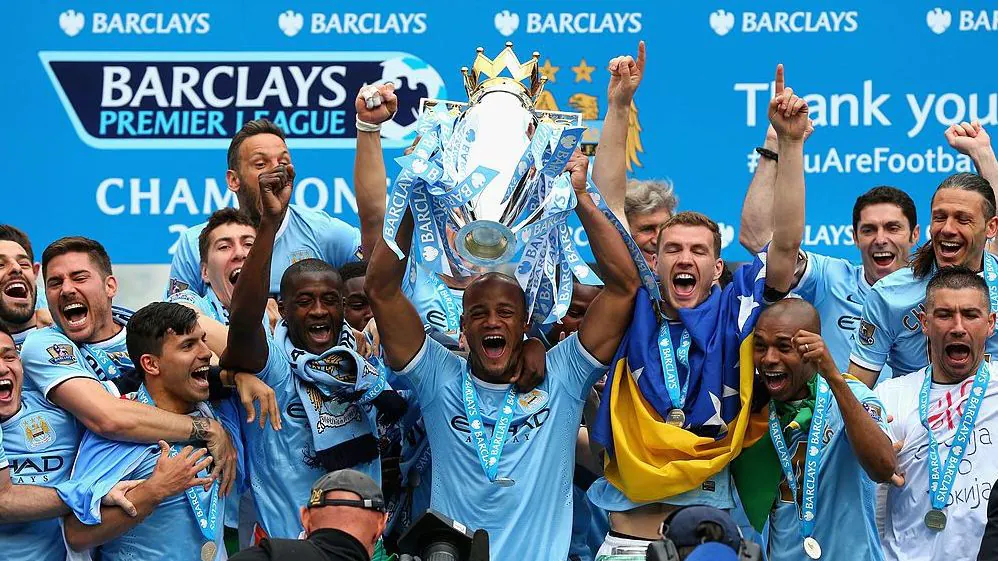
The Premier League has indicated that there is little appetite to strip Manchester City of the eight trophies they won between 2009 and 2018, despite being found guilty of breaking financial rules. This period corresponds to the time when the club was accused of inflating sponsorship revenue from connected companies and making "off the books" payments to circumvent football's financial rules. Manchester City have always denied wrongdoing, but were found guilty of the majority of 115 charges.
The decision on potential sanctions will be made by an independent panel, which is yet to hold a "sanction hearing". Possible punishments include a points deduction, huge fine, or even expulsion from the Premier League. While stripping past titles is not a direct option under Premier League rules, the disciplinary commission panel can impose a penalty "as it shall think fit". This has led to speculation that retrospective action could be taken, including stripping titles or applying asterisks to them.
Manchester City's rule breaches have raised questions about the legitimacy of their titles won during this period. The club won several trophies, including Premier League titles in 2011-12, 2013-14, and 2017-18, as well as the FA Cup, EFL Cup, and Community Shield. Some rival clubs, such as Manchester United, who finished runners-up to City in 2018, have expressed hopes that they could be awarded the title retrospectively. However, this move could open a "can of worms", raising questions about other accomplishments and potentially jeopardizing the reputation and commercial viability of the Premier League.
There are precedents for retrospective action in football and other sports. Juventus had their Serie A titles revoked in 2005 and 2006 due to the Calciopoli match-fixing scandal, while Elgin City was stripped of the 1992-93 Highland League title for fielding ineligible players. In cycling, Lance Armstrong was stripped of his seven Tour de France titles for doping. However, the argument for stripping titles in cases of financial rule breaches is more complicated, with concerns about unfairly punishing players and fans unconnected to the breaches.
Manchester City players, including former midfielder Rodri, have dismissed talk of the club being stripped of titles. Rodri emphasized that the team's achievements were "deserved" and "not paid for with money, but with effort". Others, however, argue that retrospective action is necessary to restore the competition's official record and reward clubs that competed within the rules. The Premier League's independent panel will have to weigh these competing arguments when making its decision.
Compensation claims for lost earnings are also being considered by several clubs, with a lawyer suggesting that this is a more likely outcome than the stripping of titles. The diplomatic tensions between the United Arab Emirates and the UK could also be affected by the ruling, adding another layer of complexity to the decision. As the sanction hearing approaches, the football community remains uncertain about the potential consequences for Manchester City.
The Premier League's decision will have far-reaching implications for the club, its players, and the wider football community. While some argue that stripping titles would be an unfair punishment for players and fans, others see it as a necessary measure to maintain the integrity of the competition. Ultimately, the independent panel will have to make a decision that balances these competing interests and considers the potential consequences for all parties involved.
Key points
- Manchester City were found guilty of breaking Premier League financial rules between 2009-2018.
- The Premier League has little appetite to strip Manchester City of past titles.
- An independent panel will decide on potential sanctions, including a points deduction, fine, or expulsion.