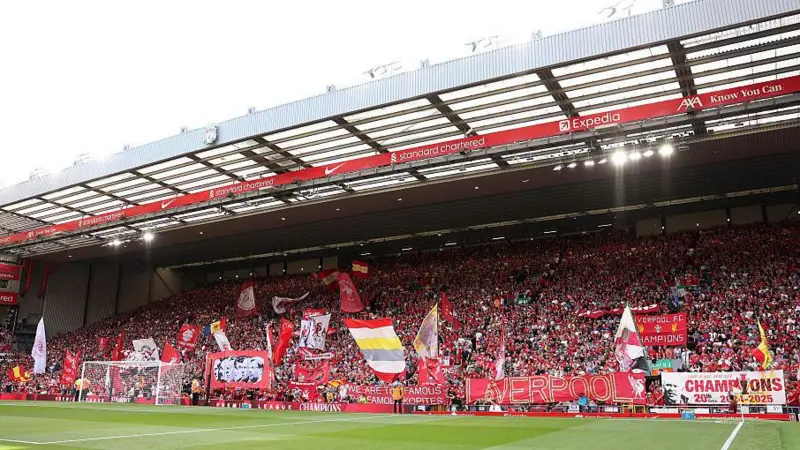
The Premier League is home to some of the most famous football stadiums in the world. The 2026/27 season features 20 clubs playing across England, with stadiums that differ greatly in size, history and character. Some have been home to their clubs for more than a century, while others are relatively new. Several have undergone major redevelopment, while others are in the process of expanding.
Arsenal's Emirates Stadium, with a capacity of 60,704, has been their home since 2006. Located in Holloway, north London, the stadium is named after Emirates, the Dubai-based airline and long-standing club sponsor. Outside the stadium are six bronze statues honouring Arsenal legends, including former players Tony Adams, Dennis Bergkamp and Thierry Henry, managers Herbert Chapman and Arsene Wenger, and former director Ken Friar.
Aston Villa's Villa Park has been their home since 1897 and is located in Aston, Birmingham. The stadium previously had a capacity of 43,205, but that figure has been reduced to 36,887 for the 2026/27 season because the North Stand is closed for redevelopment. Once the redevelopment is completed, Villa Park is expected to have a capacity of more than 50,000. One of its stands is named after former club chairman Doug Ellis.
The smallest ground in the Premier League is Bournemouth's Vitality Stadium, with a current capacity of 12,357. The stadium, located in Boscombe, Bournemouth, is undergoing redevelopment that is expected to increase its capacity to around 20,200. It opened in 1910 and was originally known as Dean Court. It has been called Vitality Stadium since 2015 after the insurance company became the club’s naming-rights sponsor.
Brentford's Gtech Community Stadium has a capacity of 17,250, making it the second-smallest stadium in the Premier League. The stadium was initially called Brentford Community Stadium before being renamed in 2022 following a sponsorship agreement with British technology company Gtech. Brighton & Hove Albion's American Express Stadium, commonly known as the Amex, has a capacity of 32,176 and has been their home since 2011.
Chelsea's Stamford Bridge has been their home since the club was founded in 1905. The stadium, located in Fulham, west London, has a capacity of 40,044. One of its stands is named after former Chelsea vice-chairman Matthew Harding, who died in 1996. A bronze statue of former Chelsea forward Peter Osgood also stands outside the stadium. Coventry City's Coventry Building Society Arena has a capacity of 32,609 and is hosting Premier League football for the first time in the 2026/27 season.
Everton's Hill Dickinson Stadium is the newest ground in the Premier League, having opened in 2025. The Toffees previously played at Goodison Park for 133 years before moving to their new home at Bramley-Moore Dock on the banks of the River Mersey. The stadium has a capacity of 52,769 and is named after Liverpool-based law firm Hill Dickinson, its naming-rights partner.
Key points
- The Premier League features 20 clubs with stadiums of varying sizes and histories.
- Several stadiums have undergone major redevelopment or are in the process of expanding.
- The smallest ground in the Premier League is Bournemouth's Vitality Stadium.