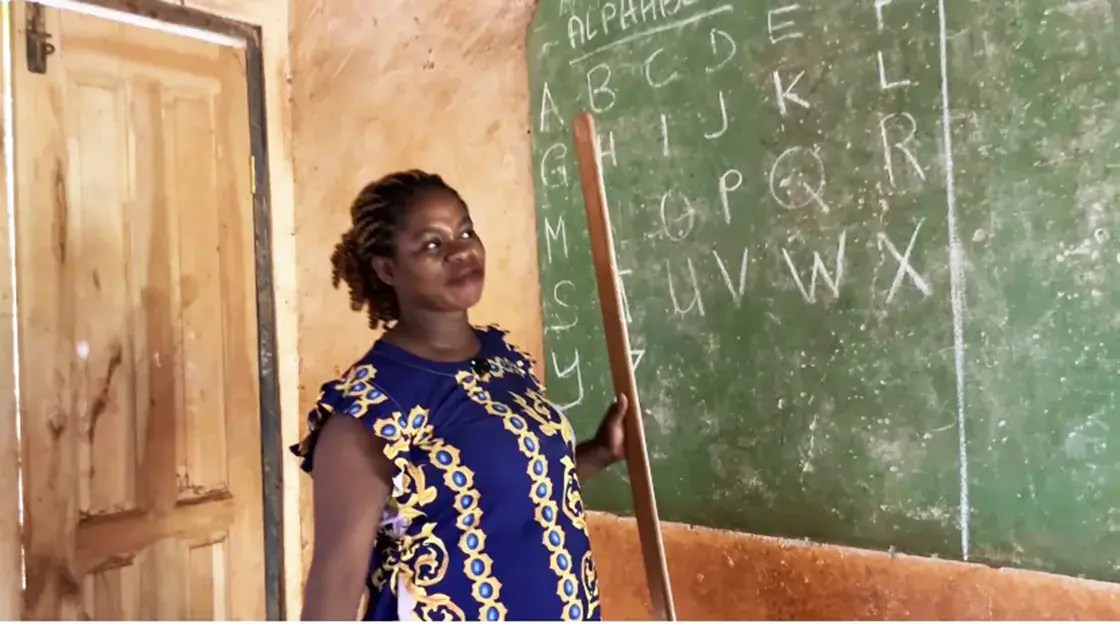
A pregnant teacher at Desreagya D/A Basic School in Ghana's Ashanti Region is facing significant challenges in her daily responsibilities. Mrs Emilia Asantewaa has to teach five classes in a single classroom, combining Kindergarten One to Primary Three in a room originally designated for Junior High School One. The classroom is divided into four sections to accommodate pupils at different stages of learning, requiring Mrs Asantewaa to move between sections to deliver lessons.
The shortage of functioning classrooms and inadequate teaching staff at Desreagya D/A Basic School has resulted in overcrowding, with pupils having to share limited classroom space. Other teachers also have to combine classes, with pupils from Primary Four to Primary Six taught together in the JHS Two classroom by one teacher, and the three JHS classes combined in a single classroom. This arrangement makes it difficult for teachers to attend to the different groups.
The school's infrastructure challenges are further compounded by the condition of its buildings. A block originally intended to serve as teachers' accommodation has deteriorated considerably, with cracks developing in its walls and raising concerns about its structural safety. A thatched pavilion, intended to provide additional classroom space, is equally unsuitable for teaching and learning due to its poor condition.
Mrs Asantewaa also faces difficult living conditions, occupying a deteriorating mud structure serving as teachers' quarters. The pregnant teacher said the roof leaks whenever it rains, sometimes forcing her to wake up in the middle of the night to mop water from the room. She is particularly worried about a weakened section of the building, which she fears could collapse at any time and leave her without accommodation.
The Municipal Chief Executive for Atwima Mponua, Mr Ibrahim Ishaq, attributed the combination of classes primarily to inadequate teaching staff. He explained that the school had classrooms, but lacked sufficient teachers to handle the various classes separately. Mr Ishaq said the Assembly had constructed a classroom block at the school before he assumed office and acknowledged the competing educational infrastructure needs across the district.
Mr Ishaq identified the movement of teachers from rural communities as a major challenge affecting education delivery in the district. He said some teachers posted to remote communities sought transfers after two or three years, leaving schools struggling with staffing shortages. To encourage teachers to remain in underserved communities, the Assembly has introduced motivational packages for those who have served in remote areas for extended periods.
The Assembly is addressing the infrastructure challenges at Desreagya D/A Basic School, with plans to construct new classrooms and provide decent accommodation for teachers. Mr Ishaq assured that Desreagya would be considered under the Assembly's planned classroom construction programme by next year. Discussions are ongoing with the community to find a solution to the teachers' accommodation challenges.
Key points
- The pregnant teacher, Mrs Emilia Asantewaa, has to teach five classes in a single classroom due to a shortage of functioning classrooms and inadequate teaching staff.
- The school's infrastructure challenges are further compounded by the condition of its buildings, including a deteriorated block intended for teachers' accommodation and a thatched pavilion unsuitable for teaching and learning.
- The Assembly is addressing the infrastructure challenges, with plans to construct new classrooms and provide decent accommodation for teachers, and has introduced motivational packages to encourage teachers to remain in underserved communities.
Reporting sources
- Five Classes, One Room: Pregnant Teacher’s Ordeal In Atwima Mponua · The Ghanaian Chronicle