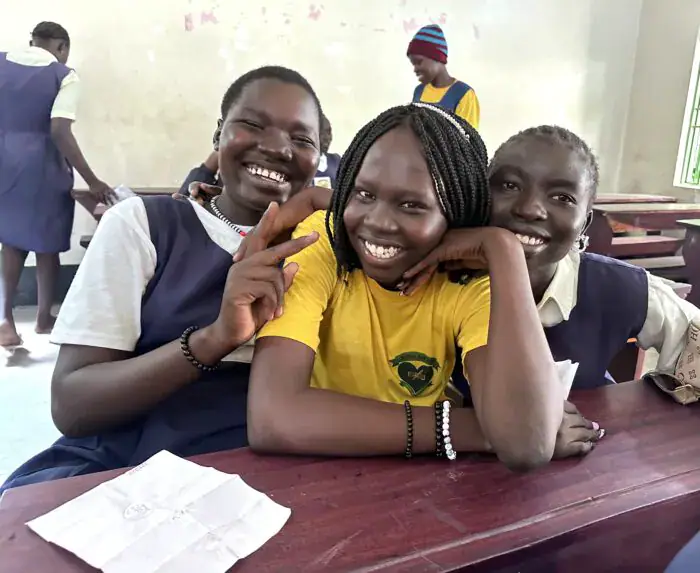
Nancy Modo, a 19-year-old from Juba, South Sudan, dreams of becoming a pediatrician. However, after completing Senior Four at New Apostolic Secondary School, she faces an uncertain future due to financial hardship. Rising living costs, school fees, and expensive transport are among the challenges Nancy says girls face in staying in school and pursuing their ambitions. Many girls struggle to meet their basic needs, let alone afford education.
The financial burden on girls extends beyond paying school fees. Those who cannot afford transport may have to walk long distances to school, arrive late, or miss classes altogether, affecting their concentration and academic performance. Nancy says financial problems can lead to girls being chased from school if they cannot pay fees. Without transport money, girls may have to walk long distances, arrive late, or skip school, further jeopardizing their education.
Poverty exposes girls to exploitation by wealthy men who offer money, phones, and other gifts in exchange for relationships. Nancy says girls struggling to meet their needs may find it difficult to reject such offers, even when they understand the risks involved. Such pressures can destroy a girl's life, leading to early pregnancy, disease, and loss of self-esteem. Her safety and future dreams, like Nancy's of becoming a pediatrician, can be easily destroyed.
Dorothy Ambrose Drabuga, executive director of Women Foundation for Humanity, shares Nancy's concerns. She says the economic crisis has made it difficult for families to provide for their children, leaving some girls vulnerable to relationships with older men who offer financial assistance. These relationships can result in early pregnancy and dropping out of school. Some pregnant girls face rejection by their families, while the men involved may deny responsibility.
Economic pressures within extended families can also affect how educational opportunities are distributed between boys and girls. Drabuga says priorities are often given to boys, not girls. She argues that parents and communities should protect girls and prioritize their education instead of viewing marriage as a solution to eradicating poverty. Collective responsibility from parents, schools, communities, and authorities is necessary to protect girls and keep them in school.
Teachers see the effects of financial and social pressures on girls in classrooms. Joshua Bidal Joseph, a teacher at Bulluk Secondary School, says some girls struggle due to inadequate parental support, lack of essential supplies, and household responsibilities. The lack of support can affect girls' emotional well-being and ability to concentrate during lessons. Teachers sometimes observe signs of distress among girls dealing with difficulties outside the classroom.
Nancy says poverty is not the only obstacle schoolgirls face in Juba. Social media, peer pressure, parties, nightclubs, and negative friendships can also distract students from their studies. Despite these pressures, Nancy credits her family and friends for encouraging her to remain focused on her ambitions. She is calling for scholarships for students who have completed Senior Four to help them continue their education.
Key points
- Financial hardship and social pressures hinder girls' education in Juba, South Sudan.
- Poverty exposes girls to exploitation by wealthy men who offer financial assistance in exchange for relationships.
- Collective responsibility is necessary to protect girls and prioritize their education.