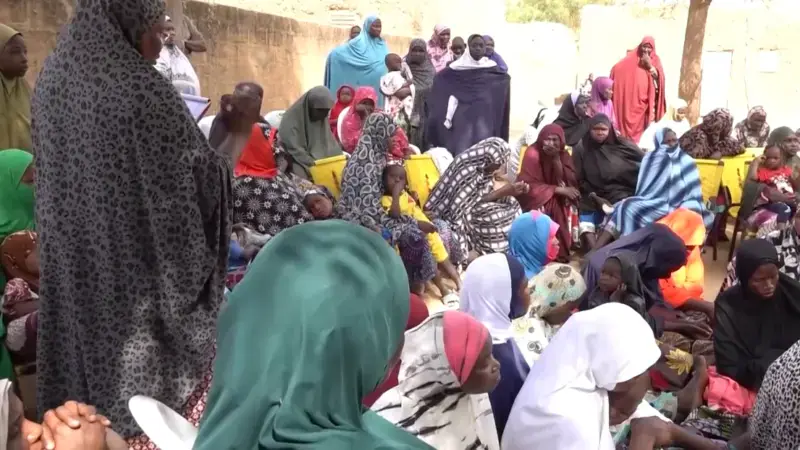
Women in Niger are struggling to access their rights in disputes over land, inheritance, and child custody. According to the Justice Needs and Satisfaction survey conducted by the Hague Institute for Innovation of Law (HiiL) and the Ministry of Justice, more than half of the population experienced justice problems in 2024. The survey revealed that 61 percent of the population has experienced at least one issue accessing justice, with women facing greater obstacles in obtaining justice.
The survey showed that men are more likely to report justice problems (70 percent) than women (52 percent), but this does not mean women suffer fewer injustices. Instead, it highlights that many women either do not recognize their challenges as justice problems or do not advocate for themselves. As a result, women need justice just as much as men, but face greater barriers in accessing it. The survey results indicate that women face obstacles not only within their families and communities but also in the resolution of disputes.
The gap between men's and women's rights in Niger is obvious, with 41 percent of women saying they are unaware of their legal rights. Women are also more likely to drop an ongoing court case (38 percent) than men (34 percent). Additionally, almost two-thirds (64 percent) of women have no formal education, compared to 47 percent of men. This lack of education and awareness of their rights further exacerbates the challenges women face in accessing justice.
Domestic violence is the most pressing issue faced by women in Niger, with 29 percent saying they have experienced some kind of intimate partner violence. Between 2022 and 2024, domestic violence jumped from the eighth most serious problem for the general population to the third. According to HiiL, this may signal a shift in attitude toward reporting such incidents. Land disputes over field boundaries, inheritance, contested sales, and crop damage rank second among the most serious justice problems.
For women in rural areas, where more than 80 percent of Nigeriens currently live, land provides food, income, and economic autonomy. However, traditional practices, family pressures, and systems where people farm land they do not own keep their access uncertain. The outcome of a dispute can ultimately shape a woman's income, economic security, and ability to invest in her future.
The Hague Institute for Innovation of Law (HiiL) conducted a qualitative study to better understand the challenges women face in accessing justice. The study found that land problems accounted for 23 percent of all recorded justice problems, with a severity score of 7.1. The institute's October 2026 report highlighted the need for improved access to justice for women in Niger.
The Nigerien government and international organizations must work together to address the significant barriers women face in accessing justice. This includes increasing awareness of women's rights, improving access to education, and providing support for women who have experienced domestic violence or other justice problems. By addressing these challenges, women in Niger can have greater access to justice and improved economic security.
Key points
- Women in Niger face significant barriers in accessing justice, particularly in disputes over land, inheritance, and child custody.
- The lack of education and awareness of their rights further exacerbates the challenges women face in accessing justice.
- Domestic violence is a pressing issue for women in Niger, with 29 percent reporting experience of intimate partner violence.
Reporting sources
- Nigerien women lose their rights before ever reaching a courtroom · Global Voices Africa