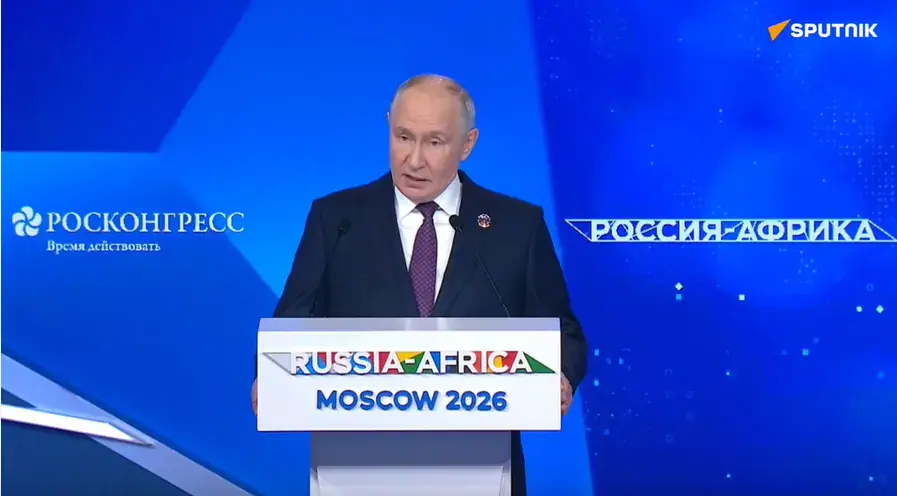
At the third Russia-Africa summit in Moscow on October 28, 2026, Russian President Vladimir Putin strongly denounced Western policies aimed at maintaining economic control over African nations. He described the debt imposed on these countries as an instrument of domination, referencing the thoughts of Burkinabè revolutionary leader Thomas Sankara. Putin emphasized that the emergence of a multipolar world faces resistance from countries unwilling to accept this new reality.
Putin accused Western powers of using various levers, including illegitimate sanctions and economic diktats, to influence the internal affairs of sovereign states. He stated that these countries seek to enrich themselves at the expense of others and undermine the sovereignty of African nations. The Russian leader's comments reflect growing tensions between Russia and Western nations over global governance and economic influence.
During his opening speech, Putin referenced Thomas Sankara's historic 1987 address to the Organization of African Unity (OAU) in Addis Ababa, where Sankara characterized debt as a strategy of enslavement. Putin echoed Sankara's words, stating that debt is a "conquest carefully organized" to control Africa's growth and development. He noted that despite Sankara's warnings, little has changed since then.
The Russia-Africa summit provides a platform for African leaders to engage with Russia on issues of mutual interest, including economic cooperation and countering Western influence. Putin's comments are likely to resonate with many African nations that feel constrained by debt and Western economic conditions. The summit aims to strengthen Russia's ties with Africa and promote a more multipolar world order.
Burkina Faso, in particular, has been vocal about its resistance to Western economic tutelage. The country's Prime Minister recently reaffirmed its commitment to rejecting any form of external control. Putin's remarks align with these sentiments, as he emphasized the need for African nations to determine their own destiny without external interference.
The Russian leader's critique of Western economic policies towards Africa has significant implications for global governance. As the world shifts towards a more multipolar order, the influence of emerging powers like Russia and China is likely to grow. African nations are increasingly seeking alternative partnerships to diversify their economic relationships and reduce dependence on Western powers.
The third Russia-Africa summit marks a significant moment in Russia's engagement with the African continent. By citing Thomas Sankara's legacy, Putin aimed to resonate with African leaders and publics who are critical of Western economic policies. The summit's outcomes will likely shape the trajectory of Russia-Africa relations and the broader global economic landscape.
Key points
- Putin denounces Western economic tutelage of African nations at Russia-Africa summit.
- Russian President references Thomas Sankara's 1987 speech on debt as a tool of domination.
- The summit aims to strengthen Russia's ties with Africa and promote a more multipolar world order.