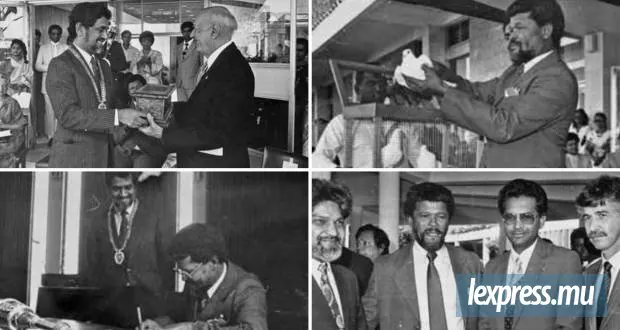
On September 30, 1986, the municipality of Port-Louis made a significant decision to grant honorary citizenship to Nelson Mandela, a move that showcased solidarity with the South African people in their fight against apartheid. This decision was not taken lightly, according to Cassam Uteem, the then Lord Mayor of Port-Louis. Uteem highlighted that the African National Congress, which Mandela was a part of, initially advocated for non-violence before being forced to change its approach due to the South African regime's increasing brutality.
The ceremony where Mandela was granted honorary citizenship was attended by several notable figures, including Stanley Mabizela, the representative of the African National Congress in East Africa. Mabizela emphasized that the gesture by the Port-Louis municipality was more than just a symbolic act; it represented the solidarity of the entire Mauritian society. He also spoke about Mandela's imprisonment, stating that it was a result of his fight against the South African regime's attempts to impose an inferior status on black people.
During the ceremony, Stanley Mabizela condemned countries like the United States, France, Germany, and Japan for their support of the South African regime. He urged these countries to assist South Africa from a humanitarian perspective, rather than solely focusing on protecting their economic and military interests. Mabizela also expressed regret that Mandela could not personally accept the honorary citizenship due to restrictions on his communication.
The event also saw interventions from other prominent figures, including Edwin de Robillard, the founder of the Solidarité Fraternelle Mauricienne. De Robillard spoke about the organization's efforts to promote peace globally and highlighted that its message had reached 48 countries worldwide. He expressed his conviction that world peace was achievable if people were willing to work towards it.
Cassam Uteem, the Lord Mayor of Port-Louis, praised the Solidarité Fraternelle Mauricienne for its past initiatives, particularly those aimed at promoting social peace in Mauritius during the 1960s and 1968. He also acknowledged Edwin de Robillard's relentless efforts to promote peace and love, attributing his commitment to his faith in Jesus Christ.
The ceremony was attended by numerous personalities, including Madun Dulloo, the Minister of Agriculture, Karl Offman, the Minister of Regional Administrations, members of the opposition, religious leaders, and members of the diplomatic corps. The event marked a significant moment in the history of Mauritius, showcasing its stance against apartheid and in support of equality and justice.
The decision to grant Nelson Mandela honorary citizenship served as a powerful statement of solidarity by the people of Mauritius with those fighting against apartheid in South Africa. This move, taken by the municipality of Port-Louis, not only honored Mandela but also underscored Mauritius's commitment to the values of equality, justice, and human rights.
Key points
- The municipality of Port-Louis granted Nelson Mandela honorary citizenship on September 30, 1986, as a gesture of solidarity with the South African people fighting against apartheid.