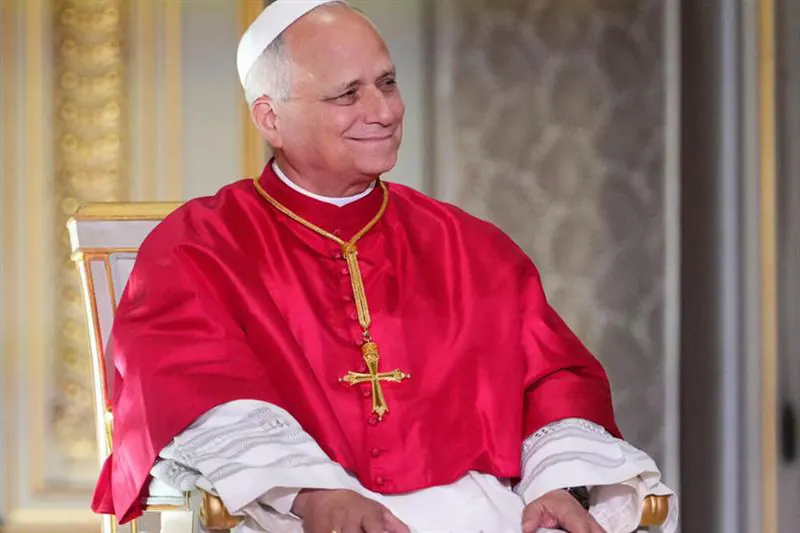
On Friday, September 25, 2026, Pope Leon XIV delivered a significant address in Paris, highlighting the potential perils of unbridled artificial intelligence (AI). The Pope emphasized the need to prioritize human values and ethics in the development and deployment of AI technology. He warned that without careful consideration, humanity risks losing its essence in a "paradise of machines." This cautionary message comes amid growing concerns about the impact of AI on society.
The Pope's remarks were made during a visit to France, where he met with President Emmanuel Macron and other officials. He stressed the importance of placing human persons at the center of all reflections on AI, urging a balanced approach that prioritizes human dignity and freedom. The Pope drew on the insights of French writer Georges Bernanos, who critiqued the dehumanizing effects of industrialization. By invoking Bernanos' ideas, the Pope underscored the need for a more nuanced and humane approach to technological advancements.
The Vatican has been actively engaging with experts and stakeholders to better understand the implications of AI. In May, Pope Leon XIV released a major document, "Magnifica humanitas," which called for a careful examination of AI's potential risks and benefits. The document highlighted concerns about the concentration of data, infrastructure, and computational power in the hands of a few actors. The Pope's emphasis on the need for a more equitable and just approach to AI development reflects the Vatican's commitment to promoting human well-being.
The Pope's views on AI are part of a broader tradition of Catholic social teaching. His predecessor, Pope Leo XIII, addressed the social and economic implications of industrialization in his 1891 encyclical "Rerum novarum." Pope Leon XIV sees AI as a transformative technology that requires a similarly thoughtful and considered response. By framing AI as a challenge to human values and dignity, the Pope is underscoring the need for a more profound and sustained conversation about the future of technology.
The scale of investment in AI is substantial, with an estimated $700 billion to be spent on AI-related initiatives in the coming year. This has raised concerns about the potential for unequal distribution of benefits and the risks of unchecked technological advancement. Some experts, including Paolo Benanti, a Vatican advisor on AI, have suggested the need for a new international framework to govern the development and deployment of AI.
The Pope's address also touched on the need to protect vulnerable populations, including children and young people, from the potential risks of AI. He emphasized the importance of ensuring that technological advancements support human development and education, rather than exploiting or manipulating individuals. The Pope's remarks reflect a broader concern about the impact of AI on human relationships and society as a whole.
The UNESCO Director-General, Khaled el-Enany, has expressed support for the Pope's call for a more thoughtful and considered approach to AI. He sees UNESCO as a key platform for promoting a global conversation about the ethics and governance of AI. By emphasizing the need for a more human-centered approach to technology, the Pope and UNESCO are highlighting the importance of prioritizing human values and dignity in the development of AI.
Key points
- The Pope warns against the risks of losing humanity amidst rapid advancements in AI technology.
- The Vatican is actively engaging with experts and stakeholders to better understand the implications of AI.
- The Pope is calling for a more thoughtful and considered approach to AI development, prioritizing human values and dignity.